A double bowl sink is fast becoming the go-to choice for Indian kitchens, and it’s not just a style trend. It solves real problems: washing and soaking at the same time, keeping raw food away from dirty dishes, and letting two people cook without bumping into each other.
This guide covers the real double bowl sink benefits, how to pick the right material for your water conditions, how to size a sink to your actual counter, and what you should reasonably expect to pay in 2026.
What is a Double Bowl Sink?
A double bowl sink has two separate basins side by side, typically each connected through a double-bowl waste kit to a common drain line. You can use both sides at once, or keep one dry while the other does the heavy lifting. It’s built for kitchens where more than one thing happens at a time, which, in most Indian homes, is every single day.
There are Two Main Types:
- Equal Bowl Sink: Both basins are the same size. Good if you cook in bulk and need space on both sides.
- Offset Bowl Sink: One large basin for cookers and kadhais, one smaller basin for rinsing or soaking. Works well if counter space is tight.
7 Real Benefits of a Double Bowl Sink for Indian Homes
- Wash and Soak Together: Soak dal on one side while you scrub a kadhai on the other. No waiting your turn.
- Keeps Raw Food Separate: Raw vegetables or meat stay away from used dishes. That’s a real hygiene win, not just a nice-to-have.
- Two People, No Fighting for Space: One person rinses, another washes. A single basin makes this nearly impossible.
- Handles Heavy Indian Cookware: An offset double bowl gives your pressure cooker or big kadhai its own space, so you’re not stacking pots awkwardly.
- Keeps the Counter Clear During Meal Prep: Wet vegetables on one side, dirty bowls on the other. Less mess, faster cooking.
- Works Without a Dishwasher: Most Indian homes still hand-wash. Soapy water on one side, clean rinse water on the other — it’s a simple system that just works.
- Built for Joint Families: More people cooking means more dishes. Two basins mean the sink is never the bottleneck.
The Trade-Offs
A double bowl sink isn’t right for every kitchen. It takes up more counter space than a single bowl, and it eats into your under-sink storage because of the extra plumbing. Each bowl is also a bit smaller than one big basin, so oversized tawas or baking trays can be awkward to fit.
If your kitchen is compact or you live alone, a single bowl sink with more open space might actually serve you better.
Equal Bowl vs. Offset Double Bowl: Which is Better?
Select an equal bowl if:
- You often wash dishes that are about the same size.
- Two people at the sink at the same time.
- You want equal working space on both sides.
- You prefer a balanced, symmetrical look.
Select an offset bowl if:
- You often wash big kadhais or pressure cookers.
- You have limited counter space.
- You want one big washing space and one small rinsing space.
- You want a bit more elbow room for typical Indian cooking sizes.
Which Material Should You Pick?
Your water conditions and budget should guide this decision, not looks alone. Hard water isn’t the only factor in corrosion — water chemistry, chlorides, cleaning chemicals, and the quality of the steel itself all play a role.
As a rule, a SS 304 sink of good quality will be more corrosion resistant than a similar quality SS 202 sink, particularly in hard water or humid conditions.
| Material | Best For | Watch Out For | Price Range |
| Steel Grade 304 | Hard water cities like Delhi, Jaipur, Ahmedabad | Costs more than 202 | ₹5,000 – ₹20,000 |
| Steel Grade 202 | Tight budgets, rental homes | Rusts faster over time | ₹1,500 – ₹8,000 |
| Granite composite | Quiet, scratch-resistant kitchens | Light colours show turmeric stains | ₹8,000 – ₹30,000 |
| Quartz composite | Long-term, low-maintenance use | Higher upfront cost | ₹15,000 – ₹50,000 |
| Fireclay | Farmhouse-style kitchens | Heavy, can chip | ₹20,000 – ₹60,000+ |
Note: Prices vary by brand, dimensions, thickness, finish, and accessories included — treat these as approximate retail ranges, not fixed prices.
SS 202 is generally more budget-friendly but offers lower corrosion resistance than SS 304 in demanding environments. In hard water or heavy daily use, it may show staining or wear before SS 304 — but exactly when depends on thickness, manufacturing quality, and maintenance, not a timeline.
What Size Fits Your Kitchen?
Home size (1BHK, 2BHK, etc.) is a rough starting point, but it doesn’t actually determine sink size — a 2BHK can have anything from a tiny galley kitchen to a large modular one. The better starting point is your available counter width and cabinet size.
| Available Kitchen Space | Useful Starting Point |
| Compact counter | 24–30 inch sink |
| Standard modular kitchen | 30–36 inch sink |
| Spacious kitchen | 36–42 inch sink |
| Large kitchen / heavy daily use | 42–45 inch sink |
Most Indian modular counters are around 600mm deep, which is a useful general reference, but counter depth and sink cutout dimensions aren’t the same thing.
Always check the manufacturer’s cutout template against your actual cabinet width and depth before ordering, and confirm the cabinet has enough internal space for the bowls and waste plumbing. Also leave 4–5 inches of space behind the sink for the tap.
Bowl depth matters too. A shallow bowl causes more splashing and makes washing large utensils harder; a very deep bowl can be uncomfortable to reach into, especially for shorter users. Compare overall depth, bowl depth, and your counter height rather than picking on size alone.
Double Bowl Sink Price in India
Prices vary by brand, dimensions, steel grade, thickness, finish, mounting style, and included accessories. The ranges below are approximate retail bands rather than fixed prices.
| Budget | What You Get | Best For |
| ₹2,000 – ₹5,000 | Thin steel, basic finish, no sound padding | Rentals, very tight budgets |
| ₹5,000 – ₹10,000 | Grade 304 steel, decent thickness | 1BHK and small 2BHK homes |
| ₹10,000 – ₹15,000 | Thicker gauge, anti-scratch coating | Families with heavy daily use |
| ₹15,000 – ₹30,000 | Granite composite, sound-dampened | Modern modular kitchens |
| ₹30,000+ | Quartz or fireclay, long warranty | Premium kitchens |
Keep an extra ₹1,000–₹2,500 aside. Sink prices rarely include installation, drain pipes, or tap fitting — those come separately, and actual installation cost depends on your existing plumbing, whether a double waste kit is included, and local plumber charges.
Best Double Bowl Sink Types for Different Indian Kitchens
- Best for compact kitchens: 24–30 inch offset sink
- Best for most families: 30–36 inch SS 304 sink
- Best for joint families: 42–45 inch deep double bowl
- Best for premium kitchens: quartz or premium-grade SS 304
- Best budget choice: verified SS 202 from a reputable brand, with realistic expectations on lifespan
Should You Pick Double Bowl or Single Bowl?
Go double bowl if you cook daily in large amounts, hand-wash everything, or often have two people working in the kitchen at once. Go single bowl if your kitchen is small, you live alone or as a couple, or you mostly wash large flat items like tawas that need one big open space.
Neither choice is wrong; it depends on how busy your kitchen actually gets.
Quick Checklist Before You Buy a Double Bowl Sink
- Confirm the steel grade (304 generally holds up better in hard water areas).
- Check the gauge: for stainless steel, a lower gauge number means thicker steel. 16 or 18 gauge is typically sturdier than 22 or 24 gauge, though gauge alone doesn’t determine overall quality.
- Ask if it has sound-reduction pads underneath.
- Decide between top mount (easier install) or undermount (needs a stone counter).
- Compare bowl depth and overall depth, not just footprint.
- Check whether the product references the relevant Indian Standard (IS 13983:1994 for domestic stainless-steel sinks) and verify any certification claims made by the manufacturer, rather than assuming a mark is mandatory.
Final Thoughts
The right double bowl sink comes down to a few things: your water quality, your available counter space, and how your family actually cooks.
Check the steel grade, measure your cabinet and cutout properly, and pick a size that matches your actual counter rather than your home type. Do that, and you’ll have a sink that handles your daily cooking chaos for years without a single complaint.
Frequently Asked Questions
Does a Double Bowl Sink Cost More to Install Than a Single Bowl?
It can, since it typically needs a double-bowl waste kit and extra fitting work. The exact cost depends on your existing plumbing, whether a waste kit is included, and local plumber charges — ask your plumber for a quote upfront rather than assuming a fixed add-on cost.
Can I Fit a Double Bowl Sink in a Small Kitchen?
Yes, if you go offset. A 24–30 inch offset double bowl fits most compact and 1BHK kitchens without crowding the counter — just confirm against your actual cutout template first.
How Long Does a Good Double Bowl Sink Last?
A well-made SS 304 or quality composite sink can last many years, often 15 years or more with proper installation and care. This should be treated as a general expectation and not a guarantee. The actual lifespan will vary due to quality, thickness, installation, and maintenance of the material.
Can Both Bowls Share One Tap?
Yes. You will find that most Indian kitchens have a single swivel tap that can reach both bowls, so you don’t have to buy two separate taps.
Is a Double Bowl Sink Harder to Clean Than a Single Bowl?
Not really. You’re cleaning the same total surface area, just split into two sections. Some people find it easier since each side stays more organised.
Which Brands Make Double Bowl Sinks in India?
Brands like Ruhe, Lipka, Anupam Sinks and Fossa bring in double bowl steel, granite and quartz sinks at different price points. Check the thickness, warranty, and accessories that come with the package and compare with other brands. Do not decide on brand name alone.
Related Products
Explore products related to this article
-
 25%
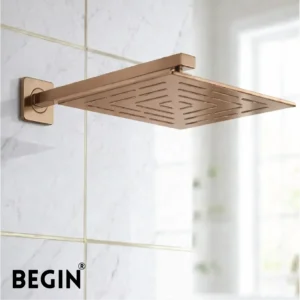
25%Rose Gold Rain Shower Head 12×12 AB3114RG – Overhead Shower | Begin Faucets
Original price was: ₹3,400.00.₹2,550.00Current price is: ₹2,550.00. Add to cart -
25%
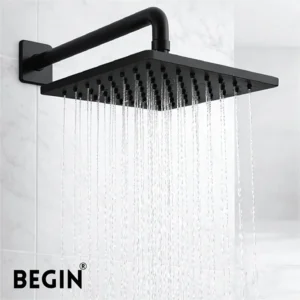
Matte Black Overhead Shower 10×10 | Stainless Steel | Square Matte Finish
Original price was: ₹2,700.00.₹2,025.00Current price is: ₹2,025.00. Add to cart -
25%
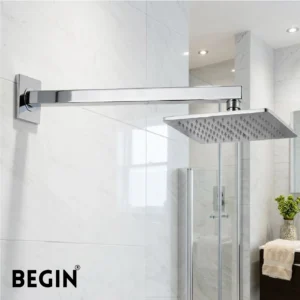
Square Shower Arm 18 Inch Wall Mount AD0163 – Begin Faucets
Original price was: ₹800.00.₹600.00Current price is: ₹600.00. Add to cart -
25%
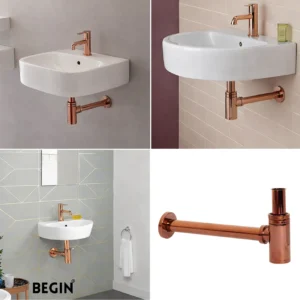
Bottle Trap Rose Gold Finish 300mm AA0041RG | Begin Faucets
Original price was: ₹1,280.00.₹960.00Current price is: ₹960.00. Add to cart