

Bathroom Grab Bars for Elderly in India | Complete Guide
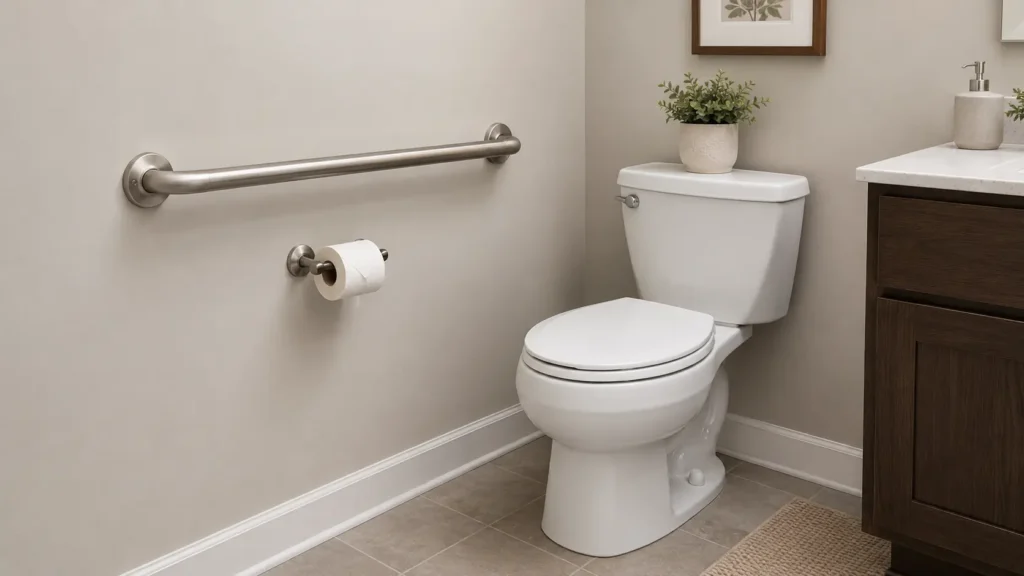
Walk into most Indian bathrooms, and you’ll find the same setup: a bucket and mug near a floor-level tap, wet ceramic tiles underfoot, and nothing on the wall to hold onto. Your parents use this bathroom alone, every morning, often while half-asleep and moving slower than they used to. That combination — standing water, hard tiles, and no support is exactly how most falls at home happen. Not on stairs. Not in the kitchen. In the bathroom. A grab bar is a small fix for a big risk. This guide covers what the data actually shows, where bars need to go, which type and size fit an Indian bathroom, what “correct height” really means here (not just the American number every site copies), and what the whole job realistically costs. Why Elderly Falls in Indian Bathrooms Are So Common This isn’t a guess — it’s backed by India’s largest study on ageing. The Longitudinal Ageing Study in India (LASI), a nationally representative survey of more than 28,000 adults aged 60 and above, found that about 11.6% of them reported a fall. Among older adults already classified as frail, that number climbs to roughly 15%, compared to under 12% for those who aren’t frail. Other regional studies in India have found even wider variation — anywhere from 14% to over 50% depending on the state and how the survey was conducted, which tells you fall risk isn’t evenly spread; it depends heavily on local conditions, age, and health status. The bathroom sits at the centre of this risk because Indian plumbing habits are structurally different from Western ones: None of these are unusual bathrooms; they’re the default layout in most Indian homes, which is exactly why this deserves more attention than it usually gets. Where You Actually Need a Grab Bar A grab bar only helps if it’s where the body actually moves. Think through the real path: door → across the wet floor → commode or bathing area → back to the door. Types of Grab Bars in India No single bar type fits every bathroom. Most homes end up using a mix. Type Best for What to know Straight bars Everyday commode and shower use The default option; mounted horizontal, vertical, or diagonal L-shaped / angled bars Corners, shower entries Combine a vertical and horizontal grip in one unit Folding / flip-up bars Compact Indian bathrooms Hinge flat against the wall when not needed — useful where space is tight Diagonal-mount bars Users with arthritis A 45° angle can follow the arm’s natural arc more comfortably than a flat horizontal bar Suction-cup bars Travel or short-term use only Not rated for full body weight — treat as temporary, never a daily-use substitute for a wall-anchored bar What Size Grab Bar Do You Need? Length should match the spot, not personal preference: As a rule of thumb: shorter near the commode, longer along shower walls and approach paths. Grab Bar Height: India vs. the ADA Numbers Most articles on this topic quote the American ADA standard of 33–36 inches (about 84–91 cm) from the floor, because it’s the most searchable number online. It’s a legitimate reference, but it’s a US commercial-building code, not something written for Indian homes or Indian body proportions. India does have its own accessibility framework: the Harmonised Guidelines and Standards for Universal Accessibility in India, 2021 (issued by the Ministry of Housing and Urban Affairs and CPWD under the Rights of Persons with Disabilities Act, 2016), along with the older IS 4963:1987 from the Bureau of Indian Standards. These are the correct reference points for Indian accessible design, and they exist primarily to guide public buildings rather than private homes. For a home installation, the more useful approach and the one geriatric and occupational therapists generally recommend is to mount the bar level with your parent’s hip height while they’re standing next to it, rather than defaulting to a fixed number pulled from a foreign code. A few centimetres of difference matters far more to the actual user than matching an imported standard exactly. Whatever height you choose, the bar must be anchored into a wall stud, brick, or solid concrete — never into tile or drywall alone. Stainless Steel, Nylon, or Aluminium: Which Material Should You Pick? The right material depends more on your local climate than on price. Material Best For Watch Out For SS304 stainless steel Humid and coastal climates; long-term daily use Higher upfront cost, but holds up where cheaper materials corrode Nylon/composite Budget installs, lighter use, warmer grip for arthritic hands Lower load capacity; can degrade faster in extreme heat Aluminium Lightweight installs Wears faster in high-humidity, coastal conditions For most Indian homes, especially anywhere near the coast or dealing with heavy monsoon humidity — SS304 stainless steel with a textured, non-slip grip is the safer long-term choice, even at a higher initial cost. What Affects Your Total Grab Bar Cost The bar itself is only part of the bill. Two things matter more: Product prices vary widely by brand, material, and load rating, so treat any single figure you see online as a rough guide rather than a fixed number — always confirm current pricing and the certified load rating directly with the seller before buying. As a general pattern, basic bars sit at the lower end of the market, while branded with anti-slip grips and higher load ratings cost noticeably more. It’s usually more cost-effective to budget for a full three-bar bathroom setup at once than to add bars one at a time later. If a parent is recovering from surgery and only needs support for a few months, renting is worth exploring — several home-care and mobility-equipment suppliers in India now offer short-term grab bar rentals as an alternative to buying. Installation and Buying Checklist Most grab-bar failures come down to poor installation, not a weak bar. Before you buy or install: Beyond Grab Bars: Building a Genuinely Fall-Safe Bathroom A grab bar alone doesn’t cover everything.
Best Tap and Shower Cleaner for Hard Water Stains and Limescale
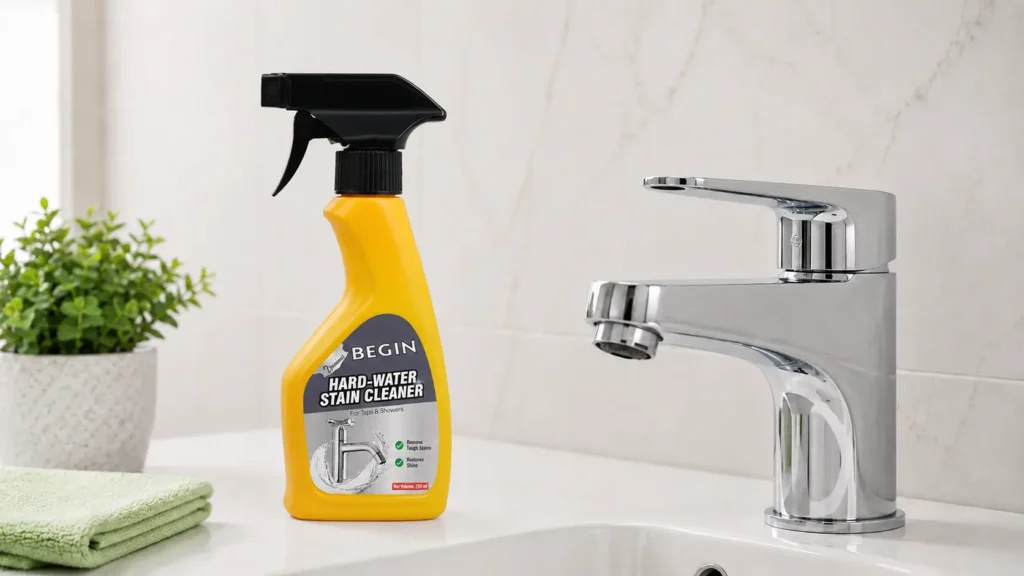
If your tap looked brand new a few weeks ago and now has that dull, spotty film on it, you’re not doing anything wrong. Most of India runs on hard water, and groundwater studies from major cities put the figure at somewhere around 85% of households dealing with moderate to severe hardness. That’s calcium and magnesium sitting in your water supply, and every time it touches a metal surface and dries, it leaves a little bit of itself behind. It’s not just a cosmetic issue either. Ignore it long enough, and the buildup clogs your showerhead nozzles, drops your water pressure, and in some cases starts eating into the coating on nicer fittings. None of that is a huge deal on its own, but it adds up fast if nobody’s paying attention. This blog walks through why the staining happens in the first place, what tap and shower cleaners are available in the market, what’s actually in the cleaners that claim to fix it, whether vinegar from your kitchen cabinet can genuinely replace a bottled product, and how to build a cleaning habit that won’t wreck your fixtures in the process. Why do Taps and Showers Get Hard Water Stains? Hard water carries dissolved minerals, and those minerals don’t go anywhere when the water evaporates. They stay put. Over weeks and months, that residue thickens into something you can actually see and feel. A few different things show up, and they’re not all the same problem: Humid bathrooms make all of this worse because surfaces stay wet longer, which just gives minerals more time to settle in. And depending on which city you’re in, your water might be dramatically harder or softer than your neighbor’s, so don’t be surprised if your cleaning routine needs to be more aggressive than what worked at your last place. What’s Actually Inside Tap and Shower Cleaners Most tap and shower cleaners lean on mild acids to break the mineral bonds without chewing through the metal or finish underneath. Worth knowing what you’re spraying, honestly; not all acids are created equal here. Ingredient What It Does Works Best For Citric acid Naturally derived, breaks down light-to-moderate buildup without being harsh. Weekly upkeep Lactic acid Gentle, skin-friendly, handles soap scum and light limescale well. Sensitive or coated finishes Sulfamic acid A heavier-duty descaler for thick, hardened crust. Serious, long-neglected limescale If you’re cleaning weekly and just staying on top of things, citric or lactic acid formulas are the safer pick. They’re gentle enough for finishes like rose gold or matte black that scratch or dull easily. Sulfamic acid gets the job done faster on stubborn buildup, but I’d use it sparingly, and if you’ve got a premium coated fixture, test it on a hidden spot first before going all in. Vinegar or a Proper Cleaner? Here’s the Honest Answer Vinegar and baking soda are the usual go-to home remedies, and people want to know if they actually work or if it’s just internet folklore. They do work, to a point. Vinegar’s acetic acid can loosen light scale and soap film reasonably well, especially on plain chrome. A cloth soaked in diluted vinegar wrapped around a showerhead overnight is a legitimately cheap, effective fix if the buildup isn’t too bad. Where it falls apart is on anything other than basic chrome. Brass, rose gold, matte black, PVD gold — vinegar is too acidic for these, and using it repeatedly will dull or strip the coating over time. It also just doesn’t have the strength to deal with limescale that’s been sitting for months; a proper descaler will clear that in one go where vinegar might need five attempts and still leave residue. How to Choose the Right Tap and Shower Cleaner for Your Bathroom A decent cleaner clears the grime without wrecking the finish. A few things worth checking before you buy one. Does it actually cover the basics — hard water stains, limescale, soap scum, water spots, light rust? Most claim to, but check the label rather than assuming. Look for something non-abrasive that works fast and rinses off cleanly. Nobody wants a cleaner that leaves its own residue behind or lingers with a chemical smell for hours. And match it to your finish, because this part actually matters: Finish What Works Chrome Fairly tough, but rough scrubbing will still scratch it; stick to mild cleaners. Stainless Steel Non-abrasive only, or you’ll dull the shine. Brass Gentle, low-acid formulas; brass tarnishes quickly otherwise. Matte Black Skip abrasive pads entirely; they strip the coating down to bare metal. Rose Gold Soft, non-acidic cleaners only; the plating is delicate. Gold Finish (PVD) Mild, PVD-safe formulas; strong acids will wear it down. Brushed Nickel Microfiber cloth and a gentle cleaner to keep the texture intact. Best Tap and Shower Cleaners in India Every bathroom faces its own mix of stains, so one product rarely fits all needs. Use this table to match a tap and shower cleaner to your actual problem. Product Handles Hard Water Stains Removes Limescale Safe on Premium Finishes Good for Weekly Use Rough Price Range Begin Faucets Tap & Faucet Cleaner Yes Yes Yes Yes ₹1,900 Happi Planet Tap Cleaner & Limescale Remover Yes Strong Check the label first Not really ₹200–₹299 Koparo Tap & Shower Cleaner Yes Light to moderate Yes Yes ₹149–₹299 JOFF Tap & Shower Cleaner Yes Moderate Yes Yes ₹150–₹300 Right Pure Tap & Shower Cleaner Yes Moderate Check the label first Somewhat ₹200–₹350 Prices shift depending on pack size and seller, so treat these as ballpark figures. And genuinely check the label for finish compatibility before your first use; this matters more on plated or coated fittings than people realize. If you’re dealing with limescale that’s been building for a while, go with something stronger like Happi Planet. For a lighter weekly wipe-down, Koparo or JOFF do the job without being overkill. And if your bathroom has premium fittings, don’t just chase the strongest formula on the shelf —
Bathroom Tiles Cleaner Liquid: Best Picks & Buying Guide
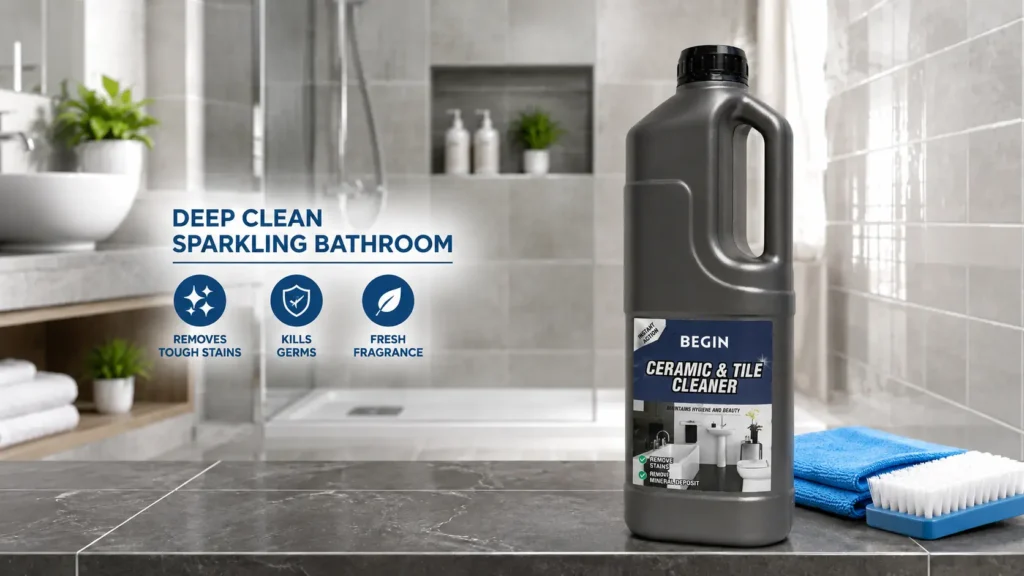
Every bathroom needs a bathroom tiles cleaner liquid sooner or later, because plain water and a mop just aren’t enough. Hard water stains dry into white, crusty patches on your floor. Soap scum turns tiles cloudy and dull. Mould gathers in damp corners, and grout lines slowly darken with grime that regular sweeping never touches. A standard floor cleaner is made to lift loose dirt, not to break down mineral deposits stuck to a surface. As a result, tiles stay hazy even after a full mop session. That’s where a dedicated bathroom cleaning liquid comes in, since it’s built to cut through this kind of buildup. In our own tests across a few Indian households, the difference showed up fastest on grout lines — a plain floor cleaner left them grey, while a dedicated tile cleaner or grout cleaner lifted the colour back within one wash. This guide covers what you need to pick a bathroom tile cleaner that actually works for your bathroom. We’ll start with how to match a cleaner to your stain type and tile surface. Then, we’ll share a few reliable options available in India, along with rough price ranges and a plain look at how we picked them. Finally, we’ll go over safe ways to use these cleaners at home, step by step. How to Choose the Right Bathroom Tiles Cleaner Liquid A cleaner that works well on one bathroom floor may not be suitable for another. By matching the cleaner to your stains and choosing a formula that’s compatible with your tile material, you can achieve better cleaning results while extending the life of your bathroom surfaces. Match the Cleaner to Your Stain Stains aren’t all the same under the surface, so one cleaner rarely works for every mark on your tiles. Stain Best Cleaner Type Why It Works Hard water stains Acid-based cleaner Dissolves calcium deposits and limescale from mineral-heavy water Soap scum Surfactant-based cleaner Cuts through soap residue and greasy film sitting on the tile Mould & mildew Cleaner with disinfectant Kills the spores so they stop coming back Yellow stains Mild acid or enzyme cleaner Loosens grout stains and old discoloration over time Everyday dirt Any general tile cleaner Clears loose grime without needing anything strong If your bathroom deals with heavy mineral buildup, you’ll likely need the strongest hard water stain remover on this list, since limescale tends to sit deep in the tile. Check Your Tile Material and the Ingredients Your tile type matters just as much as the stain. Ceramic, porcelain, and vitrified tiles are fairly tough, so they handle most cleaners, including mild acids, without trouble. Marble and granite are a different story. These stones need acid-free or pH-neutral cleaners, because anything acidic can wear down their shine or eat into the surface over months of use. It helps to know what’s actually in the bottle: A few other things are worth a quick check before you pick a bottle off the shelf: Note: Skip strong acidic cleaners on marble or natural stone unless the packaging says it’s safe for those surfaces. Best Bathroom Tiles Cleaner Liquids in India Product Best For Highlights Price Range Begin Faucets Tile Cleaner Everyday cleaning, hard water stains, soap residue 1-litre formula for routine bathroom tile maintenance ₹499 Lizol Bathroom Cleaner Daily cleaning, disinfecting Kills 99.9% of germs ₹136–₹237 Harpic Bathroom Cleaner Tough stains, multi-surface Works on tiles, taps, basins ₹104–₹212 Roff Cera Clean Post-construction cleaning Removes cement and grout residue ₹160–₹895 Diversey Taski R6 Heavy-duty descaling Professional-grade, concentrated ₹615–₹1,250 Note: Prices vary by pack size, city, and retailer; check the current listing before buying. The germ-kill figure for Lizol reflects the manufacturer’s own published lab claims, not independent third-party testing. Where Begin Faucets Tile Cleaner Fits Begin Faucets Tile Cleaner is built for routine upkeep rather than a one-time deep clean. It’s a reasonable everyday pick if your main problems are soap scum and everyday mineral buildup on ceramic or vitrified tiles, since it’s formulated for that kind of regular maintenance rather than heavy post-construction grime. It also fits naturally into a bathroom that already uses other Begin Faucets fittings and cleaning products, though it works fine on its own. It isn’t the right choice for tough limescale that’s built up over months; for that, an acid-based descaler like Diversey Taski R6 will do more work in one go. Match it to your actual bathroom, not the brand name. How to Use Bathroom Tiles Cleaner Liquid Safely Using a tile cleaner the right way keeps your bathroom clean without leaving behind residue, damaged grout, or fumes you didn’t sign up for. Step-by-Step Mistakes to Avoid Final Thoughts The right cleaner depends on two things: what’s staining your tiles and what your tiles are made of. Ignore either one, and you risk wasted effort or a dulled surface. Sticking to a regular cleaning schedule also keeps mineral deposits from turning into stubborn patches down the line. For everyday needs like soap scum and hard water spots, Begin Faucets Tile Cleaner works as one dependable option among several. Whatever bottle ends up in your hand, match it to your tiles first. Frequently Asked Questions How Often Do You Clean Bathroom Tiles with a Cleaning Liquid? Twice a week is a fair rule of thumb for most households, based on general manufacturer guidance for bathroom cleaners. If your area has harder water, you might need a third round somewhere in between. Skip too many cleans, and the grime just sits there, getting tougher to shift later. Can I Make a Homemade Bathroom Tile Cleaner, and Is It as Effective? A mix of vinegar and baking soda handles light, fresh stains decently at home. But against older, set-in marks, it usually falls short when compared to a bought bathroom tile cleaner liquid. Think of homemade options as fine for upkeep, not for stubborn buildup. Is It Safe to Use the Same Cleaner on Floor Tiles and Wall Tiles? Yes, in most houses, since
Best Jet Spray for Toilet: Compare Materials & Brands
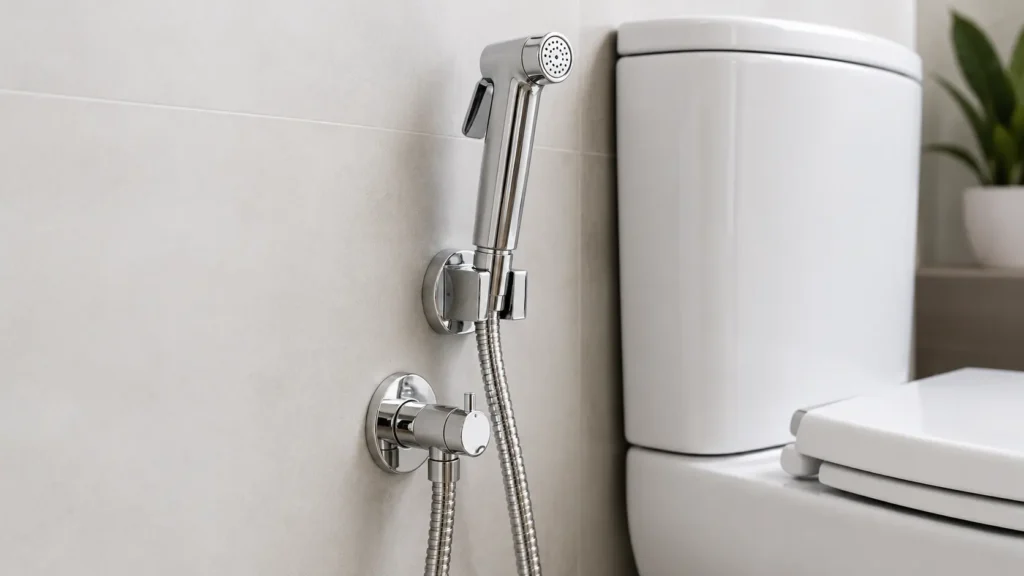
Finding the best jet spray for toilet use is not as simple as picking the cheapest option on the shelf. Many buyers make that mistake and regret it within months. A poor-quality jet spray often leaks at the joint. It may rust after a few uses in hard water. Some models offer no real pressure control, so you get either a weak trickle or a hard blast. Cheap hoses crack and split too soon. This guide will help you compare materials, understand how a jet spray differs from a health faucet, look at trusted brands, and know what price range fits your budget. Which is the Best Jet Spray for a Toilet? For most Indian households, the best jet spray for toilets is made of brass or SS304 stainless steel. Look for a braided steel hose, a smooth pressure-control trigger, and leak-proof fittings that fit the standard ½-inch plumbing size used across India. This combination gives you strength, hygiene, and long-term value without heavy maintenance. Use Case Recommended Choice Everyday home use Brass or SS304 Budget bathrooms PTMT or ABS Hard-water areas Brass or SS304 Elderly users Soft-pressure trigger Premium bathrooms Premium brass health faucet Your final pick still depends on your water quality, budget, and who uses the bathroom most. Jet Spray vs Health Faucet: Are They the Same? Most people in India use “jet spray” and “health faucet” as if they’re the exact same thing, and in casual conversation, that’s fine. But technically speaking, there’s a subtle difference worth understanding. A health faucet typically refers to the handheld nozzle attached to a flexible hose; the kind you hold in your hand and direct yourself. Jet spray, on the other hand, is a bit more flexible in meaning. Sometimes it’s used for that same handheld unit, but in certain setups, it refers to a fixed spray mounted directly onto the toilet itself. Both serve the exact same purpose — personal hygiene after using the toilet, but how they’re designed and installed sets them apart. A handheld health faucet allows you to adjust the angle, distance, and pressure as you desire, giving you more flexibility. A fixed jet spray is incorporated in the toilet setup and is in a fixed location and does not provide the same flexibility. So here’s the simplest way to think about it: the function is identical, but the design and installation aren’t always the same. If you’re planning to buy one, don’t just go by the name; check what type of product you’re actually getting. Internationally, this same fitting also goes by names like handheld bidet sprayer or shattaf. Types of Jet Sprays: ABS vs PTMT vs Stainless Steel vs Brass Not all jet sprays are made from the same stuff, and that’s exactly why some last five years while others crack in five months. The material you pick decides how well it handles daily use, water quality, and wear. Material Best For Advantages Limitations ABS Budget use Lightweight, affordable Less durable PTMT Everyday bathrooms Rust-free, economical Basic appearance Stainless Steel Daily family use Strong, corrosion-resistant Check steel grade Brass Long-term use Premium durability Higher price A few things worth knowing before you shop: If your budget is tight but you still want something rust-free, a PTMT jet spray is worth a look. A brass jet spray costs more upfront but tends to outlast the rest. How to Choose the Best Jet Spray for Toilet Picking the right jet spray isn’t just about looks. Check these seven things before you spend your money. Look for a leak-proof hose too, since it directly affects how long your fitting stays trouble-free. Water Pressure Varies More Than You’d Think Not every home delivers water the same way, and that affects which spray makes sense. Note: Match your fitting to your building’s plumbing setup. Common Mistakes to Avoid When Buying a Jet Spray These small checks save more than they appear because a toilet spray that lasts saves you money in the long run. Best Jet Spray Brands in India and Price Range The cheaper ones use thinner plastic and basic plating, while the pricier ones use better metal and finer finishing. Category Approx. Price Brands Budget ₹250–₹700 PTMT and ABS brands Mid-range ₹700–₹1,500 Begin Faucets, Hindware, Cera, Parryware, RN, Plantex Premium ₹1,500–₹3,000+ Jaquar, Kohler, Grohe A quick sense of where each brand sits: If you’re wondering about the toilet jet spray price in India, it really comes down to material, brand, and finish, so the range above gives you a rough starting point. Take Begin Faucets, for example. It makes health faucets across different finishes and materials, which gives buyers some room to balance how long it lasts against how it looks and what it costs. Whichever brand catches your eye, take a minute to check the material grade, hose quality, warranty terms, and whether it matches your water pressure. Installation, Water Pressure & Maintenance Tips Set it up right the first time, and your jet spray won’t give you trouble for years. Wrapping It Up Choosing the best jet spray for toilet use really comes down to a handful of things: solid material, a fit for your water pressure, a sturdy hose, tight leak-proof fittings, and a warranty you can count on. Sticking to trusted brands makes this whole decision easier too. If you’re weighing your options, it’s worth looking at Begin Faucets alongside other established names and picking whatever suits your bathroom, your water pressure, and your long-term needs best. Frequently Asked Questions How Long Does a Jet Spray Usually Last? A good-quality jet spray, especially brass or SS304 steel, can last several years with basic care. Cheaper plastic models tend to wear out much sooner, often within a year or two of daily use. Can I Install a Jet Spray Myself, or Do I Need a Plumber? Many people install it themselves using PTFE tape and a wrench, since the fitting is simple. However, if you are unsure about the valve connection, or notice
Shower Heads with Filters for Hard Water | India Buyer Guide
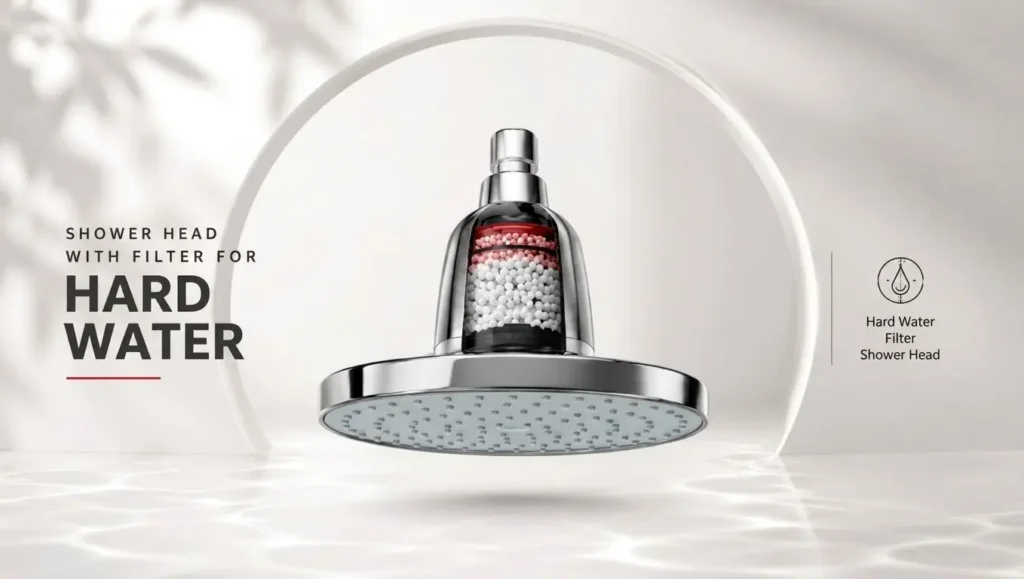
Shower heads with filters for hard water work for some problems and not others, so setting the right expectation matters before you buy. These filters reduce chlorine, loose sediment, and bad smell in your water, and some models with KDF (a copper-zinc alloy that reduces chlorine and certain metals through a chemical reaction) or calcium sulfite media may reduce staining associated with treated water, but do not significantly reduce mineral scale caused by hardness. What they generally cannot do is remove dissolved calcium and magnesium, the minerals that make water “hard” under BIS IS 10500, India’s drinking water standard. That job usually needs a water softener. This guide covers which filter media actually work, when a filter alone is enough for your bathroom, and how to pick one suited to Indian water sources. Do Shower Heads with Filters for Hard Water Really Work? A hard water shower filter reduces sediment, chlorine smell, and the harsh feel of treated municipal water. Independent testing of shower filtration systems shows it does not fully remove dissolved calcium and magnesium, the minerals responsible for scale and limescale buildup. For genuine hardness reduction, you need a different technology altogether. That technology is a water softener. A softener uses ion exchange (a process that swaps calcium and magnesium ions for sodium ions) to actually lower hardness, while a shower filter only screens and chemically alters certain contaminants as water passes through. Before you buy either, test your water correctly. Hard Water in India: Borewell, Tanker & Municipal Water Your water source shapes what a filter needs to handle, and India’s three main sources differ sharply. Borewell Water Borewell water is drawn from underground rock layers, so it picks up dissolved calcium, magnesium, iron, and sometimes fluoride as it moves through soil and stone. A shower filter for borewell water can reduce iron staining and sediment, but the calcium and magnesium pass through largely unaffected, which is what leads to calcium deposits, magnesium deposits, and soap scum on tiles and fixtures over time. Tanker Water Tanker water quality depends entirely on its source and route, since one tanker may draw from a clean bore and another from a contaminated one, with no consistent standard across suppliers. Municipal Water Municipal water usually starts from a treated surface or ground source and gets chlorine added for disinfection, so its main added contaminant is chlorine rather than extra minerals. BIS IS 10500 sets: for drinking water. This is a drinking-water reference, not a bathing-water rule, so treat it as context rather than a target for your shower. Note: Match your filter choice to your water source, not to a generic hardness number. Types of Shower Filter Media Filter Media Helps With Hard Water Impact PP cotton/sediment filter Traps dirt, rust, and visible particles Does not affect dissolved calcium or magnesium Activated carbon Reduces chlorine taste and smell Does not soften water KDF media Reduces chlorine and some heavy metals through a copper-zinc reaction Does not remove dissolved hardness minerals Vitamin C (ascorbic acid) Neutralizes chlorine and chloramine Has no effect on calcium or magnesium Ion exchange resin Swaps hardness ions for sodium or potassium ions Reduces hardness, but resin capacity is limited in a shower-head format Polyphosphate/scale inhibitor Coats minerals to slow scale formation on surfaces Does not remove minerals, only reduces buildup As the table shows, no single common shower-filter media fully softens water on its own. Each type is built to solve a narrow problem, whether that is chlorine odor, loose particles, or surface scale, and combining media in one cartridge only stacks these narrow effects rather than creating a true softening function. A basic sediment filter, for instance, keeps your water visibly clean but leaves mineral content untouched. Similarly, an anti-scale shower head that uses a polyphosphate scale inhibitor can slow down limescale spots on your fixture without lowering the hardness of the water itself; unlike a standard shower filter cartridge aimed at chlorine or sediment, this scale inhibitor depletes over time and needs periodic replenishment. Note: Pick your filter media based on your actual problem, whether that is chlorine, sediment, or surface scale, rather than expecting one cartridge to solve all three. Shower Filter vs Water Softener vs RO: Which One Do You Need? Your choice depends on what problem you’re actually solving, not which product sounds the most advanced. The table below breaks down which option fits which situation. Option Best For What It Does Not Do Shower head filter Renters, mild chlorine smell, light sediment, day-to-day comfort. Does not lower dissolved calcium and magnesium in a meaningful way. Bathroom or whole-house softener Severe hardness, visible limescale on tiles and taps, geyser scaling, borewell water. Requires installation and space, so it is less practical for rented homes. RO purifier Makes drinking water safe by removing dissolved solids and contaminants. Treats only drinking water, not bathing water, so it does nothing for your shower or geyser. A water softener shower head can help in transitional cases, such as a rented flat with moderately hard water where a full whole-house unit isn’t possible, since it fits directly onto your existing pipe without major plumbing changes. How to Choose the Best Filtered Shower Head for Indian Bathrooms Choosing a filtered shower head for hard water comes down to matching the product to your actual water problem, not chasing the highest stage count. Use this checklist before you buy: If you’re searching for the best shower filter for hard water in India, the honest starting point is your specific symptom, not a brand’s stage count. Brands currently selling filtered shower heads in India, based on live listings, include WaterScience (CLEO range), Purifit, KRYSSTAL, Alton, and Panca, though you should confirm specifications, cartridge life, and borewell-specific options directly on each listing before buying, since marketing pages often overstate results. Installation, Maintenance & Replacement Cost in India Most shower filters install without a plumber, and cartridge life depends more on your water quality than the brand you choose. Installation Cartridge
Kitchen Faucet Trends in India 2026
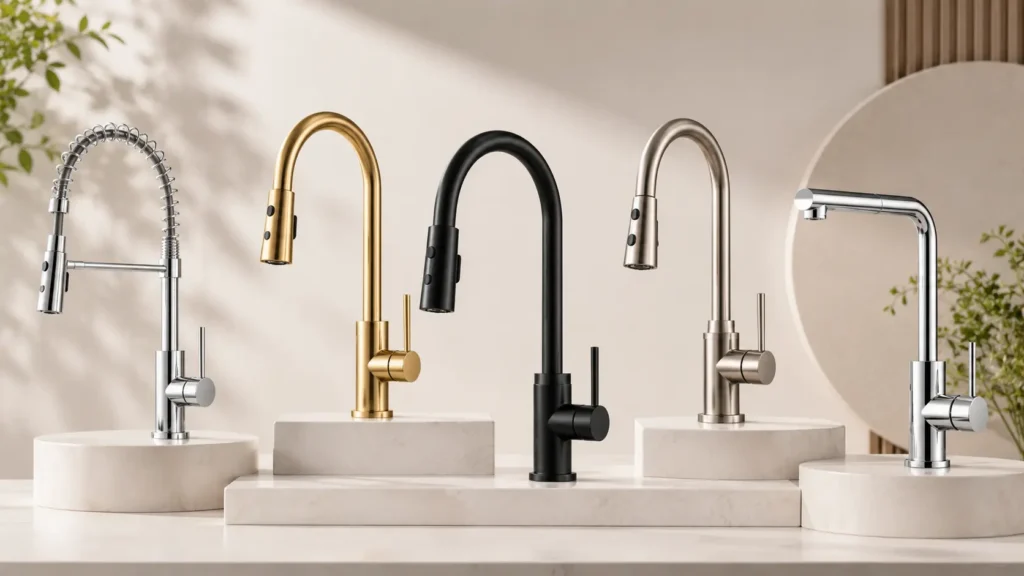
Indian kitchens look very different today than they did a decade ago. More homeowners now choose modular kitchen layouts, which demand fixtures that match clean lines and smart storage. Hard water remains a real challenge in many cities, so families want faucets that resist scale and are easy to clean. At the same time, water efficiency has become a genuine priority, not just a buying trend. Consequently, homeowners are asking more pointed questions about flow rates, quality of finish and long-term durability. This has prompted brands to rethink design, materials and function in tandem, rather than just focusing on looks. As a result, premium kitchen faucets now sit on many shopping lists, even in mid-range renovations. This blog walks through the kitchen faucets trends in India that are actually shaping these choices in 2026. Pull-Down Spray Faucets are Becoming the Preferred Choice Indian cooking demands more from a kitchen tap than most Western designs allow for. Large kadais, heavy pressure cookers, and big vegetable batches need a faucet that reaches every corner of the sink. A pull-down spray gives that extra flexibility, letting the spout move directly over pots instead of forcing them under a fixed tap. Conventional faucets, on the other hand, tend to have a gap between the spout and deep vessels, making rinsing rice, washing greens, or scrubbing tawas slower and messier. The pull-down design solves this gap problem, which is one reason kitchen faucet trends in India point clearly towards this style. Who Should Consider Them Pull-down faucets suit modular kitchen owners who already have a single-bowl or double-bowl sink. They work especially well for families who cook daily and need quick switching between aerated flow and a stronger spray. Beyond that, households with children benefit too, since one-hand operation makes the tap easier and safer to use. Price Range and What to Check Before Buying In practice, pull-down faucets in India fall across three clear price bands. Therefore, buyers must check spout reach against sink width, and confirm enough sink depth to avoid splashing. Matte Black and Premium Finishes are Defining Modern Kitchens Light-coloured cabinetry now dominates Indian modular kitchens, and homeowners want fixtures that stand out against this backdrop. A matte black faucet creates strong visual contrast, giving the sink area a sharp, finished look. Brushed gold and gunmetal are softer options that work better with warmer tones or stone countertops in the kitchen. Beyond looks, these finishes rely on PVD coating, which bonds metal at a molecular level. This makes the surface far more resistant to scratches, fading, and hard water spots than standard chrome plating. As a result, premium finishes now last longer in daily use, even in homes with harder tap water. Popular Finish Options and Maintenance Four finishes appear most often in Indian showrooms today. For maintenance, wipe PVD finishes with a soft cloth and mild soap, avoiding abrasive scrubbers. Standard chrome faucets cost ₹2,500 to ₹6,000, while PVD-coated options typically range from ₹9,000 to ₹25,000. High-Arc and Gooseneck Designs Work Well with Indian Cooking Habits Regular taps don’t usually fit tall pots and pressure cookers. A gooseneck spout solves this by curving high over the sink, giving space for tall pots underneath. The height also turns out to be useful in filling tall steel containers or rinsing large colanders during cooking. Beyond function, the curved shape adds a clean, sculptural look to modular kitchens. Many homeowners pair a single lever gooseneck faucet with a minimalist sink to create a focal point. This combination has become one of the most popular modern kitchen faucet designs for modular kitchens. Installation Considerations and Price Before buying, check the cabinet clearance above the sink, since tall spouts need extra vertical space. Confirm the sink depth too, as splashing increases when the arc sits very high above a shallow basin. In India, high-arc and gooseneck faucets typically cost between ₹6,000 and ₹22,000, depending on brand, finish, and cartridge quality. Water-Efficient Faucets are Becoming a Priority In many Indian cities, real water supply pressure is a concern, so every drop saved counts. The aerator mixes air with water, maintaining pressure while reducing overall water consumption. It has a flow restrictor in there that limits the maximum flow, but does not interfere with normal activities like rinsing or washing. The Difference is Clear in Numbers This can reduce water use in the kitchen by nearly half, a great help in homes with a tanker supply or limited hours of municipal supply. Who Should Consider Them Urban households facing intermittent water supply gain the most from this feature. Families in flats with shared overhead tanks also benefit, since lower usage reduces pressure on the building’s overall supply. For Indian households searching for the best kitchen faucet for Indian homes, water efficiency now ranks as a genuine priority, not an afterthought. These faucets typically cost ₹4,000 to ₹15,000, depending on brand and cartridge quality. Brass and Stainless Steel are the Best Materials for Indian Conditions Most Indian cities deal with hard water, and that water leaves mineral deposits inside faucet valves over the years. Municipal supplies often carry chlorine too, which wears down weaker metals from the inside out. Humid kitchens don’t help either. Trapped moisture speeds up rust and corrosion in cheaper fittings far faster than most buyers expect. A faucet made from the wrong material can fail in just a few years, even with careful use. So choosing the best kitchen faucet material for hard water isn’t about the shiny finish on top. It comes down to what’s built underneath that surface. Brass vs Stainless Steel vs Zinc Alloy Material Hard Water Performance Lifespan Price Range (INR) Brass Excellent, resists corrosion well 15 to 20 years ₹4,000 to ₹25,000 Stainless Steel Very good, low reactivity 12 to 18 years ₹5,000 to ₹20,000 Zinc Alloy Poor, prone to pitting 3 to 6 years ₹1,500 to ₹4,000 For most Indian homes, brass paired with a ceramic disc cartridge gives the best value over time. The cartridge keeps
Which Shower Head is Best for High Pressure in India
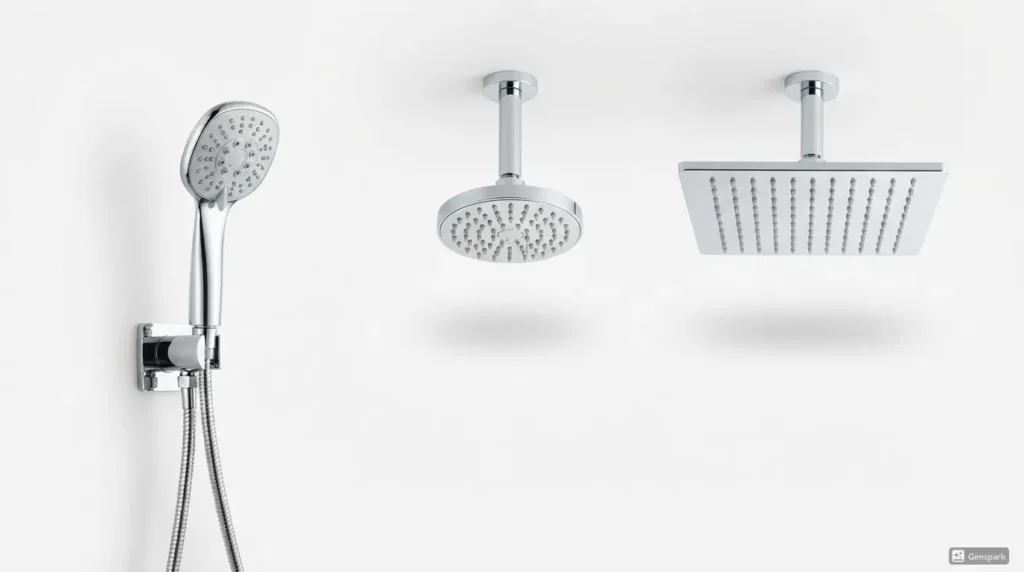
For the best shower head for high pressure, most Indian households prefer a compact hand shower or a fixed wall-mounted head with anti-clog silicone nozzles, focused spray pattern, and standard G1/2 fitting. Oversized rain shower heads look premium, but they usually need stronger inlet pressure to feel powerful. A smaller nozzle often beats a bigger showerhead when your water pressure is limited. But the right pick still depends on your water source, your existing pressure level, and your pipe’s fitting size. That’s what we’ll break down next. Which Shower Head is Best for High Pressure? For many Indian bathrooms, a compact hand shower or fixed wall shower beats a large rain shower on felt pressure. That’s because a smaller spray face pushes the same water through fewer holes. So each jet feels stronger, even at a lower flow rate. Rain and overhead shower heads spread water across a wide disc. That means they need a stronger inlet supply to feel powerful. Without a booster pump, they often feel weak or misty instead. Your setup matters too. A home with an overhead tank, a booster pump, or a direct municipal line will each behave differently with the same shower head. So always match your choice to your actual water source, not just the shower head’s looks. Shower Head Type Best For Pressure Suitability Price Range (India) Hand Shower Low to medium pressure homes High (focused spray) ₹500–₹5,000 Fixed Wall Shower Standard bathrooms High (focused spray) ₹300–₹3,000 Rain/Overhead Shower Homes with booster pumps Needs strong inlet pressure ₹600–₹5,000 (premium sets ₹20,000+) Combo Shower Homes wanting flexibility Depends on parts used Varies by parts used What Actually Makes a Shower Head Feel High-Pressure? Most people confuse pressure with flow rate. But they’re not the same thing. Pressure is the force with which the water is being pushed through the pipe. It is measured in bar or psi ( pounds per square inch ), or sometimes kPa ( kilopascals ). Flow rate is how much water comes out. It’s measured in LPM (liters per minute). A shower head can have low flow but still feel strong, because pressure and flow do two different jobs. In India, plumbing references under IS 17429 Part 1:2020 commonly cite around 70 kPa (0.7 bar) as the minimum dynamic pressure recommended at a shower outlet, with 50 kPa (0.5 bar) used as a benchmark in simplified-system contexts. So if your line runs below these levels, even a good will feel weak. Nozzle count changes the feel too. Picture two heads with the same 9.5 LPM flow: one has 8 holes, the other has 64. The 8-hole head pushes water out faster per hole, so it hits harder, even though total flow is identical. Marketing labels don’t guarantee any of this. So check the actual LPM rating and nozzle count instead of trusting the box. Best Shower Head Types for Indian Bathrooms Not every shower head suits every home. So here’s how the main types stack up for typical Indian water setups. 1. Hand Shower: This is the best choice for homes with medium and inconsistent pressure. You can hold it close to your body, which increases the force you feel. This is why many people look for the best hand shower for high pressure when their building’s supply is inconsistent. 2. Fixed Wall Shower Head: This is a very simple wall-mounted shower head and is often a favorite with buyers in India. It gives a stronger, more focused spray than a wide rain head. So it’s a safe pick for basic bathrooms without a booster pump. 3. Rain Shower Head: A rain shower head only makes sense if your pressure is already strong. Otherwise, it turns into a rain shower for low-pressure disappointment — soft, misty, and slow. Check your pump setup first. 4. Combo Shower: A combo shower gives you both options in one fitting. So you get flexibility without picking just one style. Matching Your Indian Setup How to Choose the Right High-Pressure Shower Head Picking the right shower head takes more than checking the price tag. Here’s what to look at, step by step. Check Your Water Source First Check the Operating Pressure Don’t buy on looks alone. Manufacturers publish pressure specs, usually in bar or psi, right on the product page. So always check the listed spec before you add it to your cart. Check Fitting Size Most Indian shower heads use a standard G1/2 (1/2-inch) connection, though this isn’t universal across every brand or import. So always confirm the thread size on the listing against your existing fitting before you buy. Features That Matter More Than Marketing Claims Material and Warranty Why Your Shower Still Feels Weak After Changing the Head You installed a new shower head, but the water still trickles out. That usually means the real problem sits somewhere else in the pipe. A shower head is just one piece of the puzzle. The plumbing behind the wall matters just as much. Final Thoughts Picking which shower head is best for high pressure comes down to your home, not the fanciest option on the shelf. A big rain head or a small hand shower can both disappoint if they don’t match your water source. So before you buy, check your tank height, pump setup, and fitting size first. Ready to choose? Check out Begin Faucets’ shower head collection to find the right fit for your bathroom. Frequently Asked Questions Does a Shower Head Really Increase Water Pressure? A showerhead can’t create pressure that isn’t already in your pipes. It only changes how that existing pressure feels by concentrating water through smaller nozzles. Is a Rain Shower Head Good for Low Water Pressure? Not usually, unless you have a booster pump. The wide spray face spreads water thin, so weak supply lines often turn it into a soft drizzle. Which is Better for High Pressure: Hand Shower or Overhead Shower? A hand shower usually wins for most homes. You can hold it
Shower Head vs Shower Arm: Key Differences & Buying Guide
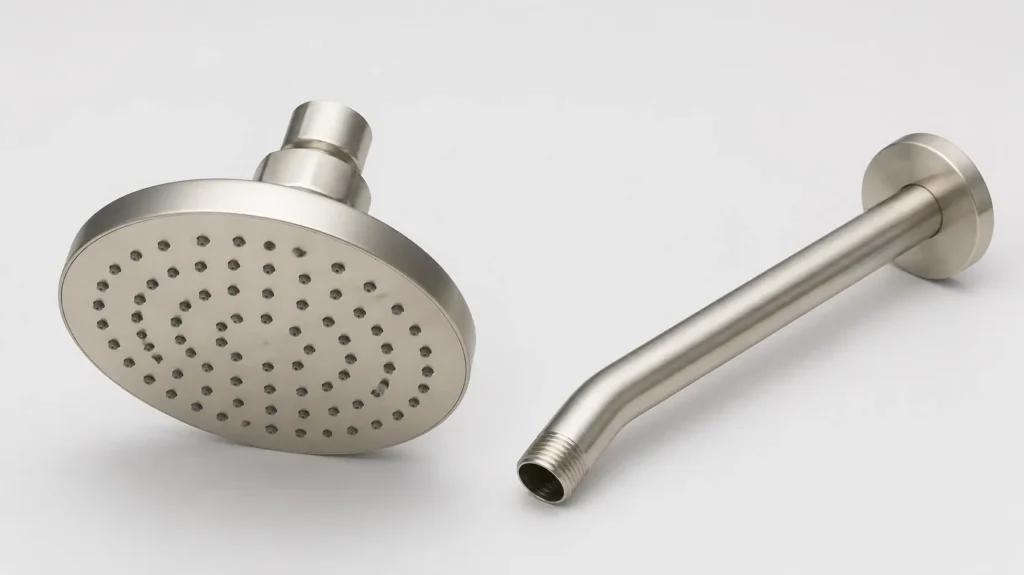
A new shower arrives, but it won’t fit the old wall fitting, and the return shipping ends up costing more than the part itself. This is one of the most common problems during bathroom renovations across Indian homes. The buyer picked a good product, but not the right part. The confusion usually comes down to one thing: people think the shower head and the pipe behind it are the same item. They are not, and mixing them up creates real problems. Get this wrong, and you’ll deal with poor water flow, mismatched threads, or a fitting that looks out of place. This guide covers the shower head vs shower arm difference. You’ll also learn how the two parts connect, when each one needs replacing, and what to check before you buy for your bathroom. Shower Head vs Shower Arm: Key Differences The shower head is the component that sprays water onto your body. The shower arm is the pipe that connects to the wall outlet and supports the shower head. One creates the spray. The other places it at the right height and angle. Feature Shower Head Shower Arm Purpose Sprays and distributes water Connects and positions the shower head Position Attached at the end of the arm Fixed to the wall outlet Water Delivery Controls spray pattern and pressure Carries water from pipe to shower head Installation Point Screws onto the shower arm Screws into the wall’s shower outlet Visible Appearance Main focal point in the bathroom Often overlooked, but affects overall look Standard Sizing (India) Varies by spray face size and thread fit Typically 6 to 15 inches long Replacement Frequency Every 3-5 years, depending on use Every 8-10 years, unless damaged Average Price (India) ₹300 – ₹5,000+ (varies by type) ₹150 – ₹1,500 (varies by material) Maintenance Needs regular cleaning for clogged nozzles Needs occasional checks for leaks or corrosion Compatibility Must match arm’s thread size Must match wall outlet’s BSP thread standard Thread Size Usually ½” BSP Female Usually ½” BSP Male Note: Prices, lifespans, and sizing figures above are general estimates based on typical market ranges — they vary by brand, city, material, and usage. Check current listings and manufacturer specs before you decide on a model. How the Shower Head and Shower Arm Work Together The water takes a simple path to reach you. Here’s the route it follows from the wall to your skin: Both parts need to work together for a good shower. A loose joint, wrong angle, or blocked arm can ruin the entire flow. Even a top-quality shower head performs poorly if the arm behind it is damaged or misaligned. Water flow through the pipe is only half the story. The other half comes down to pressure and spray performance. When Should You Replace the Shower Head, the Shower Arm, or Both? Not every shower problem means replacing the whole unit. Sometimes it’s just one part that’s fine and one that needs fixing. Replace Only the Shower Head Replace Only the Shower Arm Replace Both Shower Head and Shower Arm Knowing which part is failing saves money and avoids unnecessary work. A quick check before buying tells you exactly what to replace. Choosing the Right Shower Head and Shower Arm for Indian Bathrooms Getting this choice right isn’t just about picking a nice design. Your water pressure, water quality, and bathroom layout all decide what will actually work in your home. Water Pressure Most Indian homes run on overhead tanks. That gravity-fed setup typically delivers somewhere in the range of 0.5 to 1 bar of pressure, sometimes less, depending on tank height and pipe layout. In apartments, shared plumbing lines make this worse during morning and evening rush hours. A basic shower head handles this fine. Rainfall panels are trickier, since they generally need closer to 1 to 1.5 bar to spray evenly across the wider surface. Before buying one, find out what pressure your building actually delivers — a plumber or your building’s maintenance team can usually confirm this. Hard Water If your tap water leaves white marks on tiles, you already know about hard water. Those minerals collect inside pipes and shower nozzles over months, slowly choking the flow. Silicone nozzles handle this better than plastic or metal ones, mainly because the scale doesn’t bond to the surface as easily — you can usually just rub it off. The arm matters here too, so corrosion-resistant metal is worth the extra cost in mineral-heavy areas. Plumbing Compatibility Indian bathroom outlets are mostly built around ½-inch BSP (British Standard Pipe) threads, which is the common plumbing standard used across the country. That said, not every brand sticks to this, particularly some imported ones. Before you place an order, check the thread size listed by the manufacturer against what’s already fitted on your wall. Bathroom Size Small bathrooms feel cramped with a long arm sticking out. Go shorter and keep the fitting close to the wall. If you have more space to work with, a longer arm gives the shower head room to sit higher, which suits rainfall designs. A quick measurement of your shower area saves a return shipment later. Material Steel lasts long and shrugs off rust, but you’ll pay more for it. Brass feels solid and holds up well too, though it’s heavy and needs the occasional polish to keep its shine. Plastic fittings are the cheapest option and easy to install, but heat and constant water exposure wear them down faster than metal. Finish Chrome is still what most people buy, and it goes with almost anything. Matte black and brushed nickel have picked up demand lately for a slightly different look. Whatever you pick, try to match it with your taps and other fittings already in the bathroom. Common Installation Mistakes That Reduce Shower Performance A shower fitting can look perfect and still perform badly. Most of the time, the problem traces back to how it was installed, not the product itself. Most of these
Wall Mixer With Hand Shower: Types, Uses & Buying Tips
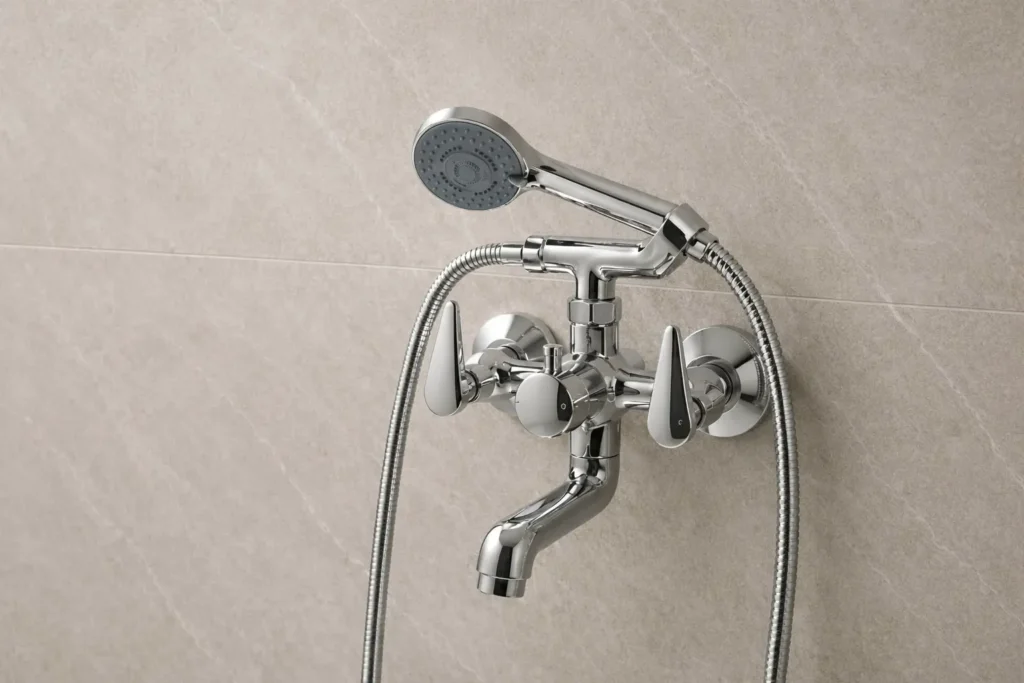
A wall mixer with hand shower is a bathroom fitting that mixes hot and cold water and sends it out through a handheld shower head. Indian homeowners now prefer this setup because it offers flexible bathing, unlike a fixed showerhead alone. Here’s what many buyers miss: two units can look almost the same on a store shelf, yet perform very differently. The cartridge quality, body material, and finish decide how long the fitting lasts and how well it handles daily use. Before buying, weigh the type of mixer, its body material, water pressure compatibility, plumbing requirements, and spare parts availability. These five factors affect performance far more than looks do. This guide explains each of them, so you can choose a fitting that suits your bathroom and lasts for years. What is a Wall Mixer With Hand Shower and How Does It Work? A wall mixer tap with hand shower, also called a hot and cold mixer tap with hand shower, blends hot and cold water into a single flow. It then sends that water out through a fixed spout or a handheld shower, whichever you need. Most Units are Built From These Parts: The working part is simple once you break it down. Hot water comes in from one pipe, cold water from another, and both meet inside the mixing chamber. Turning the handle changes how much of each goes in, so you get the temperature you want. Once that’s set, the diverter lever decides whether the water exits through the spout below or travels up through the hose to the hand shower. This makes the fitting useful for more than just bathing. People rely on it to fill buckets, rinse the floor, wash their hair, or bathe kids, all from one point on the wall. Types of Wall Mixers with Hand Shower Available in India Not every wall mixer with hand shower set works the same way. The differences come down to how the hand shower connects, how many outlets the unit offers, and how the pipework is installed. Brands such as Jaquar, CERA, Hindware, and Parryware all sell both non-telephonic and telephonic ranges in India, usually across zinc alloy and brass body options. Non-Telephonic Wall Mixer This type holds the hand shower in a fixed bracket close to the mixer body. It has a simple design, so there’s less to go wrong and less to maintain over time. Telephonic Wall Mixer Here, the hand shower pulls out on a flexible hose, much like a telephone receiver. This gives you longer reach and makes bathing easier for elderly users and children who may struggle with a fixed unit. 2-in-1 Wall Mixer This unit combines a spout and a hand shower in one compact fitting. It’s the most common setup found in Indian homes today, since it covers bucket-filling and hand shower use without needing extra plumbing points. 3-in-1 Wall Mixer A 3-in-1 wall mixer adds a third outlet: provision for an overhead shower, along with the spout and hand shower. This type needs an extra water line planned in advance. Because of this, it suits new construction or a full renovation, where the plumber can lay out all three connections before the walls are finished. Exposed vs Concealed Installation Whichever type you pick, you’ll also choose between two installation styles, and this choice matters as much as the mixer type itself. Installation Advantage Trade-off Exposed Easier to service and repair Visible pipework Concealed Cleaner, minimal look Needs planning before tiling An exposed wall mixer sits on top of the wall, so a plumber can reach the pipes quickly if there’s a leak or a part needs changing. A concealed wall mixer hides the pipework inside the wall, which gives the bathroom a neater finish, but this route only works if the plumbing is planned before tiling starts. Keep in mind that all price ranges above are indicative for 2026 and will shift based on the brand you pick, your city, and whether you buy in-store or online. Note: Wall mixers are available in finishes such as chrome, matte black, brushed nickel, gunmetal, and rose gold. Chrome remains the most popular choice because it matches most bathroom fittings and is usually the easiest to maintain. What Actually Matters When Buying a Wall Mixer with Hand Shower Looks and price tell you very little about how a fitting will hold up. These are the details that decide whether your purchase lasts five years or fifteen. Brass Body vs Zinc Alloy Body A good-quality brass wall mixer with hand shower resists corrosion and hard water better than zinc alloy. It is often made from high-grade brass, the same kind used in other sanitary fittings. It also lasts longer and handles repairs more easily because the metal is stronger around threads and joints. The trade-off is cost: brass units usually cost more than zinc alloy, but the extra spend often pays back in fewer replacements. Finish Quality A good chrome finish does more than improve appearance. Multi-layer nickel and chrome plating helps protect the mixer from rust, stains, and daily wear. A thicker, well-applied finish also keeps the fitting looking newer for longer. Cartridge Quality The cartridge controls how smoothly the handle turns and how well the mixer resists leaks. Ceramic disc cartridges outperform older rubber-washer or plastic mechanisms on both counts, and they tend to last many years longer under daily use. Water Pressure Compatibility Most hand showers work with low water pressure, but the spray becomes stronger and more even as pressure increases. Many manufacturers recommend an operating pressure of around 0.5 to 3 bar, so it’s worth checking the product specifications before buying. Diverter Quality The diverter is one of the parts that wears out most quickly because it is used every time you switch between the spout and the hand shower. A good-quality internal mechanism helps reduce leaks and keeps switching smooth over time. A durable internal mechanism matters far more here than the outer chrome finish.
2-in-1 vs 3-in-1 Wall Mixer: Differences & Buying Guide
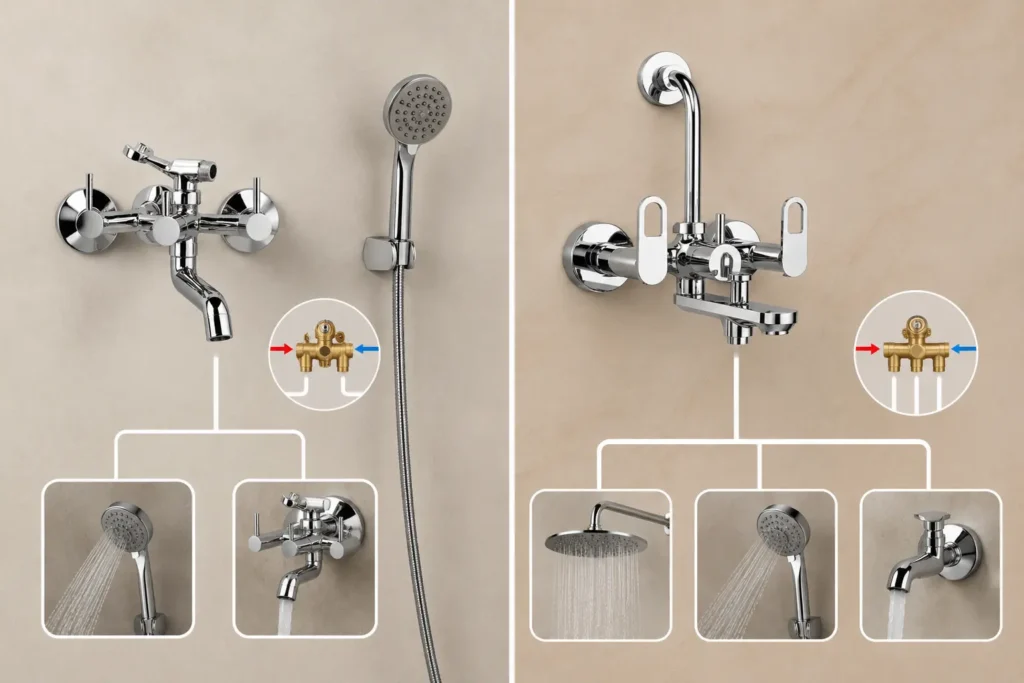
Picking a wall mixer sounds simple until you actually walk into a shop and see the options. Most people are unsure if they need a 2-in-1 or a 3-in-1 model. Here’s the basic idea: a wall mixer is a fitting fixed into your bathroom wall. It lets you control and switch water flow between outlets like your shower head and tap. Now, the tricky part. Both mixers often sit next to each other on store shelves, looking almost identical. But their function is not the same, and that’s exactly why buyers get stuck. This brings us to the real question people search for — 2-in-1 vs 3-in-1 wall mixer. Truthfully, one isn’t superior to the other. It comes down to how many outlets your bathroom has and how you plan to use them. Over the next few sections, we’ll break down how each type works, where they fit best, and what to check before you buy one. What is a 2-in-1 Wall Mixer? A 2-in-1 wall mixer is a wall-mounted fixture with two water outlets. The number of outlets can vary by brand, but it is generally designed for generic bathroom use with a limited number of water connections. It’s a simple design. You turn one handle, and water moves to either the shower or the tap, not both at once. Most homes with a basic bathroom layout use this type. If your bathroom only has a shower and a tap, this mixer covers your needs without extra plumbing work. Because it controls fewer outlets, installation stays straightforward. Plumbers often finish the job faster with this setup. What is a 3-in-1 Wall Mixer? A 3-in-1 wall mixer adds a third outlet for more flexibility. In many models, this is used for an overhead shower or another water outlet, depending on the brand. This third point is where the difference lies. This is a popular option with homeowners who want a rain shower or ceiling-mounted shower head later, even if they don’t install it right away. As a result, this mixer suits bathrooms planned for future upgrades. It also works well in larger bathrooms where multiple water outlets get used regularly. Some people install all three outlets immediately. Others activate the third one later, once they’re ready to add the extra fitting. One thing to keep in mind: outlet configurations aren’t identical across brands. A few manufacturers add different combinations, like a spout instead of a hand shower. Because of this, always check the exact product specifications before you finalize your purchase. What one brand calls “3-in-1” might work slightly differently from another. 2 in 1 vs 3 in 1 Wall Mixer: Complete Comparison Before picking one over the other, it helps to look at both side by side. This wall mixer comparison lays out the practical differences so you’re not guessing at the shop. Feature 2-in-1 Wall Mixer 3-in-1 Wall Mixer Number of water outlets Usually 2 Usually 3 Hand shower compatibility Yes Yes Overhead shower compatibility No Yes Plumbing requirement Needs simpler plumbing May need extra plumbing for the additional outlet Installation complexity Usually easier Usually a little more involved Best suited bathroom size Small to medium Medium to large Maintenance Fewer parts to check Slightly more upkeep Price range in India Approximately ₹1,700–₹6,000 Approximately ₹3,500–₹10,000+ Upgrade flexibility Limited Higher, room for overhead shower later Best suited for Basic bathrooms, tighter budgets Bathrooms where you may add an overhead shower later Actual prices depend on the brand, material, and finish you pick. Exact outlet design, plumbing needs, and naming may differ from brand to brand, so always check the product specification before buying. So what’s the actual difference between 2 in 1 and 3 in 1 wall mixer options once you get past the spec sheet? Mostly, it’s about how much your plumbing has to do. A 2-in-1 keeps things basic. Fewer pipes go into the wall, so the plumber’s job gets done quicker, and repairs later stay cheap too. A 3-in-1, though, plans ahead. Even if you don’t hook up an overhead shower right away, the outlet sits there waiting. That means no breaking tiles again if you decide to add one next year. There’s a maintenance angle too. Less hardware behind the wall usually means less can go wrong, which is partly why 2-in-1 setups tend to need fewer repair visits. None of this makes one option the smarter buy across the board. It really depends on whether your bathroom plumbing needs to stay simple now, or stretch a little further down the road. Which Wall Mixer is Right for Your Bathroom Not every bathroom needs the same setup. Here’s how the choice usually plays out based on your specific situation. This wall mixer buying guide isn’t about finding the best wall mixer for bathroom use in general. It’s about matching the mixer to your actual layout, plans, and budget. How to Choose the Right Wall Mixer Picking between 2-in-1 and 3-in-1 covers is just part of the decision. A few other things determine whether the fitting actually lasts once it’s installed. Wrapping It Up At its core, the 2 in 1 vs 3 in 1 wall mixer decision comes down to how many outlets your bathroom actually needs right now, and later. A 2-in-1 works well if your plumbing stays simple and an overhead shower isn’t part of your plans. A 3-in-1 suits homes that want that flexibility built in from the start. Before you buy either one, check your existing plumbing layout with a plumber first. This one step can save you from mismatched fittings, extra construction, or costly changes once the mixer is already installed. Frequently Asked Questions Can a 2-in-1 Wall Mixer Be Upgraded to a 3-in-1 Later? Not directly. The body itself only has two outlet points, so upgrading usually means removing the old fitting and installing a new one, along with fresh pipework behind the wall. Does a 3-in-1 Wall Mixer Need Different or Extra Plumbing Work? Yes, in most