

Wall Mixer With Hand Shower: Types, Uses & Buying Tips
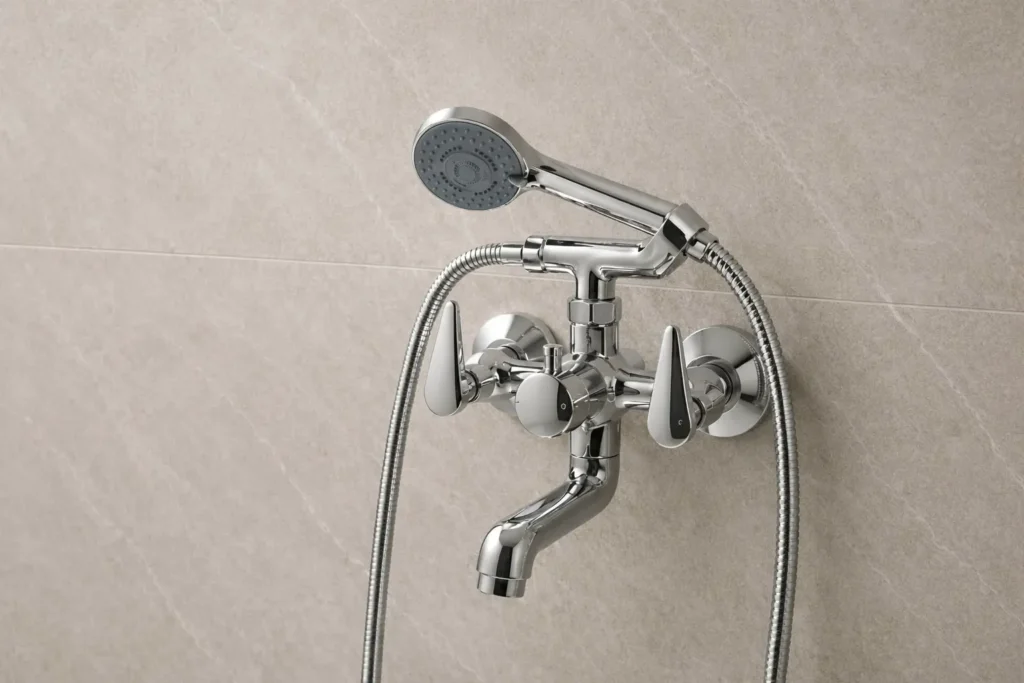
A wall mixer with hand shower is a bathroom fitting that mixes hot and cold water and sends it out through a handheld shower head. Indian homeowners now prefer this setup because it offers flexible bathing, unlike a fixed showerhead alone. Here’s what many buyers miss: two units can look almost the same on a store shelf, yet perform very differently. The cartridge quality, body material, and finish decide how long the fitting lasts and how well it handles daily use. Before buying, weigh the type of mixer, its body material, water pressure compatibility, plumbing requirements, and spare parts availability. These five factors affect performance far more than looks do. This guide explains each of them, so you can choose a fitting that suits your bathroom and lasts for years. What is a Wall Mixer With Hand Shower and How Does It Work? A wall mixer tap with hand shower, also called a hot and cold mixer tap with hand shower, blends hot and cold water into a single flow. It then sends that water out through a fixed spout or a handheld shower, whichever you need. Most Units are Built From These Parts: The working part is simple once you break it down. Hot water comes in from one pipe, cold water from another, and both meet inside the mixing chamber. Turning the handle changes how much of each goes in, so you get the temperature you want. Once that’s set, the diverter lever decides whether the water exits through the spout below or travels up through the hose to the hand shower. This makes the fitting useful for more than just bathing. People rely on it to fill buckets, rinse the floor, wash their hair, or bathe kids, all from one point on the wall. Types of Wall Mixers with Hand Shower Available in India Not every wall mixer with hand shower set works the same way. The differences come down to how the hand shower connects, how many outlets the unit offers, and how the pipework is installed. Brands such as Jaquar, CERA, Hindware, and Parryware all sell both non-telephonic and telephonic ranges in India, usually across zinc alloy and brass body options. Non-Telephonic Wall Mixer This type holds the hand shower in a fixed bracket close to the mixer body. It has a simple design, so there’s less to go wrong and less to maintain over time. Telephonic Wall Mixer Here, the hand shower pulls out on a flexible hose, much like a telephone receiver. This gives you longer reach and makes bathing easier for elderly users and children who may struggle with a fixed unit. 2-in-1 Wall Mixer This unit combines a spout and a hand shower in one compact fitting. It’s the most common setup found in Indian homes today, since it covers bucket-filling and hand shower use without needing extra plumbing points. 3-in-1 Wall Mixer A 3-in-1 wall mixer adds a third outlet: provision for an overhead shower, along with the spout and hand shower. This type needs an extra water line planned in advance. Because of this, it suits new construction or a full renovation, where the plumber can lay out all three connections before the walls are finished. Exposed vs Concealed Installation Whichever type you pick, you’ll also choose between two installation styles, and this choice matters as much as the mixer type itself. Installation Advantage Trade-off Exposed Easier to service and repair Visible pipework Concealed Cleaner, minimal look Needs planning before tiling An exposed wall mixer sits on top of the wall, so a plumber can reach the pipes quickly if there’s a leak or a part needs changing. A concealed wall mixer hides the pipework inside the wall, which gives the bathroom a neater finish, but this route only works if the plumbing is planned before tiling starts. Keep in mind that all price ranges above are indicative for 2026 and will shift based on the brand you pick, your city, and whether you buy in-store or online. Note: Wall mixers are available in finishes such as chrome, matte black, brushed nickel, gunmetal, and rose gold. Chrome remains the most popular choice because it matches most bathroom fittings and is usually the easiest to maintain. What Actually Matters When Buying a Wall Mixer with Hand Shower Looks and price tell you very little about how a fitting will hold up. These are the details that decide whether your purchase lasts five years or fifteen. Brass Body vs Zinc Alloy Body A good-quality brass wall mixer with hand shower resists corrosion and hard water better than zinc alloy. It is often made from high-grade brass, the same kind used in other sanitary fittings. It also lasts longer and handles repairs more easily because the metal is stronger around threads and joints. The trade-off is cost: brass units usually cost more than zinc alloy, but the extra spend often pays back in fewer replacements. Finish Quality A good chrome finish does more than improve appearance. Multi-layer nickel and chrome plating helps protect the mixer from rust, stains, and daily wear. A thicker, well-applied finish also keeps the fitting looking newer for longer. Cartridge Quality The cartridge controls how smoothly the handle turns and how well the mixer resists leaks. Ceramic disc cartridges outperform older rubber-washer or plastic mechanisms on both counts, and they tend to last many years longer under daily use. Water Pressure Compatibility Most hand showers work with low water pressure, but the spray becomes stronger and more even as pressure increases. Many manufacturers recommend an operating pressure of around 0.5 to 3 bar, so it’s worth checking the product specifications before buying. Diverter Quality The diverter is one of the parts that wears out most quickly because it is used every time you switch between the spout and the hand shower. A good-quality internal mechanism helps reduce leaks and keeps switching smooth over time. A durable internal mechanism matters far more here than the outer chrome finish.
2-in-1 vs 3-in-1 Wall Mixer: Differences & Buying Guide
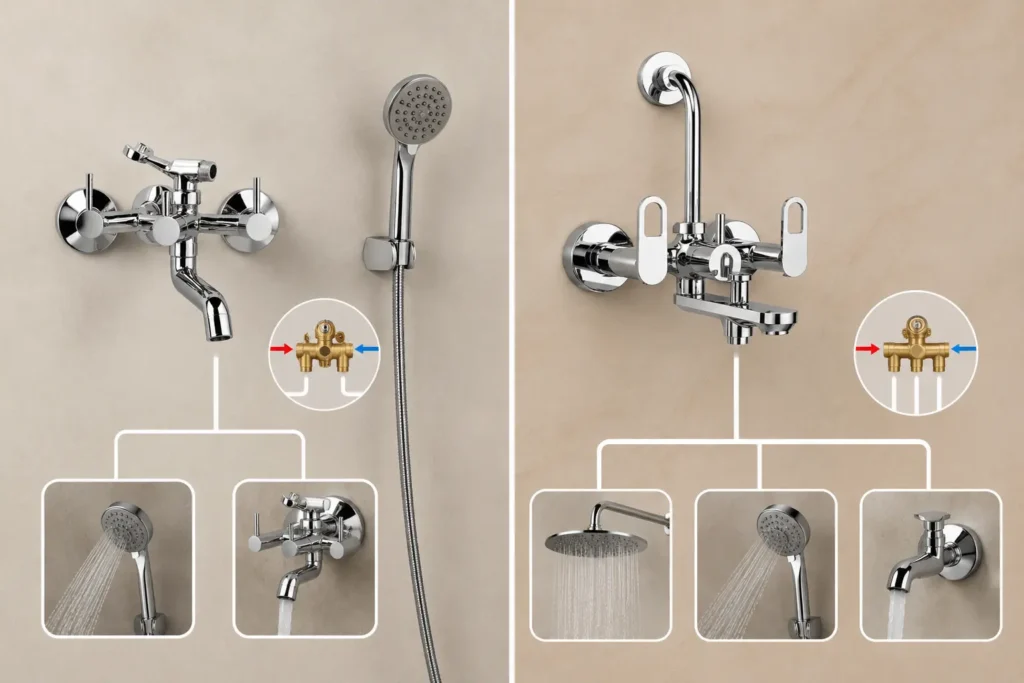
Picking a wall mixer sounds simple until you actually walk into a shop and see the options. Most people are unsure if they need a 2-in-1 or a 3-in-1 model. Here’s the basic idea: a wall mixer is a fitting fixed into your bathroom wall. It lets you control and switch water flow between outlets like your shower head and tap. Now, the tricky part. Both mixers often sit next to each other on store shelves, looking almost identical. But their function is not the same, and that’s exactly why buyers get stuck. This brings us to the real question people search for — 2-in-1 vs 3-in-1 wall mixer. Truthfully, one isn’t superior to the other. It comes down to how many outlets your bathroom has and how you plan to use them. Over the next few sections, we’ll break down how each type works, where they fit best, and what to check before you buy one. What is a 2-in-1 Wall Mixer? A 2-in-1 wall mixer is a wall-mounted fixture with two water outlets. The number of outlets can vary by brand, but it is generally designed for generic bathroom use with a limited number of water connections. It’s a simple design. You turn one handle, and water moves to either the shower or the tap, not both at once. Most homes with a basic bathroom layout use this type. If your bathroom only has a shower and a tap, this mixer covers your needs without extra plumbing work. Because it controls fewer outlets, installation stays straightforward. Plumbers often finish the job faster with this setup. What is a 3-in-1 Wall Mixer? A 3-in-1 wall mixer adds a third outlet for more flexibility. In many models, this is used for an overhead shower or another water outlet, depending on the brand. This third point is where the difference lies. This is a popular option with homeowners who want a rain shower or ceiling-mounted shower head later, even if they don’t install it right away. As a result, this mixer suits bathrooms planned for future upgrades. It also works well in larger bathrooms where multiple water outlets get used regularly. Some people install all three outlets immediately. Others activate the third one later, once they’re ready to add the extra fitting. One thing to keep in mind: outlet configurations aren’t identical across brands. A few manufacturers add different combinations, like a spout instead of a hand shower. Because of this, always check the exact product specifications before you finalize your purchase. What one brand calls “3-in-1” might work slightly differently from another. 2 in 1 vs 3 in 1 Wall Mixer: Complete Comparison Before picking one over the other, it helps to look at both side by side. This wall mixer comparison lays out the practical differences so you’re not guessing at the shop. Feature 2-in-1 Wall Mixer 3-in-1 Wall Mixer Number of water outlets Usually 2 Usually 3 Hand shower compatibility Yes Yes Overhead shower compatibility No Yes Plumbing requirement Needs simpler plumbing May need extra plumbing for the additional outlet Installation complexity Usually easier Usually a little more involved Best suited bathroom size Small to medium Medium to large Maintenance Fewer parts to check Slightly more upkeep Price range in India Approximately ₹1,700–₹6,000 Approximately ₹3,500–₹10,000+ Upgrade flexibility Limited Higher, room for overhead shower later Best suited for Basic bathrooms, tighter budgets Bathrooms where you may add an overhead shower later Actual prices depend on the brand, material, and finish you pick. Exact outlet design, plumbing needs, and naming may differ from brand to brand, so always check the product specification before buying. So what’s the actual difference between 2 in 1 and 3 in 1 wall mixer options once you get past the spec sheet? Mostly, it’s about how much your plumbing has to do. A 2-in-1 keeps things basic. Fewer pipes go into the wall, so the plumber’s job gets done quicker, and repairs later stay cheap too. A 3-in-1, though, plans ahead. Even if you don’t hook up an overhead shower right away, the outlet sits there waiting. That means no breaking tiles again if you decide to add one next year. There’s a maintenance angle too. Less hardware behind the wall usually means less can go wrong, which is partly why 2-in-1 setups tend to need fewer repair visits. None of this makes one option the smarter buy across the board. It really depends on whether your bathroom plumbing needs to stay simple now, or stretch a little further down the road. Which Wall Mixer is Right for Your Bathroom Not every bathroom needs the same setup. Here’s how the choice usually plays out based on your specific situation. This wall mixer buying guide isn’t about finding the best wall mixer for bathroom use in general. It’s about matching the mixer to your actual layout, plans, and budget. How to Choose the Right Wall Mixer Picking between 2-in-1 and 3-in-1 covers is just part of the decision. A few other things determine whether the fitting actually lasts once it’s installed. Wrapping It Up At its core, the 2 in 1 vs 3 in 1 wall mixer decision comes down to how many outlets your bathroom actually needs right now, and later. A 2-in-1 works well if your plumbing stays simple and an overhead shower isn’t part of your plans. A 3-in-1 suits homes that want that flexibility built in from the start. Before you buy either one, check your existing plumbing layout with a plumber first. This one step can save you from mismatched fittings, extra construction, or costly changes once the mixer is already installed. Frequently Asked Questions Can a 2-in-1 Wall Mixer Be Upgraded to a 3-in-1 Later? Not directly. The body itself only has two outlet points, so upgrading usually means removing the old fitting and installing a new one, along with fresh pipework behind the wall. Does a 3-in-1 Wall Mixer Need Different or Extra Plumbing Work? Yes, in most