

202 vs 304 Stainless Steel Sinks: Which is Better?
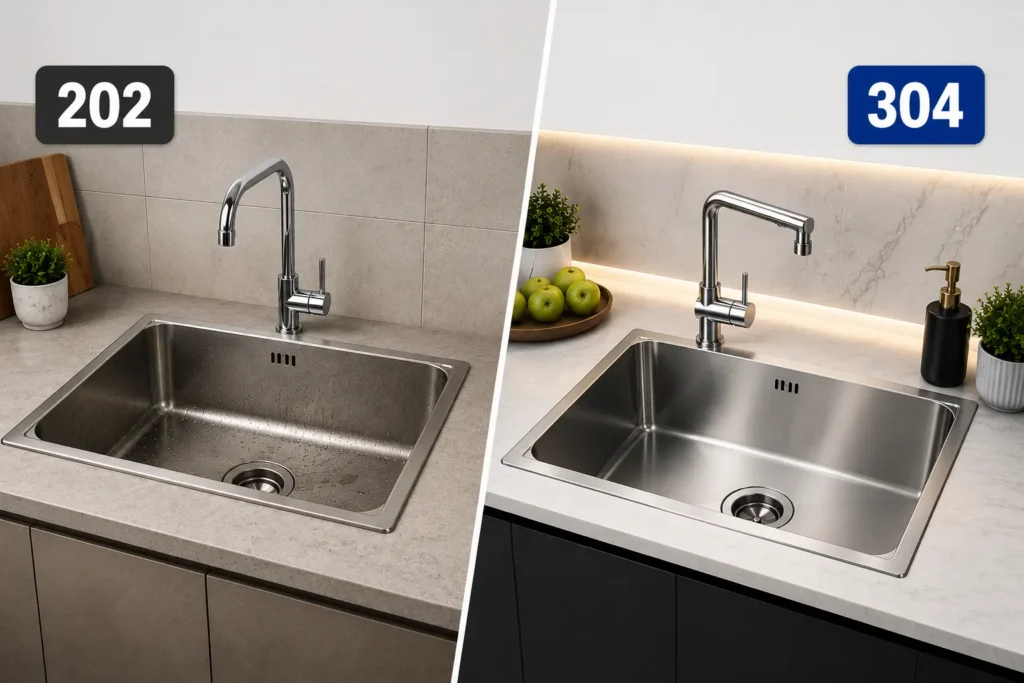
Most people pick a kitchen sink based on looks alone and regret the decision within the first few years of use. When choosing between 202 vs 304 stainless steel sinks, the grade of steel decides how long your sink lasts, how well it resists rust, and how easy it is to clean every day. The confusion between these two grades is real, especially in India. And many sellers will not explain the difference and will call both stainless steel. As a result, buyers often end up with the wrong sink for their kitchen and water conditions. This post breaks down exactly what sets these two grades apart, so you can choose with confidence. Understanding Stainless Steel Sink Grades Think of a stainless steel grade as a formula. It tells you which metals were mixed together and in what ratio. Manufacturers produce different grades because different products serve different purposes. A sink in a commercial kitchen takes far more punishment than one in a home. On the other hand, a home kitchen sink still needs to handle daily exposure to water, soap, and food acids without breaking down. Chromium and nickel are the two metals that matter most in this formula. Chromium coats the steel surface with a thin layer that keeps rust out. Nickel makes the steel tougher and keeps stains and corrosion from settling in over the years of use. More nickel in the formula means a more durable sink, and a higher price tag to match. What is a 202-Grade Stainless Steel Sink? 202-grade stainless steel is the more affordable option you will find in most budget kitchen sinks across India. Manufacturers make it by using manganese in place of a higher nickel content. The result is a more affordable steel that still offers a reasonable degree of protection against corrosion. Composition and Key Features: 202-grade steel carries roughly 16–18% chromium, around 3–4% nickel, and uses higher manganese content to compensate for the lower nickel compared to 304-grade. Chromium does provide a protective surface layer. But at lower nickel levels, the alloy cannot match 304-grade for long-term corrosion resistance. Pros: Cons: What is a 304-Grade Stainless Steel Sink? 304-grade stainless steel sits at the top end of what you will find in residential kitchen sinks. It costs more than 202-grade, and there is a clear reason for that. The metal composition is simply stronger and more capable of handling real kitchen conditions. Composition and Key Features: Grade 304 steel has 18% chromium and 8% nickel. This is why you will often see it labelled as 18/8 stainless steel — the two numbers refer directly to those percentages. This blend is food-grade, which means it is safe to be in contact with food, water, and cookware every day. Pros: Cons: 202 vs 304 Stainless Steel Sinks: Key Differences Knowing each grade separately is useful. However, seeing them side by side is what actually helps you decide. These differences directly affect how your sink performs five or ten years from now. Feature 202 Grade 304 Grade Chromium Content ~16–18% ~17–19.5% Nickel Content ~3–4% (higher manganese compensates) ~8% Rust Resistance Moderate Excellent Durability Good Excellent Lifespan 8–12 years (average use) 15–20+ years Coastal/Humid Areas Not recommended Recommended Price Range Budget-friendly Premium The single biggest factor separating these two grades is nickel content. Nickel is what gives 304-grade steel its ability to fight corrosion year after year. Because 202-grade uses manganese instead, it simply cannot match that level of protection — especially when water, soap, and food acids hit the surface every single day. As a result, the gap between these grades becomes even more significant when you factor in India’s diverse climate and water conditions. Which Stainless Steel Sink Grade is Better for Indian Kitchens? Indian kitchens are tough on sinks. Between hard water, acidic cooking, and humid climates, a sink here faces far more stress than one in a dry, temperate country. The grade you choose needs to match those real conditions — not just look good on a spec sheet. And here’s how each condition relates to the correct grade: For most Indian households, 304-grade is the practical choice, not because it costs more, but because it actually lasts. However, knowing the grade on paper is one thing. Verifying it before you buy is another matter entirely. How to Identify a Genuine 304 Stainless Steel Sink Many sinks on the market carry vague labels. Knowing what to check before paying protects you from ending up with a 202-grade sink at a 304-grade price. Knowing how to verify a grade is half the job. The other half is figuring out which grade actually fits your kitchen, your location, and your budget. When Should You Choose 202 Grade and When Should You Choose 304 Grade? Neither grade is universally wrong. The right choice depends on how you live, where you live, and how long you plan to stay. 202 Grade is a Good Fit When 304 Grade is Worth the Investment When Common Myths About Stainless Steel Sinks “304 stainless steel is 100% rust proof, correct?” It is rust-resistant, not rust-proof. Prolonged exposure to harsh chemicals or bleach-based cleaners can still damage the surface over time. “202 stainless steel is just poor quality.” That is not accurate. 202 is a legitimate steel grade that works perfectly well in the right conditions. The problem starts when buyers use it in situations it was never designed for. “A thicker gauge means a better steel grade.”These are two separate properties. Gauge measures the physical thickness of the steel sheet and affects dent resistance and noise dampening. Grade measures the alloy composition and determines corrosion resistance. A thick 202-grade sink is still more prone to rusting than a thinner 304-grade one. You need both working in your favour. “A shiny mirror finish means it is 304-grade.” The finish — matte, brushed, or mirror is a surface treatment applied after manufacturing. It has no connection to the steel grade underneath. Both 202 and 304-grade sinks