

Bathroom Floor Drain Trap Types, Tips, and Maintenance
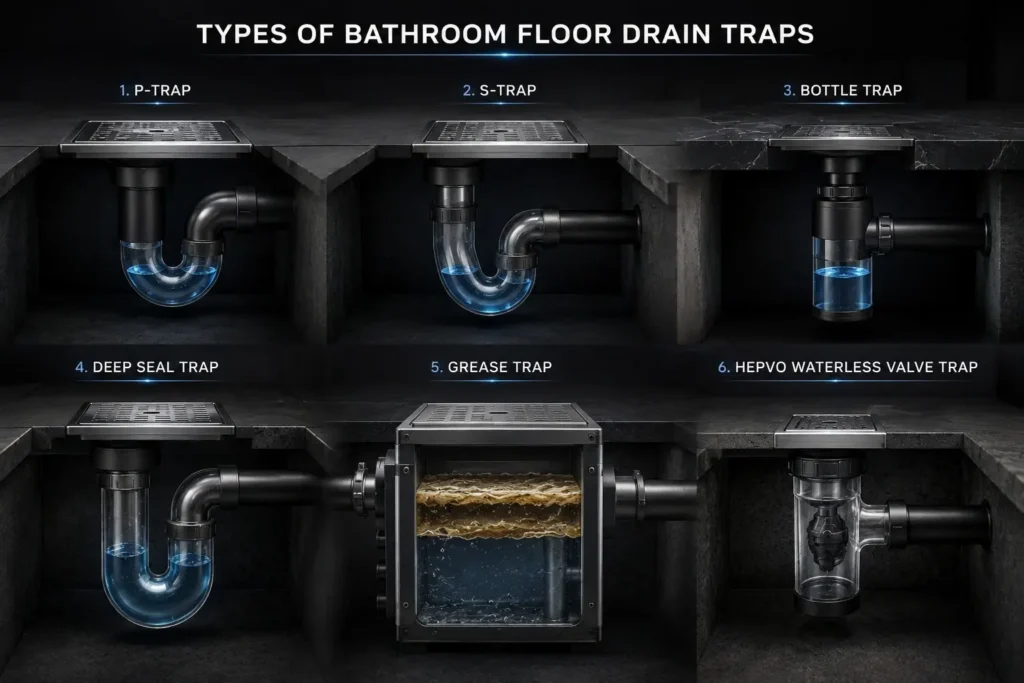
That smell creeping out of your bathroom floor isn’t random — your bathroom floor drain trap is likely the culprit. Most homeowners ignore this small but mighty component until something goes wrong. And by then, you’re dealing with foul odors, slow drains, or worse — sewer gas sneaking into your home. Here’s the good news. Once you understand how it works, you can easily stay ahead of the problem. This blog covers the different types of floor drain traps, how they keep your bathroom fresh, and simple maintenance tips to avoid blockages and bad smells. Stick around — this is easier to manage than you think. What is a Bathroom Floor Drain Trap A bathroom floor drain trap is a small curved pipe fitted beneath your floor drain. It sits quietly under the surface, completely out of sight. Think of it as a silent gatekeeper. Its one job is to stop unwanted things — sewer gases, insects, and debris — from traveling up through the drain and into your bathroom. Without it, your bathroom would be directly connected to the sewer system. Hence, foul smells and potential health hazards could enter your home freely. It’s a simple component, but it plays a surprisingly important role in keeping your bathroom clean, safe, and odor-free every single day. Difference Between Floor Drain and Floor Trap These two terms sound similar, but they do very different jobs. Here’s a quick way to tell them apart. Feature Floor Drain Floor Trap Purpose Collects and removes water Blocks gases, pests, and debris Location Visible on the floor surface Hidden beneath the floor drain Water Seal No Yes Visibility Easy to see Out of sight Works Alone No No Neither one works on its own. The floor drain handles the water, while the floor trap handles everything you don’t want coming back up. Strip one away, and the system breaks down. Together, though, they quietly do their job every single day without you ever having to think about it. Types of Bathroom Floor Drain Traps Not all bathroom floor drain traps look or work the same way. Here’s a breakdown of the most common types so you can spot which one belongs in your bathroom. 1. P-Trap Picture the letter “P” flipped on its side — that’s exactly what this one looks like. It’s the go-to choice for most homes today, used under sinks and floor drains alike. The design is straightforward, which makes both installation and cleaning far less of a hassle. 2. S-Trap This one curves twice, forming a shape that looks like the letter “S.” Older homes have them everywhere, but most building codes today won’t allow new installations. The biggest issue is self-siphoning — the trap tends to drain its own water seal dry, which defeats the whole purpose. 3. Bottle Trap This is a nice little trap with a small cylindrical body that fits nicely under the drain. Ideal for tight spaces, this is why you will often see this under pedestal sinks. It has a clean, minimal look and is a popular choice for modern bathroom designs. 4. Deep Seal Trap This one has a deeper water column – around 75mm compared to the standard 50mm. That extra depth ensures the seal takes much longer to evaporate. And making it a solid pick for bathrooms or utility rooms that rarely see regular use. 5. Grease Trap Its job is to catch fats and oils before they sneak into your drainage system. You’ll mostly find it in kitchens, but some bathrooms share drainage lines where one becomes necessary. Skip it where it’s needed, and you’re looking at stubborn, greasy blockages down the line. 6. HepvO Waterless Valve Trap Instead of relying on standing water, this trap uses a soft internal valve that flexes open when water passes through, then snaps shut on its own. No water means no evaporation problem — making it a genuinely clever solution for drains that go weeks without any use. Common Signs Your Bathroom Floor Drain Trap Has a Problem The trap in your floor drain usually gives you some hints before it stops working properly. Look for these signs, and you can fix problems early. 1. Spotless bathroom smells like sewer gas: You can’t smell that unmistakable sewer smell, but everything looks clean, don’t brush it off. The water in the trap dried up, or there is a crack, and the nasty gas comes right in. 2. Gurgling noises: If you hear gurgling and bubbles from your drain immediately after running water through it, it’s because air is trapped in the pipes. It may be because there is some form of clogging in the vent. 3. Slow drainage of water: If you find that the floor drain is slow, then it is most likely because the trap is blocked with things such as hair or soap from the bathroom. 4. Insects around the drain: There are unusual insect sightings around the drain. That water barrier is supposed to keep critters from crawling up the sewer and invading your bathroom. 5. Cracks around the drain: Even the smallest crack will allow water to get under the floor and destroy the seal. Often, you will not see them immediately. 6. Puddles on the floor: If you see water chillin’ on the bathroom floor instead of draining, you have a serious clog in your trap or drain. And now it’s backing up. Bathroom Floor Drain Trap Maintenance Tips Maintaining the floor drain trap is not difficult. Just pick up a few good habits, and you can avoid any surprises. When Should You Replace Your Bathroom Floor Drain Trap? Sometimes, fixing won’t do. Here are the times when replacement is the better option: 1. If you spot a crack or any kind of damage, getting a good seal is basically impossible. 2. Still smelling something funky after cleaning and refilling the trap? That probably means the trap is worn out. 3. When stubborn clogs just won’t budge, even