

Stainless Steel Grab Bar: Types, Grades & Buying Guide
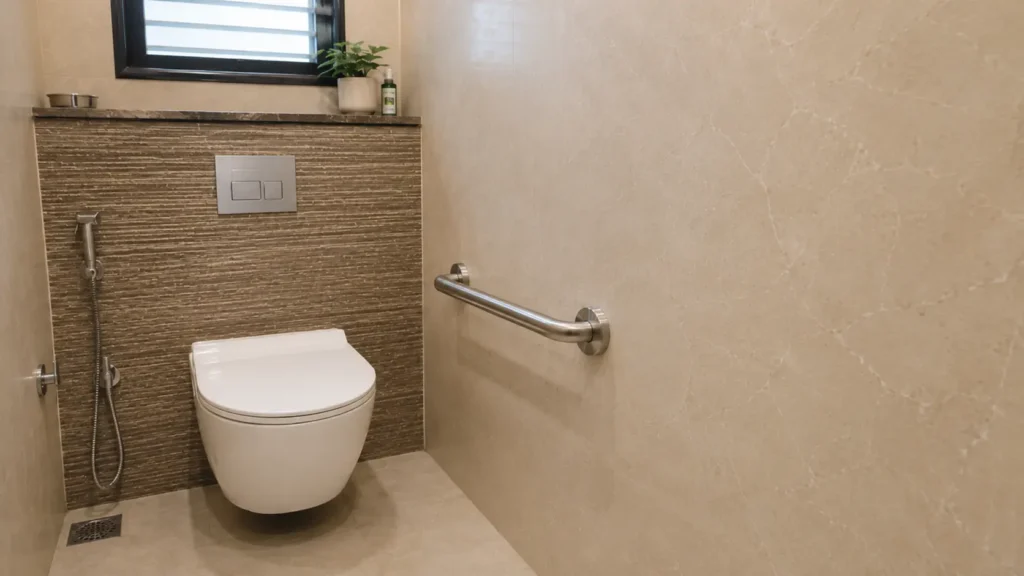
A stainless steel grab bar is a metal rail that you mount to the wall that provides you with something sturdy to hang on to in the bathroom. Homeowners and architects, hospitals, and commercial projects all select this hardware because it can take the daily wear, wet floors, and heavy use without breaking down. Stainless steel is a winner over plastic or regular metal because it doesn’t rust, stays strong for years, and looks clean in any bathroom. But not all stainless steel is the same – the grade you choose will determine how well the bar resists rust, particularly in humid or coastal areas like India. Pick the wrong grade and your solid-looking bar could corrode in a few years. This guide will take you through steel grades, finishes, sizes, installation, pricing, and upkeep, so you can select the right grab bar for your bathroom and your budget. What is a Stainless Steel Grab Bar and Why is It Preferred? A stainless steel grab bar is a fixed rail mounted on a wall to give you a firm grip when standing, sitting, or moving in the bathroom. Its only job is to hold your body weight safely, unlike a towel bar, which just hangs cloth and cannot bear real pressure. Many buyers confuse the two, but pulling on a towel bar for support can snap it off the wall and cause a fall. There are some obvious reasons why stainless steel is the best choice for grab bars: Because of these strengths, you will find stainless steel grab bars in home bathrooms, hospitals, hotels, accessible washrooms, and elderly care facilities. Each of these spaces needs hardware that stays safe and clean under daily, heavy use. Quick Tip: Never use a towel bar as a substitute for a grab bar; they are built for completely different jobs. SS202 vs SS304 vs SS316: Which Stainless Steel Grade Should You Choose? Buy any stainless steel grab bar, and it will look shiny on day one. But the metal underneath that shine is not always the same, and that difference shows up years later as rust spots, weak joints, or a bar that just feels flimsy. In India’s mix of dry cities and damp coastal towns, the grade you pick matters as much as the size or design. Start with SS202. It has less chromium and nickel than the other two grades, and those two elements are what keep rust away. So SS202 holds up fine in a dry indoor bathroom with little water splash, but leave it in constant moisture, and you will see dull spots creep in within a couple of years. Treat it as a budget option, not a long-term one. SS304 is what most Indian bathrooms use, and there is a simple reason for that. It strikes a fair balance between price and rust protection, so it survives daily water contact without much trouble. Unless you have a specific reason to go higher, SS304 covers the job well. Then there is SS316. It costs more because it carries molybdenum, an added element that stands up to salt air and harsh chemicals far better than SS304 can. If your home sits near the sea, or your city stays humid for most of the year, this extra cost pays off over time. In India, stainless steel sheet and strip used to manufacture fittings like these falls under IS 6911:2017, the Bureau of Indian Standards specification that governs chemical composition, mechanical properties, and surface finish for stainless steel. BIS certification under this standard is mandatory for manufacturers, so it’s worth asking your supplier whether the raw steel behind your grab bar is IS 6911 compliant — it’s a concrete way to check quality claims rather than taking a shiny finish at face value. Internationally, the closest equivalent is ASTM A240, the standard that covers chromium and chromium-nickel stainless steel plate, sheet, and strip, which is why grades like SS304 and SS316 read the same whether you’re buying in Mumbai or Munich. Grade Corrosion Resistance Best For Approx. Price Range (India) Limitation SS202 Low to moderate Dry, low-moisture bathrooms Cheapest of the three Rusts sooner in wet or humid air SS304 Good Everyday home bathrooms Mid-range Struggles a bit near the coast SS316 Excellent Coastal and humid homes Highest of the three Higher upfront cost Which Grade is Best for Indian Homes SS304 suits most households; it holds up well, is easy to find, and does not stretch the budget. If salty air or heavy humidity is part of your daily life, spend a bit more on SS316. SS202 only makes sense when your bathroom rarely sees water and your budget is the top concern. Quick Tip: Ask the seller to show the grade stamped on the bar itself — a sticker or a verbal promise is not proof. A BIS-marked mill test certificate for the underlying steel is stronger proof than either. How to Choose the Right Stainless Steel Grab Bar The best grab bar is determined by five factors: size, grip thickness, shape, finish, and hardware. Get these right, and the bar will feel natural to use for years. 1. Size: A grab bar that is too short or placed wrong will not give you the support you need. Here is a quick size guide: Length Typical Use 12″ Small spaces, near soap dishes or corners 16″–18″ Beside the toilet 24″ Inside a shower, vertical mount 32″–36″ Along a shower wall, horizontal mount for full support 2. Grip Diameter: Most stainless steel grab bars come with a grip between 32 mm and 38 mm thick. This range fits an average adult hand well, so you get a firm hold even with wet or soapy palms. A grip that is too thin or too thick can slip out of your grasp when you need it most. 3. Shape: A straight bar works for simple wall support. An L-shaped bar covers two directions, so it helps near a toilet where you need
Bathroom Grab Bars for Elderly in India | Complete Guide
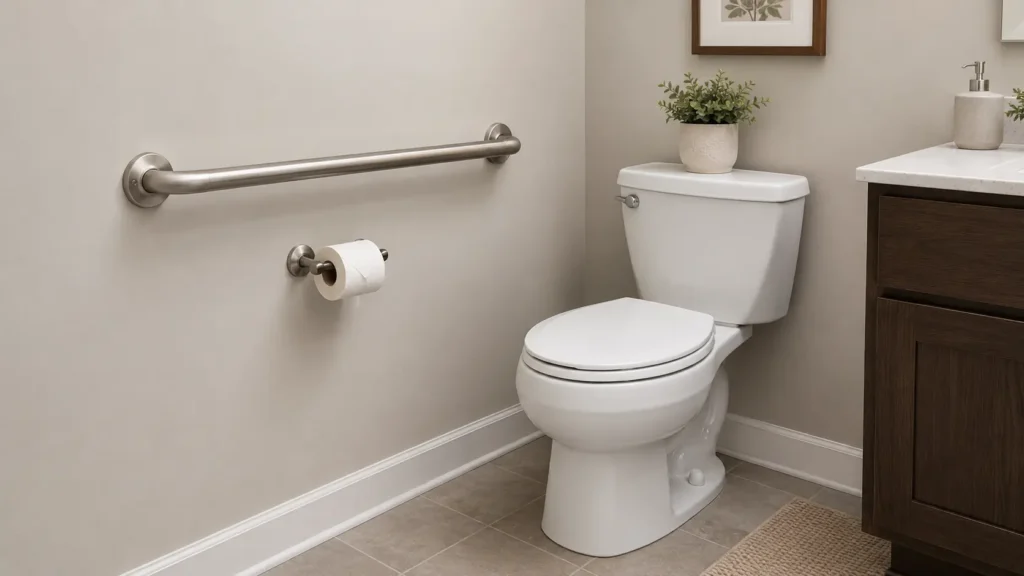
Walk into most Indian bathrooms, and you’ll find the same setup: a bucket and mug near a floor-level tap, wet ceramic tiles underfoot, and nothing on the wall to hold onto. Your parents use this bathroom alone, every morning, often while half-asleep and moving slower than they used to. That combination — standing water, hard tiles, and no support is exactly how most falls at home happen. Not on stairs. Not in the kitchen. In the bathroom. A grab bar is a small fix for a big risk. This guide covers what the data actually shows, where bars need to go, which type and size fit an Indian bathroom, what “correct height” really means here (not just the American number every site copies), and what the whole job realistically costs. Why Elderly Falls in Indian Bathrooms Are So Common This isn’t a guess — it’s backed by India’s largest study on ageing. The Longitudinal Ageing Study in India (LASI), a nationally representative survey of more than 28,000 adults aged 60 and above, found that about 11.6% of them reported a fall. Among older adults already classified as frail, that number climbs to roughly 15%, compared to under 12% for those who aren’t frail. Other regional studies in India have found even wider variation — anywhere from 14% to over 50% depending on the state and how the survey was conducted, which tells you fall risk isn’t evenly spread; it depends heavily on local conditions, age, and health status. The bathroom sits at the centre of this risk because Indian plumbing habits are structurally different from Western ones: None of these are unusual bathrooms; they’re the default layout in most Indian homes, which is exactly why this deserves more attention than it usually gets. Where You Actually Need a Grab Bar A grab bar only helps if it’s where the body actually moves. Think through the real path: door → across the wet floor → commode or bathing area → back to the door. Types of Grab Bars in India No single bar type fits every bathroom. Most homes end up using a mix. Type Best for What to know Straight bars Everyday commode and shower use The default option; mounted horizontal, vertical, or diagonal L-shaped / angled bars Corners, shower entries Combine a vertical and horizontal grip in one unit Folding / flip-up bars Compact Indian bathrooms Hinge flat against the wall when not needed — useful where space is tight Diagonal-mount bars Users with arthritis A 45° angle can follow the arm’s natural arc more comfortably than a flat horizontal bar Suction-cup bars Travel or short-term use only Not rated for full body weight — treat as temporary, never a daily-use substitute for a wall-anchored bar What Size Grab Bar Do You Need? Length should match the spot, not personal preference: As a rule of thumb: shorter near the commode, longer along shower walls and approach paths. Grab Bar Height: India vs. the ADA Numbers Most articles on this topic quote the American ADA standard of 33–36 inches (about 84–91 cm) from the floor, because it’s the most searchable number online. It’s a legitimate reference, but it’s a US commercial-building code, not something written for Indian homes or Indian body proportions. India does have its own accessibility framework: the Harmonised Guidelines and Standards for Universal Accessibility in India, 2021 (issued by the Ministry of Housing and Urban Affairs and CPWD under the Rights of Persons with Disabilities Act, 2016), along with the older IS 4963:1987 from the Bureau of Indian Standards. These are the correct reference points for Indian accessible design, and they exist primarily to guide public buildings rather than private homes. For a home installation, the more useful approach and the one geriatric and occupational therapists generally recommend is to mount the bar level with your parent’s hip height while they’re standing next to it, rather than defaulting to a fixed number pulled from a foreign code. A few centimetres of difference matters far more to the actual user than matching an imported standard exactly. Whatever height you choose, the bar must be anchored into a wall stud, brick, or solid concrete — never into tile or drywall alone. Stainless Steel, Nylon, or Aluminium: Which Material Should You Pick? The right material depends more on your local climate than on price. Material Best For Watch Out For SS304 stainless steel Humid and coastal climates; long-term daily use Higher upfront cost, but holds up where cheaper materials corrode Nylon/composite Budget installs, lighter use, warmer grip for arthritic hands Lower load capacity; can degrade faster in extreme heat Aluminium Lightweight installs Wears faster in high-humidity, coastal conditions For most Indian homes, especially anywhere near the coast or dealing with heavy monsoon humidity — SS304 stainless steel with a textured, non-slip grip is the safer long-term choice, even at a higher initial cost. What Affects Your Total Grab Bar Cost The bar itself is only part of the bill. Two things matter more: Product prices vary widely by brand, material, and load rating, so treat any single figure you see online as a rough guide rather than a fixed number — always confirm current pricing and the certified load rating directly with the seller before buying. As a general pattern, basic bars sit at the lower end of the market, while branded with anti-slip grips and higher load ratings cost noticeably more. It’s usually more cost-effective to budget for a full three-bar bathroom setup at once than to add bars one at a time later. If a parent is recovering from surgery and only needs support for a few months, renting is worth exploring — several home-care and mobility-equipment suppliers in India now offer short-term grab bar rentals as an alternative to buying. Installation and Buying Checklist Most grab-bar failures come down to poor installation, not a weak bar. Before you buy or install: Beyond Grab Bars: Building a Genuinely Fall-Safe Bathroom A grab bar alone doesn’t cover everything.