

How to Clean a Rainfall Shower Head With Vinegar & TDS Tip
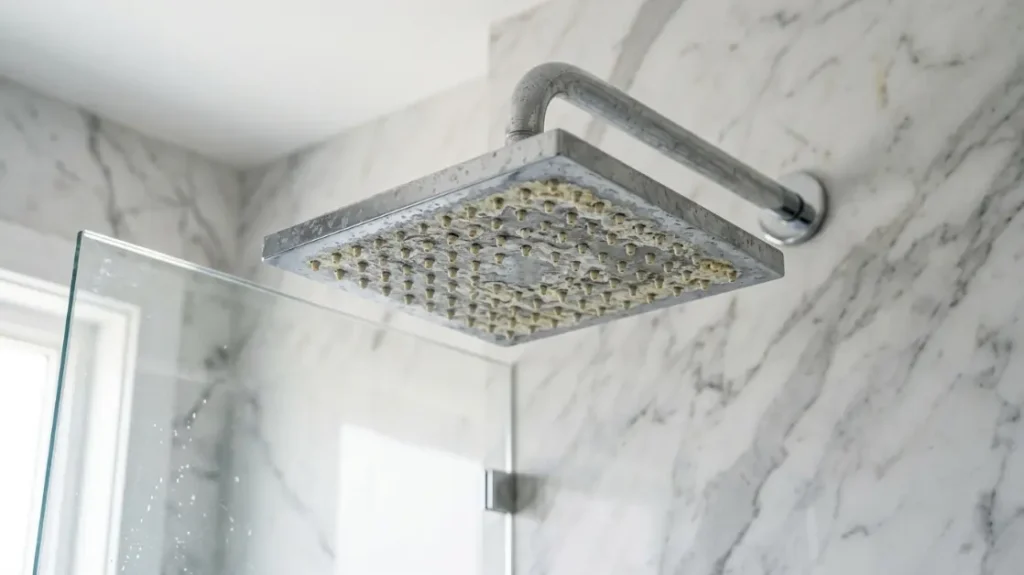
The easiest way to clean a rainfall shower head is to soak the nozzles in a mild vinegar solution, scrub away the loosened deposits with a soft brush, and rinse well with warm water. If your shower head has a matte black, gold, rose gold, or brass finish, skip the vinegar and check the manufacturer’s care instructions first, since acidic cleaners can damage these coatings. Below you’ll find the full steps, a finish-safety guide, and a cleaning schedule based on how hard your water is — something that matters more in India than most guides mention. Why Rainfall Shower Heads Get Clogged Tap water carries dissolved minerals like calcium and magnesium. When water dries on the shower head, these minerals stay behind as a hard, white crust. Over weeks, this crust blocks the small spray holes and slows the water down. This happens faster in homes with hard water, common across large parts of India, especially where water comes from borewells or older municipal pipelines. White spots on your taps, glass shower panel, or bathroom tiles are usually a sign of this. A TDS (Total Dissolved Solids) meter, the same kind used to test RO water, can confirm it. The Bureau of Indian Standards sets the acceptable TDS limit for drinking water at 500 mg/L under IS 10500:2012. Water above that counts as hard, and it leaves scale behind faster. Cleaning Frequency Based on Your Water’s TDS Level: TDS Level (mg/L) Water Hardness How Often to Clean Below 150 Soft water Once a month 150–300 Moderately hard Every 3 weeks 300–500 Hard (at BIS limit) Every 2 weeks Above 500 Very hard Once a week If you don’t own a TDS meter, a rough sign works too: the more scale you see building up on your taps and shower glass, the more often your shower head needs cleaning. Check the Finish Before You Clean Rainfall Shower Head Not every rainfall shower head can handle vinegar. Manufacturers coat different finishes with different materials, and acid can wear some of them down over time. Always check this before you start. Finish Safe to Clean With Avoid Chrome Diluted white vinegar (1:1 with water) Steel wool, bleach Matte black Mild soap and warm water Vinegar, abrasive pads Gold or rose gold pH-neutral cleaner, soft cloth Acidic cleaners, long soaks Brushed nickel Diluted vinegar, used briefly Undiluted acid, hard scrubbing Brushed brass Manufacturer-approved cleaner only Vinegar unless the brand confirms it’s safe When in doubt, check the warranty card or the brand’s website. Jaquar, Kohler, Begin Faucets, and Hindware all list finish-specific care instructions, and using the wrong cleaner can void your warranty. Method 1: Cleaning Rainfall Shower Without Removing the Shower Head This works well for fixed, ceiling-mounted rainfall shower heads and for light to moderate buildup. Method 2: Cleaning Rainfall Shower by Removing the Shower Head Choose this method for heavy blockages, uneven spray patterns, or when Method 1 hasn’t fully restored the flow. What You Can Safely Use to Clean Rainfall Shower Head Cleaner Good for Routine Cleaning? Note White vinegar (diluted) Yes, for hard finishes like chrome Skip on delicate coatings Baking soda paste Yes Gentle, good for wiping the surface Mild dish soap Yes Safe for almost all finishes Bleach No Can strip colour coatings Steel wool or scouring pads No Scratches every finish type Strong chemical descaler Use with care Check compatibility with your material first Common Mistakes That Damage Shower Heads Still Have Low Water Pressure After Cleaning? If the shower head is clean but the flow is still weak, work through these in order before assuming the fixture is broken: Keeping It Clean for Longer When to Replace Rainfall Shower Head, Not Clean Sometimes cleaning isn’t enough. Look for: If you see any of these, a new shower head will serve you better than another round of soaking. Final Thoughts A clean rainfall shower head comes down to two things: knowing your finish, and knowing your water. Vinegar handles most jobs, a gentle soap works for delicate coatings, and a quick monthly check keeps scale from building up in the first place. If your water tests above 300 mg/L TDS, clean every two weeks rather than waiting for the pressure to drop. Do that, and your shower head will keep working the way it did on day one. And if your current shower head is past saving, or you’re setting up a new bathroom altogether, it helps to start with a fixture built for Indian water conditions. Check out Begin Faucet’s collection of rain showers, overhead showers, and handheld showers to find one that suits your bathroom and holds up well against hard water. Frequently Asked Questions Can I Use Lemon Juice Instead of Vinegar? Yes. Lemon juice has citric acid and dissolves mineral scale in a similar way. It’s a common substitute in Indian kitchens and works fine on chrome and stainless steel, but skip it on matte black and gold coatings. Does Hard Water Damage a Rainfall Shower Head Over Time? Yes, if left uncleaned. Buildup can corrode metal parts under the plating and wear down silicone nozzles, shortening the fixture’s life even if the outside still looks fine. Will a Shower Filter Remove Hardness From My Water? Not fully. Most shower filters reduce chlorine and improve water feel, not calcium and magnesium. For real hardness problems, a proper water softener works better. Is a Chemical Bathroom Descaler Safe for a Rainfall Shower Head? Only if the label confirms it suits your finish. Descalers work faster than vinegar but can be harsh on brass, gold, and matte coatings. Does a Clogged Shower Head Increase the Water Bill? It can. A partly blocked head takes longer to deliver full pressure and warmth, so the shower runs longer and uses more water and heating. How Do I Know If My Shower Head Has a Flow Restrictor? Most rainfall shower heads have one, a small disc inside the inlet, visible once you unscrew the head from