

How to Clean a Health Faucet Head: Easy Step-by-Step Guide
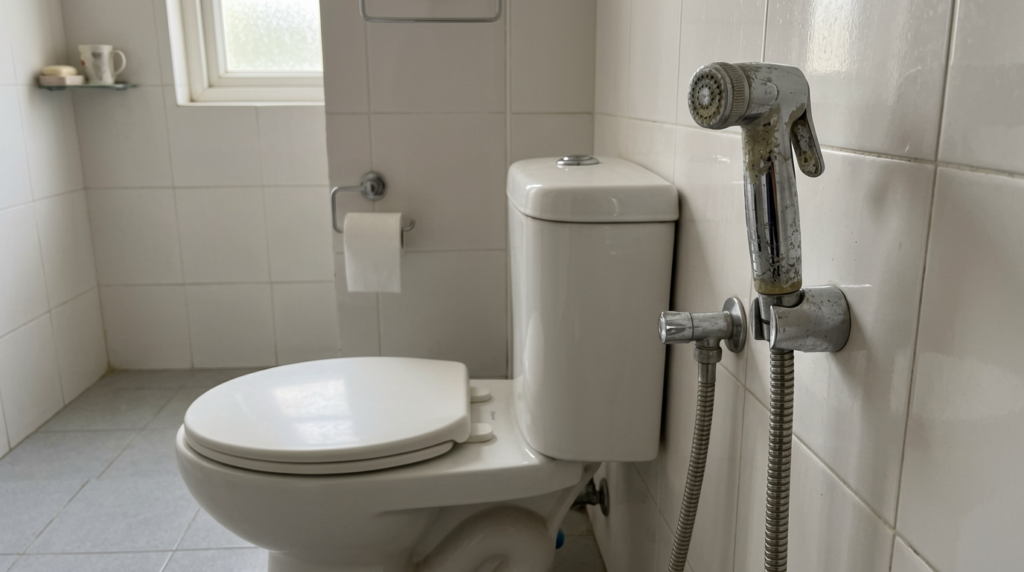
Is your health faucet giving a weak spray? Learning how to clean a health faucet head can fix that fast. A dirty nozzle is very common — especially in Indian homes where hard water leaves white mineral crust that slowly chokes the spray holes. The good news is you do not need a plumber or any special tools. In this blog, you will learn the right way to clean your health faucet head at home, when to replace it, and how to keep it clean for longer. Most people finish in under 30 minutes. Let’s get started. Why Does a Health Faucet Head Get Dirty or Clogged? Your health faucet head deals with a lot every single day. It collects dirt and clogs over the years. Here are the main culprits: The biggest culprit in the majority of Indian homes is hard water deposits on the surface of taps. Cities like Delhi, Lucknow, and Ahmedabad have water that carries heavy minerals. Once this water dries up on the nozzle, it leaves a white or yellowish crust behind, and that crust slowly chokes the small spray holes. Soap scum blocks holes from the outside, while mineral deposits clog them from inside. This is exactly why your faucet starts throwing water in odd directions or loses pressure. Signs Your Health Faucet Head Needs Cleaning Check your faucet regularly. These signs tell you it’s time for a clean: If you see any of these signs, clean your faucet head right away. Black spots and a bad smell mean mould — do not delay on those. Things You’ll Need Before You Start Before you even start, grab these easy-to-find items: You probably have most of these already at home. The Basic Cleaning Method for How to Clean Health Faucet Head Whether your spray head is removable or not, the core cleaning method is the same — a vinegar soak followed by a gentle scrub. Here is how to do it. Step 1: Prepare your vinegar solution Mix equal parts white vinegar and warm water. This simple solution works surprisingly well on the white crusty deposits that block your faucet nozzle. For heavy white crust, soak for the full 2 hours. If vinegar alone does not work after two attempts, use a store-bought descaler such as diluted citric acid powder, which is easily available online. White vinegar contains 5 to 8% acetic acid, which dissolves calcium carbonate — the main mineral in limescale. Never use bleach or strong acid on chrome fittings, these strip the finish and cause permanent damage. Step 2: Soak the spray head Submerge the spray head fully in the vinegar solution. For light buildup, 30 to 60 minutes is enough. Not sure if your buildup is light or heavy? Try scraping it with a fingernail — if it comes off easily, it is light. If it is rock-hard, soak for 2 hours. Step 3: Scrub gently Slip on your rubber gloves. Take your soft toothbrush and work it gently across the nozzle. To properly clean the health faucet nozzle holes, use a toothpick to poke through any holes that still look blocked. Never use a metal pin or needle — it bends and tears the tiny holes, ruining the spray pattern completely. Step 4: Rinse and test Turn the faucet on and let the water run hard for 30 seconds. This flushes out everything the vinegar loosened inside. Dry the head with your microfiber cloth once done. Quick Tip: Stand back and watch the spray after rinsing. Even flow and stronger pressure mean your faucet is clean and clear again. If the flow is still uneven after cleaning, the rubber washer inside may need replacing. If Your Head Does NOT Remove Follow the basic cleaning method above with one difference for Step 2: instead of a bowl, use a zip-lock bag. 1. Fill a medium-sized zip-lock bag with the solution of vinegar and warm water. 2. Place the spray head into the bag and dip it into the solution. 3. Secure the bag with a rubber band and squeeze out the air so the solution wraps around every nozzle hole. 4. Leave it to soak, then scrub, rinse, and test as described above. If Your Head Removes Not sure if your head is removable? Try turning it anticlockwise. If it moves, it is removable. A removable head lets you clean every corner properly. 5. Support the faucet pipe with one hand. With the other, turn the spray head anticlockwise. If it is stiff, wrap a dry cloth around the head for a better grip. 6. Drop the spray head into a bowl of the vinegar and warm water solution and soak as per the basic method above. 7. Scrub, rinse, and test as described in the basic method. 8. Turn the head back onto the pipe in a clockwise direction. Hand-tighten well, but do not over-tighten. CAUTION: Look at the rubber washer inside before you screw the head back on. If it looks flat, cracked, or worn out, replace it with a new one. Otherwise, you will end up with a leak. If you want to skip the DIY mix and get straight to a spotless faucet, our Begin Faucet Cleaner is formulated to dissolve limescale fast — no soaking, no guesswork. How to Maintain Your Health Faucet Head Good health faucet maintenance means cleaning on a regular schedule. How often depends on your water type: Water Type Cleaning Frequency Soft Water Every 2–3 months Hard Water Every month Commercial Bathrooms Every 2–4 weeks Not sure if you have hard water? Look for white residue on your taps or kettle, which is the clearest sign. India has many hard water zones across most cities and towns, so for most Indian homes, a monthly clean is the smartest habit to build. A few small habits each week will save you a big cleaning job later: Common Mistakes to Avoid When Cleaning a Health Faucet Head These are the most common mistakes