

Bathroom Grab Bars for Elderly in India | Complete Guide
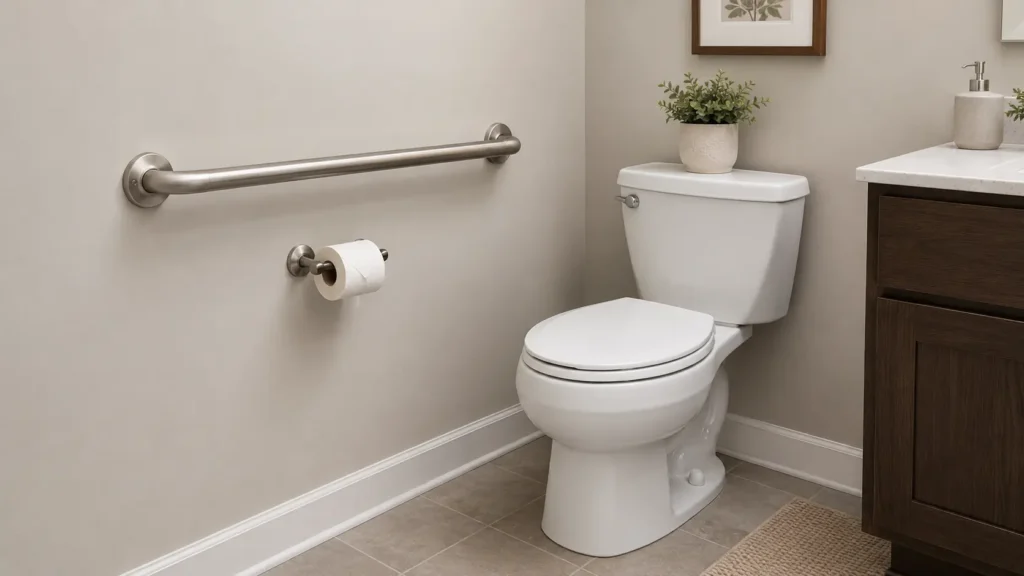
Walk into most Indian bathrooms, and you’ll find the same setup: a bucket and mug near a floor-level tap, wet ceramic tiles underfoot, and nothing on the wall to hold onto. Your parents use this bathroom alone, every morning, often while half-asleep and moving slower than they used to. That combination — standing water, hard tiles, and no support is exactly how most falls at home happen. Not on stairs. Not in the kitchen. In the bathroom. A grab bar is a small fix for a big risk. This guide covers what the data actually shows, where bars need to go, which type and size fit an Indian bathroom, what “correct height” really means here (not just the American number every site copies), and what the whole job realistically costs. Why Elderly Falls in Indian Bathrooms Are So Common This isn’t a guess — it’s backed by India’s largest study on ageing. The Longitudinal Ageing Study in India (LASI), a nationally representative survey of more than 28,000 adults aged 60 and above, found that about 11.6% of them reported a fall. Among older adults already classified as frail, that number climbs to roughly 15%, compared to under 12% for those who aren’t frail. Other regional studies in India have found even wider variation — anywhere from 14% to over 50% depending on the state and how the survey was conducted, which tells you fall risk isn’t evenly spread; it depends heavily on local conditions, age, and health status. The bathroom sits at the centre of this risk because Indian plumbing habits are structurally different from Western ones: None of these are unusual bathrooms; they’re the default layout in most Indian homes, which is exactly why this deserves more attention than it usually gets. Where You Actually Need a Grab Bar A grab bar only helps if it’s where the body actually moves. Think through the real path: door → across the wet floor → commode or bathing area → back to the door. Types of Grab Bars in India No single bar type fits every bathroom. Most homes end up using a mix. Type Best for What to know Straight bars Everyday commode and shower use The default option; mounted horizontal, vertical, or diagonal L-shaped / angled bars Corners, shower entries Combine a vertical and horizontal grip in one unit Folding / flip-up bars Compact Indian bathrooms Hinge flat against the wall when not needed — useful where space is tight Diagonal-mount bars Users with arthritis A 45° angle can follow the arm’s natural arc more comfortably than a flat horizontal bar Suction-cup bars Travel or short-term use only Not rated for full body weight — treat as temporary, never a daily-use substitute for a wall-anchored bar What Size Grab Bar Do You Need? Length should match the spot, not personal preference: As a rule of thumb: shorter near the commode, longer along shower walls and approach paths. Grab Bar Height: India vs. the ADA Numbers Most articles on this topic quote the American ADA standard of 33–36 inches (about 84–91 cm) from the floor, because it’s the most searchable number online. It’s a legitimate reference, but it’s a US commercial-building code, not something written for Indian homes or Indian body proportions. India does have its own accessibility framework: the Harmonised Guidelines and Standards for Universal Accessibility in India, 2021 (issued by the Ministry of Housing and Urban Affairs and CPWD under the Rights of Persons with Disabilities Act, 2016), along with the older IS 4963:1987 from the Bureau of Indian Standards. These are the correct reference points for Indian accessible design, and they exist primarily to guide public buildings rather than private homes. For a home installation, the more useful approach and the one geriatric and occupational therapists generally recommend is to mount the bar level with your parent’s hip height while they’re standing next to it, rather than defaulting to a fixed number pulled from a foreign code. A few centimetres of difference matters far more to the actual user than matching an imported standard exactly. Whatever height you choose, the bar must be anchored into a wall stud, brick, or solid concrete — never into tile or drywall alone. Stainless Steel, Nylon, or Aluminium: Which Material Should You Pick? The right material depends more on your local climate than on price. Material Best For Watch Out For SS304 stainless steel Humid and coastal climates; long-term daily use Higher upfront cost, but holds up where cheaper materials corrode Nylon/composite Budget installs, lighter use, warmer grip for arthritic hands Lower load capacity; can degrade faster in extreme heat Aluminium Lightweight installs Wears faster in high-humidity, coastal conditions For most Indian homes, especially anywhere near the coast or dealing with heavy monsoon humidity — SS304 stainless steel with a textured, non-slip grip is the safer long-term choice, even at a higher initial cost. What Affects Your Total Grab Bar Cost The bar itself is only part of the bill. Two things matter more: Product prices vary widely by brand, material, and load rating, so treat any single figure you see online as a rough guide rather than a fixed number — always confirm current pricing and the certified load rating directly with the seller before buying. As a general pattern, basic bars sit at the lower end of the market, while branded with anti-slip grips and higher load ratings cost noticeably more. It’s usually more cost-effective to budget for a full three-bar bathroom setup at once than to add bars one at a time later. If a parent is recovering from surgery and only needs support for a few months, renting is worth exploring — several home-care and mobility-equipment suppliers in India now offer short-term grab bar rentals as an alternative to buying. Installation and Buying Checklist Most grab-bar failures come down to poor installation, not a weak bar. Before you buy or install: Beyond Grab Bars: Building a Genuinely Fall-Safe Bathroom A grab bar alone doesn’t cover everything.