

How to Clean Limescale From a Shower Head (India Guide)
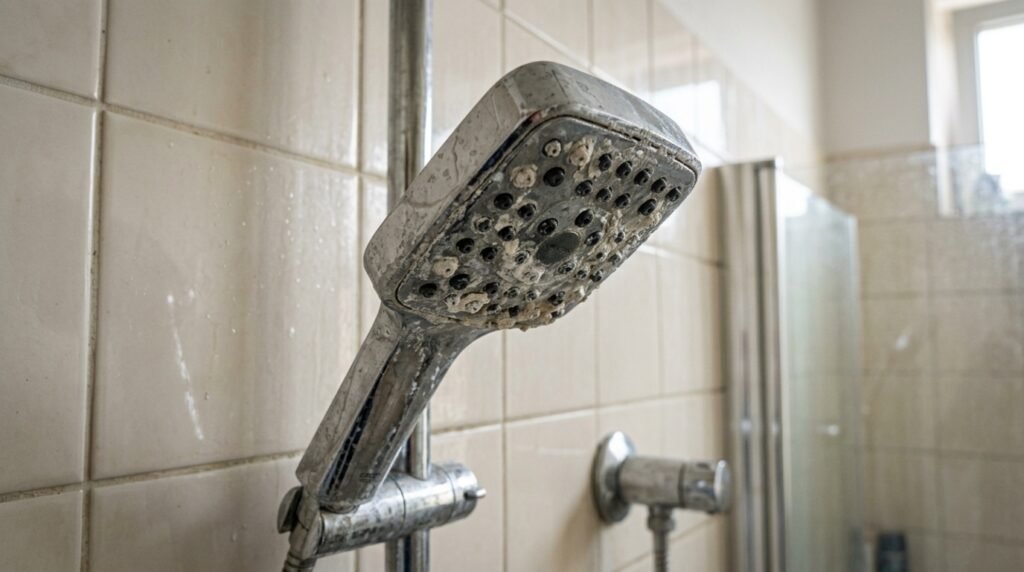
That white, crusty layer on your shower head is limescale. It forms when hard water (water with a lot of dissolved calcium and magnesium) dries on the metal. Every shower leaves a tiny bit behind. Over weeks and months, it builds up and blocks the spray holes. Quick Answer: Remove the shower head if you can, and soak it in white vinegar or citric acid for 30 to 90 minutes. Scrub the nozzles with a soft toothbrush, clear any blocked holes with a pin, then rinse well. If the shower head is fixed, tie a vinegar-filled plastic bag around it instead. Chrome and many plastic shower heads are generally fine with a mild vinegar soak, while brass, gold, matte black, and coated finishes need extra care. What Causes Limescale on a Shower Head? Hard water is common across large parts of India, especially in homes that rely on borewell or groundwater, or that store water in overhead tanks before it reaches the shower. As water dries on the nozzle plate, the calcium and magnesium stay behind as a solid, chalky layer. Your exact water hardness depends on your locality and water source, so it’s worth getting your water tested rather than assuming a fixed number for your city. As a general reference point, IS 10500:2012, the Bureau of Indian Standards specification for drinking water, sets the acceptable limit for total hardness at 200 mg/l, with a permissible limit of 600 mg/l where no better source is available. Water at or above these levels tends to leave visible deposits on taps, shower heads, and glass more quickly. Signs Your Shower Head Needs Cleaning You don’t need to inspect it closely to know something is wrong. Watch for: If you notice two or more of these, it’s time to clean. What Tools and Materials You’ll Need to Clean a Shower Head Keep this simple. Most of it is already in your kitchen. How to Clean a Removable Shower Head Taking the shower head off gives you the deepest clean. Here’s how to do it properly. Step 1: Unscrew the shower head. Twist it counter-clockwise by hand. If it won’t budge, wrap a cloth around it and use a wrench so you don’t scratch the metal. Step 2: Rinse off loose dirt under running water before soaking. Step 3: Soak it in vinegar or citric acid. Cover the whole spray plate. Check your finish first (see the next section) before choosing full-strength or diluted vinegar. Step 4: Scrub the nozzles with the toothbrush in small circles, focusing on the edges of each hole. Step 5: Clear blocked holes gently with a toothpick or pin. If your shower head has rubber nozzles, squeeze each one with your fingers first. This alone loosens a lot of surface buildup before you reach for the toothbrush. Can You Use Vinegar on Every Finish? Not always, and this trips up a lot of people. Check your finish before you soak anything. When in doubt, a mild descaling product made for your specific finish is safer than guessing with vinegar. Cleaning a Fixed Shower Head Without Removing It Many wall-mounted, ceiling-mounted, and rain shower heads in Indian bathrooms don’t come off easily. This method works around that. 1: Fill a sturdy zip-lock bag with white vinegar. 2: Slide it over the shower head so the nozzle plate sits fully inside the liquid. 3: Tie it in place with a rubber band or string around the shower arm. 4: Soak for about an hour for light buildup, or three to four hours for heavy buildup. 5: Remove the bag, scrub the plate with a soft brush, and rinse well. 6: Run the shower at full pressure for half a minute to flush out loosened deposits. For brushed brass or matte black fixed heads, including many wide rain shower plates, dilute the vinegar with equal parts water — full-strength vinegar left too long can dull these finishes. How Long Should You Soak a Shower Head Soak time depends more on how much buildup there is than on the exact minute count. Use this as a general starting point, and always follow your manufacturer’s instructions where available: Buildup level General starting point Light (thin white film) 20–30 minutes Moderate (visible crust) 45–60 minutes Heavy (thick, uneven spray) 60–90 minutes, or repeat once Don’t leave delicate or coated finishes soaking “just to be safe.” Longer isn’t always better, and it can damage the surface. Other Ways to Remove Stubborn Limescale If vinegar alone isn’t cutting through heavy deposits, try one of these. Method Best for Note Citric acid solution Heavy mineral deposits Dissolve 1–2 tbsp in 500ml warm water; check compatibility with brass, gold, and coated finishes before use Baking soda paste Surface grime and gentle scrubbing Mix with water into a paste; mildly abrasive, so scrub lightly Manufacturer-approved descaler Heavy buildup Always follow the label’s contact time General bathroom cleaner Everyday grime, not limescale Not made for shower head finishes — don’t rely on it for descaling A quick tip: don’t mix baking soda into your vinegar soak. Vinegar is acidic and baking soda is alkaline, so combining them cancels out the very acidity that dissolves limescale. Use them separately, not together. What Not to Use on a Shower Head A few habits do more harm than good: Shower Head Problems and Quick Fixes Problem Likely cause What to do Uneven spray Partly blocked nozzles Soak and scrub, flex rubber nozzles Weak water flow Mineral buildup inside Descale, then flush thoroughly Water sprays sideways A few blocked holes Clear individual holes with a pin Still weak after cleaning Inlet filter or supply issue Check the mesh filter at the connection point Buildup returns fast Hard water at the source Clean more often, or look at water treatment How Often Should You Clean a Shower Head in India? This depends on your water source more than your city. Borewell water and some groundwater tend to carry more minerals than treated municipal supply,