

Pull-Down vs Pull-Out Kitchen Faucet: Which is Better for Your Kitchen
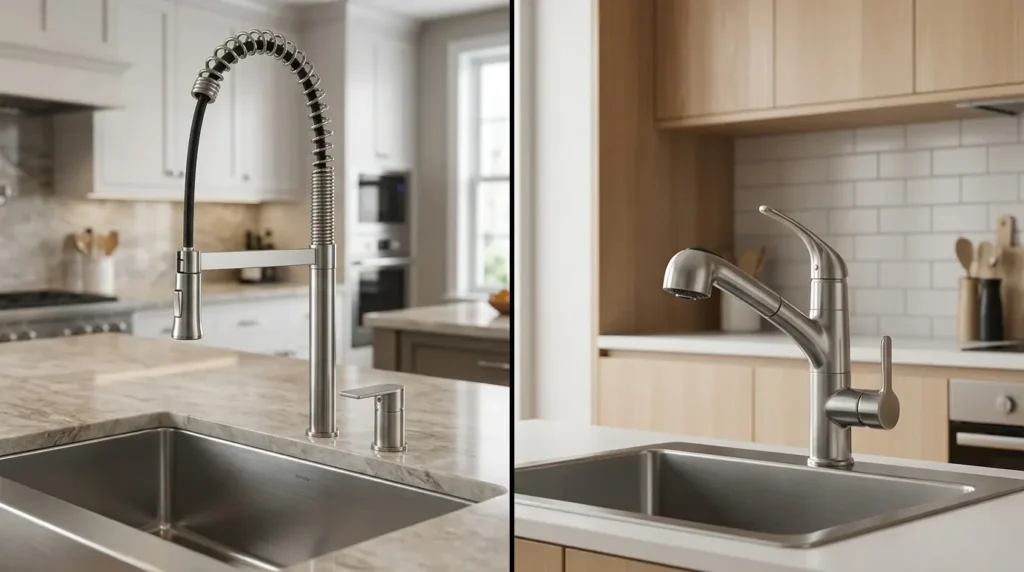
Picking a new kitchen faucet sounds simple until you start comparing options online. Two faucets can look almost the same in photos, yet work in completely different ways once they’re fixed above your sink. This is where most buyers get stuck between a pull-down and pull-out kitchen faucet. The choice matters more than it seems. A tall pull-down faucet can bump into a low cabinet. A pull-out faucet may feel too short for a deep sink full of pots. Get the wrong one, and you deal with splashing, poor reach, or an awkward fit every single day. Quick Answer: A pull-down faucet works best for deep sink and heavy cooking, like washing kadais and pressure cookers. A pull-out faucet works best for compact kitchens, shallow sinks, and low cabinets above the sink. Your sink depth, kitchen size, and cooking habits decide the right pick. Still not sure which one fits your kitchen? Let’s break it down What is the Difference Between a Pull-Down and Pull-Out Faucet? A pull-down faucet has a tall, curved spout. The spray head pulls straight down into the sink. It suits deep, single-bowl sinks and gives you room to wash large vessels. A pull-out faucet has a shorter spout. The spray head pulls out toward you instead of down. It works well in small kitchens and sinks with low cabinets above them. Feature Pull-Down Pull-Out Spout height Tall, high-arc Short, low profile Spray movement Down into the sink Out toward you Best sink type Deep, single-bowl Shallow or small Overhead space needed More Less Kitchen style Modern, bold Compact, simple Pros and Cons of Pull-Out and Pull-Down Kitchen Faucet Splashing and reach depend more on the model than the faucet type. Here’s an honest look at both. Point Pull-Down Pull-Out Washing large vessels Easier, more room Harder, less room Splash control Better in deep sinks Better in shallow sinks Reach Strong vertical reach Strong horizontal reach Fits under low cabinets No Yes Design options More finishes and spray modes Fewer, simpler options Rinsing on the counter Not ideal Very convenient Which Faucet Suits Your Indian Kitchen: Pull-Down or Pull-Out Match your kitchen setup to the right faucet using this table. Your Kitchen Better Choice Deep single-bowl sink Pull-down Small or shallow sink Pull-out Low cabinet above the sink Pull-out Frequent kadai and pressure cooker washing Pull-down Compact 1BHK or 2BHK kitchen Usually pull-out Large modular kitchen Usually pull-down Sink placed under a window Often pull-out Double-bowl sink Depends on spout reach Filling vessels on the counter Pull-out For double-bowl sinks, the real factor is how far the spout swings, not the faucet type. A pull-down with good swivel range can cover both bowls just as well as a pull-out. Which One Should You Buy: Pull-Down or Pull-Out Kitchen Faucet If you are still unsure after the tables above, let your daily routine settle it. Think about what you do at the sink most often, not what looks best in the showroom. Someone who cooks large family meals daily has different needs than someone who mostly rinses cups and plates. Final verdict: For large Indian kitchens with deep single-bowl sinks, go with a pull-down faucet. For compact kitchens, shallow sinks, or sinks under a window or low cabinet, a pull-out faucet is the safer bet. Price Range in India Prices change with brand, finish, and features. Pull-down faucets often cost a little more, mainly because of the taller build and extra spray modes, though this varies by brand and model. At the entry level, the price gap between the two types is usually small. What to Check Before You Buy Pull-Down or Put-Out Kitchen Faucet Common Mistakes to Avoid When Buying Choosing based only on looks. A tall, striking faucet may not fit under your cabinet once it’s installed. Can You Replace a Pull-Out Faucet With a Pull-Down Faucet? Yes, in most cases. You do not need to replumb your kitchen. The real thing to check is physical fit, not plumbing. Before you swap, check: If the fit works, a plumber can usually handle the swap in a single visit. Final Thoughts There is no single winner in the pull-down vs pull-out kitchen faucet debate. A pull-down kitchen faucet suits deep sinks, large cookware, and bigger modular kitchens. A pull-out kitchen faucet suits shallow sinks, low cabinets, and compact 1BHK or 2BHK homes. Before you buy, measure your sink depth, check the space above your sink, and think about how often you wash large vessels. Match these to the tables above, and the right kitchen faucet becomes an easy pick, not a guessing game. Frequently Asked Questions Which is Better, Pull-Down or Pull-Out Kitchen Faucet? It depends on your sink and kitchen size. Pull-down suits deep sinks and heavy cooking. Pull-out suits small kitchens and shallow sinks. Do Pull-Down Faucets Splash More Than Pull-Out Faucets? Not always. Splashing depends on sink depth, water pressure, and spray mode, not just the faucet type. Which Kitchen Faucet is Easier to Clean: Pull-Down or Pull-Out? Both are easy to clean. Wipe the spray head with a soft cloth weekly to stop mineral buildup, especially in hard water areas. Which Kitchen Faucet Lasts Longer? Faucet life depends on build quality, not the type. Brass bodies and ceramic cartridges outlast cheaper materials in both styles. Does the Faucet Type Work with an RO or Water Purifier Connection? Faucet type is not the deciding factor here. Most RO and water purifier systems use their own separate tap, not the main kitchen faucet. What matters is whether your countertop and sink have enough holes for the main faucet, the RO tap, and a soap dispenser, if you want all three. Does the Faucet Type Affect My Water Bill? Not directly. Water use depends on the flow rate and spray mode, not whether it is pull-down or pull-out. Check the flow rate in the product details. Which Faucet is Better for a Family that Cooks a Lot? A pull-down faucet usually works better. It