

Pop-Up Waste Coupling Types, Price, and Brands
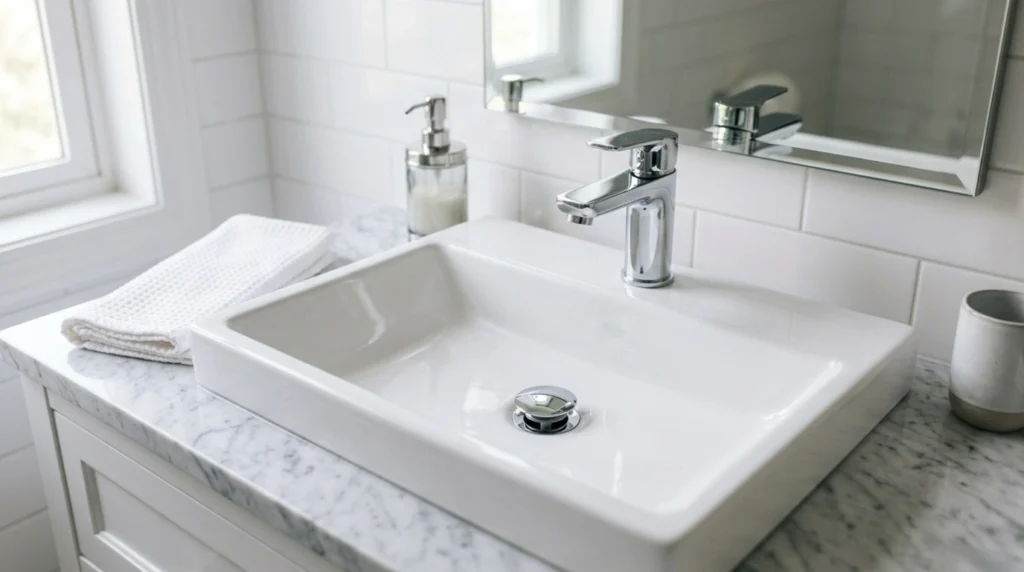
Gone are the days of rubber plugs and rusty chains in your bathroom sink. Today, the pop-up waste coupling does the same job but smarter, cleaner, and with one push. A waste coupling is the fitting that connects your basin or bathtub drain to the pipe below. You find it in countertop basins, wall-mount basins, pedestal basins, and bathtubs across Indian homes. But not all waste couplings work the same way. Some pop up with a push. Others use a rod or a click button. Each type suits a different basin style and budget. So whether you are renovating your bathroom or picking fittings for a new home, this guide covers everything. You will find types, sizes, brands, and prices all in one place. How Does a Pop-Up Waste Coupling Work? A pop-up waste coupling opens and closes your drain without a plug or chain. You activate it from above, and a stopper inside the drain moves up or down. Here is how the parts connect. A lift rod sits behind your tap. It connects to a pivot rod running horizontally inside the pipe. That pivot rod pushes the stopper up or down as you move the lift rod. Also, check if your basin has an overflow hole. Basins with an overflow slot need a waste coupling that has an overflow channel built in. A standard one will not fit correctly. In India, you will find three activation types: In the Indian market, you’ll primarily come across two types: click-clack (push-button) pop-up couplings, which are by far the most common in countertop and wall-mount basins, and full-thread or knob-operated variants used in older or more basic setups. Lever-operated couplings, where a rod behind the tap controls the stopper, exist but are largely limited to imported fittings or very high-end installations. If you’re buying locally, click-clack is almost certainly what you’re looking for. Waste Couplings Types – Material, Finish & Size Waste couplings are available in different materials, finishes, and sizes. Picking the wrong one means leaks, rust, or a poor fit; so each detail matters. Material Solid brass waste couplings handle hard water best and last the longest. Stainless steel is rust-proof, mid-range in price, and works well in humid Indian bathrooms. ABS or PVC couplings cost the least but wear out faster; they are fine for guest bathrooms with light use. Finish The finish you pick should match your tap and bathroom fittings. CP chrome is the most common and easiest to clean. But gold, glossy, matte black, rose gold, and ceramic top finishes are now widely available in India for premium bathrooms. Size and Shank Length This is the detail most buyers miss. Getting the wrong shank length means the coupling will not reach your drain pipe. Size Use Case 32mm / 1.25″ Wash basins — countertop, pedestal, wall-mount 38mm / 1.5″ Kitchen sinks and bathtubs Shank lengths available in India: 3″, 5″, 6″, 7″, and 9″. Longer shanks fit thick countertop basins where the basin wall is deeper. Note: Always measure your basin thickness before ordering online. A 3″ shank will not reach the nut on a 60mm thick countertop basin; you will need at least a 5″ or 6″ shank. Pop-Up vs. Traditional Waste Coupling For home and hotel bathrooms, pick a pop-up waste coupling every time. For high-traffic public washrooms, a traditional waste coupling is the smarter, lower-maintenance choice. Feature Pop-Up Waste Coupling Traditional Waste Coupling Ease of use One push or press Manual plug insertion Look Sleek, no visible plug or chain Basic, utilitarian Debris build-up Hair can collect under the stopper Open drain, easy to clear Maintenance Needs occasional rod adjustment Almost zero moving parts Cost ₹300 – ₹2,500+ ₹40 – ₹400 Best for Homes, hotels, premium bathrooms Public washrooms, high-traffic areas Traditional waste couplings win on one thing — simplicity. Fewer parts mean fewer things that break. So in a busy airport washroom or a school toilet block, they make sense. But in your home or a hospitality project, the pop-up wins on every other count. Brands to Know Before You Buy The brand you pick affects more than just price. It decides your warranty coverage, spare part availability, and how well the finish holds up in hard water over time. Entry to Mid Range Hindware is a reliable starting point and also widely available offline and priced for standard residential bathrooms. Ruhe, Krysstal, and Bassino are design-led brands offering PVD finish options at mid-range prices. Mid to Premium Range Begin Faucets makes solid brass pop-up waste couplings in shank sizes of 3″, 5″, 6″, and 9″. They cover chrome and gold finishes, plus a ceramic pop-up variant for premium countertop basins. Their couplings fit countertop, wall-mount, and pedestal basins. You can browse the full range at Jaquar remains one of the most recognized names in Indian bathrooms, with a wide finish range and strong after-sales infrastructure across the country. The brand advertises a 10-year warranty, though coverage varies by product category. CERA is equally worth considering, especially if you’re buying from a physical store. Most mid-size plumbing and sanitary showrooms stock it. Not the flashiest option, but reliable and easy to find spare parts for. Luxury Tier Kohler and Grohe are global brands. They offer great build quality, but at a considerable price premium. Tip: See if the brand sells spare parts separately. A broken pivot rod should not mean replacing the entire waste coupling. Pop-Up Waste Coupling Price in India A pop-up waste coupling in India starts at under ₹100 and goes beyond ₹2,500 for premium branded options. Material and finish drive most of the price difference. Tier Material Price Range Budget ABS / PVC ₹50 – ₹200 Mid-Range Brass chrome / Stainless steel ₹300 – ₹800 Premium Ceramic top / PVD / Branded brass ₹800 – ₹2,500+ Five Factors Push the Price Up or Down How to Choose the Right Waste Coupling for Your Bathroom The right waste coupling depends upon your basin type, countertop thickness, and water
Waste Coupling for Kitchen Sink: Types, Sizes & Materials
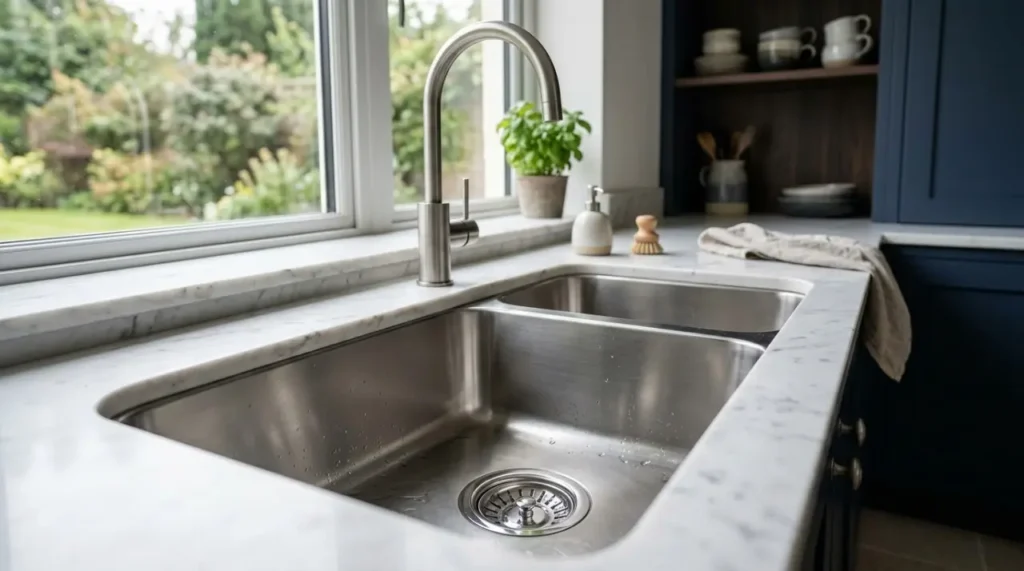
When you’re renovating your kitchen, every fitting matters, including the one most people overlook. A waste coupling for a kitchen sink is the connector that joins your sink’s drain outlet to the waste pipe running into your wall or floor. It sounds simple. It isn’t. Most buyers pick the first one they see at the hardware store. That’s usually the wrong call. There are multiple types, at least three common size standards, and material choices that directly affect how long your fitting lasts. This guide walks you through everything — types, sizes, materials, and how to pick the right waste coupling for your specific kitchen setup. What is a Waste Coupling for a Kitchen Sink? Most people think the waste coupling is just the drain plug or the strainer sitting at the top of the sink. It is not. The waste coupling is the fitting that connects your sink’s drain outlet to the waste pipe system beneath it. It does two things. First, it gives wastewater a clear exit path out of your sink. Second, it creates an airtight seal that blocks sewer gas from rising back up through your drain. The fitting has four main parts. The flange sits on top, covering the drain hole from above; this is the part you actually see. Underneath the sink, the threaded body grips the fitting securely in place. Between the two, a rubber washer does quiet but critical work: it presses against the sink base and stops water from finding a way through. The locking nut tightens from below to secure the whole assembly in place. One thing worth knowing: the waste coupling is not the same as the P-trap. The P-trap is the curved pipe you see lower down, and it serves a different function entirely. Because kitchens handle grease, food debris, and hot water daily, not every coupling is built for the job, which is why type and material matter. Types of Waste Coupling for Kitchen Sink Not all waste couplings look the same or work the same way. Before you buy, know which type actually fits your sink. 1. Full-Thread Flat Strainer Coupling Walk into any plumbing shop in India, and this is what you will see first. It fits stainless steel single-bowl sinks and has threading running the full length of its body. That full threading is what keeps it locked tight against the drain hole. It also comes with a removable strainer basket, so food debris does not go straight into your pipe. Most options in the market sit between ₹150 and ₹600. 2. Half-Thread Coupling Your sink has a small overflow slot near the top rim? Then this is your type. The threading stops halfway down the body, leaving the lower half open. That gap lets overflow water drain back in without getting blocked. It fits a specific kind of sink, so do not buy this one if your sink has no overflow channel. You will find these priced between ₹200 and ₹700. 3. Pop-Up Waste Coupling This one has a lever or knob that opens and closes the drain. No bending down, no pulling out a stopper by hand. It suits premium kitchen setups where ease of use matters. That said, kitchens with heavy daily food waste can clog the pop-up mechanism faster than you expect. Plan to spend between ₹400 and ₹1,200 for a decent unit. 4. Square Waste Coupling Granite and quartz composite sinks do not always have round drain holes. Many come with square cutouts, and the standard size you will see is 90x90mm. These couplings usually ship as part of the composite sink package, but if you are buying separately, confirm the cutout size first. Prices generally fall between ₹350 and ₹900. 5. Y-Coupling / Dual Outlet Two bowls, one drain pipe. That is the problem this type solves. It also works when your dishwasher drain needs to connect to the same sink outlet. Two inlets feed into one waste pipe, which keeps things tidy under the sink cabinet. Brass variants cost between ₹300 and ₹800. Quick Decision Shortcut: Waste Coupling Size and Material: What to Know Before You Buy Size is where most buying mistakes happen. Here is what you need to check before ordering anything. Drain hole shape: Your sink has either a round or a square drain hole. Do not assume, look at it. Round drain holes on Indian stainless steel sinks typically measure between 38mm and 45mm. Most single-bowl SS sinks from brands like Futura, Carysil, and Franke sit at 38mm to 40mm. Check the product sheet before buying. Square drain holes follow a standard 90x90mm cutout with a tolerance of plus or minus 4mm. These are almost always found on granite or quartz composite sinks. Waste pipe outlet at the wall or floor side is nearly always 40mm (1.5 inches) for kitchen sinks. Never use a 32mm bathroom basin coupling here. The pipe diameter is different, and the connection will not hold under the kitchen water volume. Measure your drain hole before ordering. A 2mm mismatch means a permanent micro-leak. Choosing the Right Material and Finish Material decides how long your fitting lasts. Here is a straight comparison: Material Best For Price Range Lifespan PVC Cold-water utility sinks ₹80–₹250 2–4 years SS 304 All Indian kitchen sinks ₹350–₹900 8–12 years Brass Premium and heavy-use setups ₹700–₹1,800 10–15 years PVD Finish Luxury and modern kitchens ₹1,200–₹3,500 10+ years PVC degrades with repeated boiling water exposure. Brass holds threads better than SS but costs more. For any Indian kitchen sink, SS 304 is the right call. On finishes, Chrome works with most taps and is the standard choice. Matte or Gunmetal suits modern flat-panel kitchens. Matte Black PVD is scratch-resistant and outlasts standard chrome plating. Rose Gold PVD sits in the luxury segment and is mostly a design choice. How to Choose the Right Waste Coupling for Your Kitchen Sink Buying the wrong coupling costs you twice — once at purchase, once when it leaks. Run