

Rain Shower vs Normal Shower: Which Should You Pick?
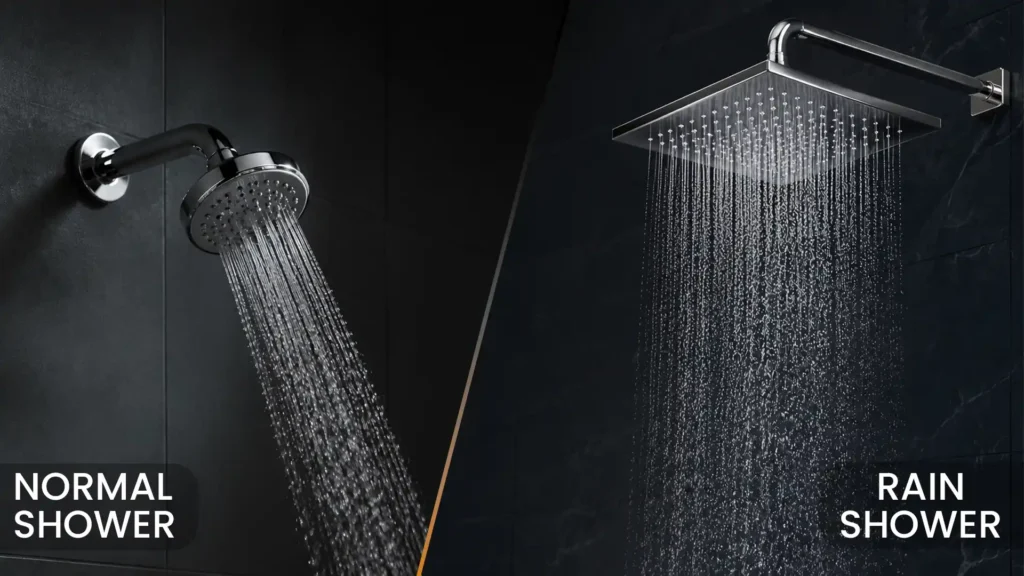
You’re standing in a showroom, staring at two very different showerheads, and somehow the one that costs more doesn’t feel like an obvious win. The rain shower vs normal shower debate comes up in almost every bathroom renovation. Both look great in photos. But photos don’t show you water pressure, installation costs, or how your back feels after a long day. Choosing the wrong one can mean wasted money or a shower you regret every morning. This blog covers all the important things like cost, pressure, health benefits and installation. There are no confusing terms and no guesswork. Just clear, honest information to help you make the right call for your bathroom and your budget. What is a Rain Shower and How Does It Work? A rain showerhead is basically a large, flat head that sits above you and showers water evenly over your body from all sides. Most models are between 8 and 12 inches wide. Some go even larger. The water flows straight down from above, just like rain falling from the sky. That’s exactly where it gets its name. These showerheads are generally mounted on the ceiling or on a long overhead arm. This type of shower allows water to fall vertically, hitting your shoulders, head, and back simultaneously. The flow is wide and gentle, not a strong, focused stream. Many homeowners exploring the rain shower vs normal shower choice are drawn to this style for its calm, spa-like feel. It turns a regular rinse into something that actually feels relaxing. What is a Normal Shower and How Does It Work? You’ll find a normal showerhead in most homes across the country. It’s smaller, usually around 3 to 5 inches wide, and mounts directly on the wall. The water comes out in a focused stream aimed at your body from the side. Most standard showerheads let you switch between spray settings — wide spray, massage, mist, or a strong single stream. That flexibility is one reason they’ve stayed popular for decades. The controls are simple. All you do is twist the knob, set the angle, and you’re good to go. No special installation, no ceiling work. For anyone just starting the rain shower vs normal shower research, this is the baseline. It’s reliable, affordable, and works well in almost any bathroom size or layout. Rain Shower vs Normal Shower: Key Differences Attribute Rain Shower Normal Shower Sprayer Head Dimension 8–12 inches or larger 3–5 inches Type of Water Sprayed Wide and gentle Narrow and concentrated Water Pressure Low and gentle pressure High pressure Positioning Mounted on the ceiling or overhead arm Wall mounted Water Consumption 2–5 gallons per minute 1.5–2.5 gallons per minute Suitable For Lavish bath and relaxation Quick showers It is safe to say that the main criteria for deciding between a rain shower vs normal shower are practical aspects and personal experience. Rain showers are lush, but they use more water and take more setup. Normal showers are straightforward, water-efficient, and fit almost any bathroom without extra work. Knowing these basic differences makes every other decision in this blog much easier to follow. Water Pressure: Rain Shower vs Normal Shower Water pressure matters more than most people think when picking a showerhead. Rain showers spread water across a wide surface area. That means the pressure at each nozzle is softer and more spread out. The result is a gentle, calm flow. But here’s the catch – if your home already has low water pressure, a rain showerhead can feel like a light drizzle. Not exactly refreshing. Normal showers work differently. The smaller head concentrates water into a tighter stream, which naturally feels stronger. Most standard showerheads also let you adjust the spray intensity, so you get more control over how the water hits. When looking at rain shower vs normal shower performance, water pressure is often the deciding factor. Check your home’s water pressure before buying a rain showerhead. Anything below 40 PSI may give you disappointing results with a rain showerhead. Installation Process: What Each Shower Type Requires Installation is one of the biggest practical differences in the rain shower vs normal shower decision. Rain Shower Installation: Normal Shower Installation: When you’re remodeling from scratch, setting up a rain shower is something you can handle without too much extra effort. But if you’re upgrading an existing bathroom, a normal showerhead saves you significant time, hassle, and disruption. Cost Comparison: Rain Shower vs Normal Shower Money is usually what makes or breaks a bathroom decision. Here’s a straightforward cost breakdown for the Indian market. Cost Factor Rain Shower Normal Shower Base Model Price ₹3,000 – ₹8,000 ₹500 – ₹2,500 Premium Model Price ₹10,000 – ₹40,000+ ₹3,000 – ₹8,000 Professional Installation ₹2,000 – ₹8,000 ₹500 – ₹1,500 Long-Term Water Bill More expensive monthly Monthly expenses lower Total Budget Needed ₹5,000 – ₹50,000+ ₹1,000 – ₹10,000 The cost gap is real and something to take seriously. Rain showers cost more to install up front and will raise your water bill over time. Normal showers, on the other hand, are affordable from day one. If you’re on a tight renovation budget, a good normal showerhead can give you good performance without raising your cost. Water Consumption: Which Shower Uses More Water? Water usage is something most people overlook until the bill arrives. Rain showers typically use between 7 and 12 litres per minute. That wide, open flow feels amazing, but moves through a lot of water fast. Over a month of daily showers, that adds up to a noticeable difference on your water bill, especially in Indian cities where water charges are rising steadily. Normal showers use around 5 to 9 litres per minute. The focused stream wastes less water while still getting the job done. In the rain shower vs normal shower comparison, normal showers clearly show the more eco-friendly and efficient choice. Rain showers consume roughly 20 to 40 percent more water per session. Now, some manufacturers have developed water-saving rain showerheads that have