

2-in-1 vs 3-in-1 Wall Mixer: Differences & Buying Guide
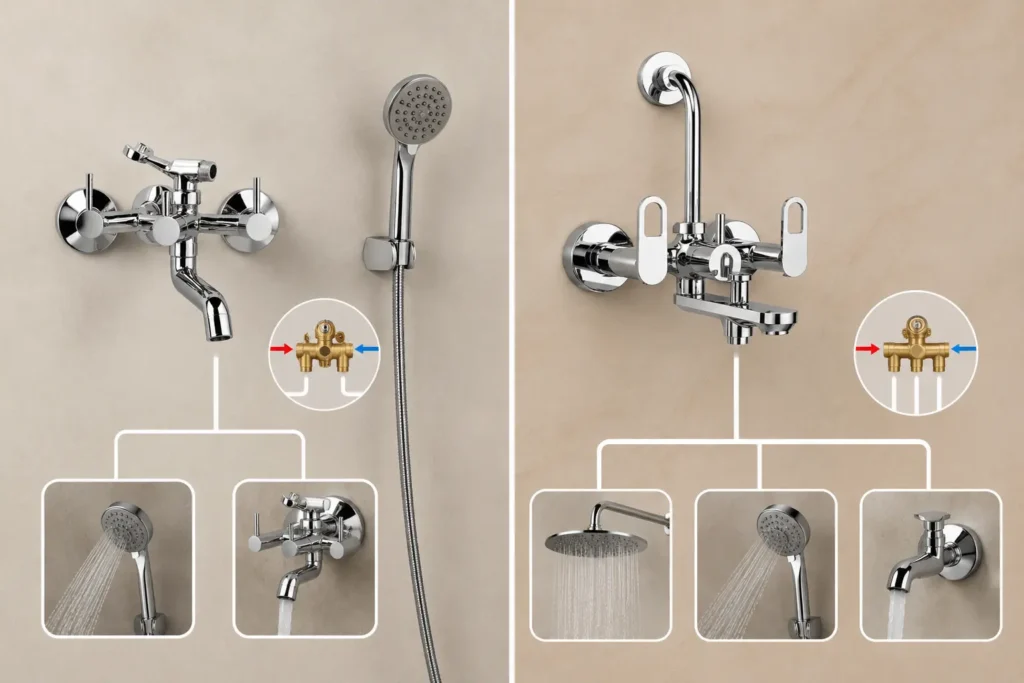
Picking a wall mixer sounds simple until you actually walk into a shop and see the options. Most people are unsure if they need a 2-in-1 or a 3-in-1 model. Here’s the basic idea: a wall mixer is a fitting fixed into your bathroom wall. It lets you control and switch water flow between outlets like your shower head and tap. Now, the tricky part. Both mixers often sit next to each other on store shelves, looking almost identical. But their function is not the same, and that’s exactly why buyers get stuck. This brings us to the real question people search for — 2-in-1 vs 3-in-1 wall mixer. Truthfully, one isn’t superior to the other. It comes down to how many outlets your bathroom has and how you plan to use them. Over the next few sections, we’ll break down how each type works, where they fit best, and what to check before you buy one. What is a 2-in-1 Wall Mixer? A 2-in-1 wall mixer is a wall-mounted fixture with two water outlets. The number of outlets can vary by brand, but it is generally designed for generic bathroom use with a limited number of water connections. It’s a simple design. You turn one handle, and water moves to either the shower or the tap, not both at once. Most homes with a basic bathroom layout use this type. If your bathroom only has a shower and a tap, this mixer covers your needs without extra plumbing work. Because it controls fewer outlets, installation stays straightforward. Plumbers often finish the job faster with this setup. What is a 3-in-1 Wall Mixer? A 3-in-1 wall mixer adds a third outlet for more flexibility. In many models, this is used for an overhead shower or another water outlet, depending on the brand. This third point is where the difference lies. This is a popular option with homeowners who want a rain shower or ceiling-mounted shower head later, even if they don’t install it right away. As a result, this mixer suits bathrooms planned for future upgrades. It also works well in larger bathrooms where multiple water outlets get used regularly. Some people install all three outlets immediately. Others activate the third one later, once they’re ready to add the extra fitting. One thing to keep in mind: outlet configurations aren’t identical across brands. A few manufacturers add different combinations, like a spout instead of a hand shower. Because of this, always check the exact product specifications before you finalize your purchase. What one brand calls “3-in-1” might work slightly differently from another. 2 in 1 vs 3 in 1 Wall Mixer: Complete Comparison Before picking one over the other, it helps to look at both side by side. This wall mixer comparison lays out the practical differences so you’re not guessing at the shop. Feature 2-in-1 Wall Mixer 3-in-1 Wall Mixer Number of water outlets Usually 2 Usually 3 Hand shower compatibility Yes Yes Overhead shower compatibility No Yes Plumbing requirement Needs simpler plumbing May need extra plumbing for the additional outlet Installation complexity Usually easier Usually a little more involved Best suited bathroom size Small to medium Medium to large Maintenance Fewer parts to check Slightly more upkeep Price range in India Approximately ₹1,700–₹6,000 Approximately ₹3,500–₹10,000+ Upgrade flexibility Limited Higher, room for overhead shower later Best suited for Basic bathrooms, tighter budgets Bathrooms where you may add an overhead shower later Actual prices depend on the brand, material, and finish you pick. Exact outlet design, plumbing needs, and naming may differ from brand to brand, so always check the product specification before buying. So what’s the actual difference between 2 in 1 and 3 in 1 wall mixer options once you get past the spec sheet? Mostly, it’s about how much your plumbing has to do. A 2-in-1 keeps things basic. Fewer pipes go into the wall, so the plumber’s job gets done quicker, and repairs later stay cheap too. A 3-in-1, though, plans ahead. Even if you don’t hook up an overhead shower right away, the outlet sits there waiting. That means no breaking tiles again if you decide to add one next year. There’s a maintenance angle too. Less hardware behind the wall usually means less can go wrong, which is partly why 2-in-1 setups tend to need fewer repair visits. None of this makes one option the smarter buy across the board. It really depends on whether your bathroom plumbing needs to stay simple now, or stretch a little further down the road. Which Wall Mixer is Right for Your Bathroom Not every bathroom needs the same setup. Here’s how the choice usually plays out based on your specific situation. This wall mixer buying guide isn’t about finding the best wall mixer for bathroom use in general. It’s about matching the mixer to your actual layout, plans, and budget. How to Choose the Right Wall Mixer Picking between 2-in-1 and 3-in-1 covers is just part of the decision. A few other things determine whether the fitting actually lasts once it’s installed. Wrapping It Up At its core, the 2 in 1 vs 3 in 1 wall mixer decision comes down to how many outlets your bathroom actually needs right now, and later. A 2-in-1 works well if your plumbing stays simple and an overhead shower isn’t part of your plans. A 3-in-1 suits homes that want that flexibility built in from the start. Before you buy either one, check your existing plumbing layout with a plumber first. This one step can save you from mismatched fittings, extra construction, or costly changes once the mixer is already installed. Frequently Asked Questions Can a 2-in-1 Wall Mixer Be Upgraded to a 3-in-1 Later? Not directly. The body itself only has two outlet points, so upgrading usually means removing the old fitting and installing a new one, along with fresh pipework behind the wall. Does a 3-in-1 Wall Mixer Need Different or Extra Plumbing Work? Yes, in most