A new shower arrives, but it won’t fit the old wall fitting, and the return shipping ends up costing more than the part itself. This is one of the most common problems during bathroom renovations across Indian homes. The buyer picked a good product, but not the right part.
The confusion usually comes down to one thing: people think the shower head and the pipe behind it are the same item. They are not, and mixing them up creates real problems.
Get this wrong, and you’ll deal with poor water flow, mismatched threads, or a fitting that looks out of place.
This guide covers the shower head vs shower arm difference. You’ll also learn how the two parts connect, when each one needs replacing, and what to check before you buy for your bathroom.
Shower Head vs Shower Arm: Key Differences
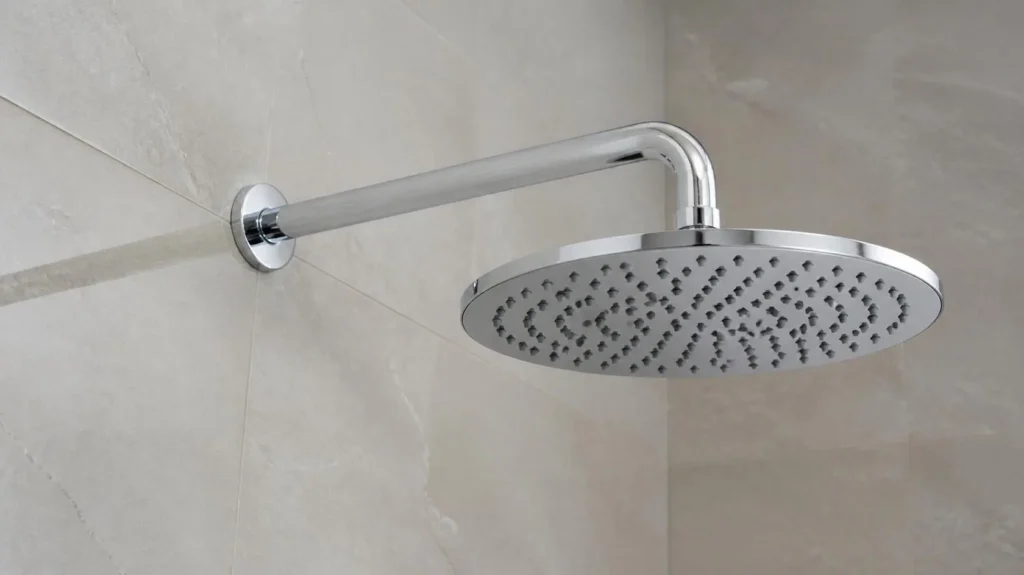
The shower head is the component that sprays water onto your body. The shower arm is the pipe that connects to the wall outlet and supports the shower head. One creates the spray. The other places it at the right height and angle.
| Feature | Shower Head | Shower Arm |
| Purpose | Sprays and distributes water | Connects and positions the shower head |
| Position | Attached at the end of the arm | Fixed to the wall outlet |
| Water Delivery | Controls spray pattern and pressure | Carries water from pipe to shower head |
| Installation Point | Screws onto the shower arm | Screws into the wall’s shower outlet |
| Visible Appearance | Main focal point in the bathroom | Often overlooked, but affects overall look |
| Standard Sizing (India) | Varies by spray face size and thread fit | Typically 6 to 15 inches long |
| Replacement Frequency | Every 3-5 years, depending on use | Every 8-10 years, unless damaged |
| Average Price (India) | ₹300 – ₹5,000+ (varies by type) | ₹150 – ₹1,500 (varies by material) |
| Maintenance | Needs regular cleaning for clogged nozzles | Needs occasional checks for leaks or corrosion |
| Compatibility | Must match arm’s thread size | Must match wall outlet’s BSP thread standard |
| Thread Size | Usually ½” BSP Female | Usually ½” BSP Male |
Note: Prices, lifespans, and sizing figures above are general estimates based on typical market ranges — they vary by brand, city, material, and usage. Check current listings and manufacturer specs before you decide on a model.
How the Shower Head and Shower Arm Work Together
The water takes a simple path to reach you. Here’s the route it follows from the wall to your skin:
- Water comes in through the plumbing pipe behind the wall. It might be hidden or exposed.
- It travels through the shower arm toward the outlet point.
- The water reaches the shower head at the end of the arm.
- Nozzles inside the head break the flow into a spray.
Both parts need to work together for a good shower. A loose joint, wrong angle, or blocked arm can ruin the entire flow. Even a top-quality shower head performs poorly if the arm behind it is damaged or misaligned.
Water flow through the pipe is only half the story. The other half comes down to pressure and spray performance.
When Should You Replace the Shower Head, the Shower Arm, or Both?
Not every shower problem means replacing the whole unit. Sometimes it’s just one part that’s fine and one that needs fixing.
Replace Only the Shower Head
- Water sprays unevenly, even after cleaning the nozzles.
- Nozzles stay clogged despite regular descaling.
- You want new spray modes, like mist or massage settings.
- You’re upgrading to a water-saving model to cut water bills.
Replace Only the Shower Arm
- Rust spots appear on the metal surface.
- Water leaks from the joint where the arm meets the wall.
- The angle sits wrong, and the head no longer reaches you properly.
- Corrosion has weakened the pipe, especially in humid bathrooms.
Replace Both Shower Head and Shower Arm
- You’re doing a full bathroom renovation and starting fresh.
- You’re switching to a rainfall shower, which needs a different arm length.
- The existing plumbing is old and doesn’t match modern fittings.
- You want a matching finish across both parts for a cleaner look.
Knowing which part is failing saves money and avoids unnecessary work. A quick check before buying tells you exactly what to replace.
Choosing the Right Shower Head and Shower Arm for Indian Bathrooms
Getting this choice right isn’t just about picking a nice design. Your water pressure, water quality, and bathroom layout all decide what will actually work in your home.
Water Pressure
Most Indian homes run on overhead tanks. That gravity-fed setup typically delivers somewhere in the range of 0.5 to 1 bar of pressure, sometimes less, depending on tank height and pipe layout.
In apartments, shared plumbing lines make this worse during morning and evening rush hours. A basic shower head handles this fine.
Rainfall panels are trickier, since they generally need closer to 1 to 1.5 bar to spray evenly across the wider surface.
Before buying one, find out what pressure your building actually delivers — a plumber or your building’s maintenance team can usually confirm this.
Hard Water
If your tap water leaves white marks on tiles, you already know about hard water. Those minerals collect inside pipes and shower nozzles over months, slowly choking the flow.
Silicone nozzles handle this better than plastic or metal ones, mainly because the scale doesn’t bond to the surface as easily — you can usually just rub it off.
The arm matters here too, so corrosion-resistant metal is worth the extra cost in mineral-heavy areas.
Plumbing Compatibility
Indian bathroom outlets are mostly built around ½-inch BSP (British Standard Pipe) threads, which is the common plumbing standard used across the country. That said, not every brand sticks to this, particularly some imported ones.
Before you place an order, check the thread size listed by the manufacturer against what’s already fitted on your wall.
Bathroom Size
Small bathrooms feel cramped with a long arm sticking out. Go shorter and keep the fitting close to the wall.
If you have more space to work with, a longer arm gives the shower head room to sit higher, which suits rainfall designs. A quick measurement of your shower area saves a return shipment later.
Material
Steel lasts long and shrugs off rust, but you’ll pay more for it. Brass feels solid and holds up well too, though it’s heavy and needs the occasional polish to keep its shine.
Plastic fittings are the cheapest option and easy to install, but heat and constant water exposure wear them down faster than metal.
Finish
Chrome is still what most people buy, and it goes with almost anything. Matte black and brushed nickel have picked up demand lately for a slightly different look.
Whatever you pick, try to match it with your taps and other fittings already in the bathroom.
Common Installation Mistakes That Reduce Shower Performance
A shower fitting can look perfect and still perform badly. Most of the time, the problem traces back to how it was installed, not the product itself.
- Incompatible Threads: Forcing two different thread types together strips the wall outlet, and you’ll need a plumber to fix it.
- Wrong Arm Length: Throws the whole spray angle off, so water hits your shoulder instead of your back.
- Overtightening: Cracks show up in the arm months later, usually right at the joint.
- Skipping PTFE Tape: This one’s sneaky. The leak doesn’t show up on day one; it shows up three weeks in.
- Poor Wall Sealing: Water creeps behind the tiles slowly, and by the time you notice damp patches, the damage is already done.
- Incorrect Slope: Water sits inside the arm instead of flowing out, which speeds up corrosion from the inside.
- Misaligned Shower Head: Ends up spraying the curtain or the floor tiles more than you.
- Ignoring manufacturer instructions: Every model has its own torque limit, and skipping that spec is how threads get stripped.
Most of these come down to rushing the job. A few extra minutes during installation save a lot of trouble later.
Wrapping It Up
At the end of the day, the shower head vs shower arm question comes down to function. One decides how water sprays out. The other decides where that spray actually lands. Get both right, and your shower feels effortless every single day.
If your existing arm is still in good shape, replacing just the shower head is usually enough. Full renovations, though, often call for swapping both parts together for a clean, matching setup.
Before you decide, browse our shower arm and shower head collection to find fittings built for Indian bathrooms and water conditions.
Frequently Asked Questions
Can I Use Any Shower Head with Any Shower Arm?
Not always. The thread size and type need to match between both parts. If they don’t fit together, you’ll need an adapter or a different arm.
What Size is a Standard Shower Arm in India?
Most arms run between 6 to 15 inches long. The right size depends on your bathroom layout and wall outlet position.
Can a Shower Arm Be Extended If It’s Too Short?
Yes, extension pieces are available for this. They screw in between the wall outlet and the existing arm to add extra length.
Do Rainfall Showers Need a Different Type of Shower Arm?
Often, yes. Rainfall heads usually need an S-shaped or angled arm to position the head correctly overhead.
How Long Does a Shower Arm Usually Last Before It Needs Replacing?
A good quality arm can last 8 to 10 years. Poor water quality or physical damage can shorten this significantly.
Related Products
Explore products related to this article
-
 25%
25%Box Drain with Flip Bowl – 100×450 mm Stainless Steel Floor Drain
Original price was: ₹2,500.00.₹1,875.00Current price is: ₹1,875.00. Add to cart -
58%
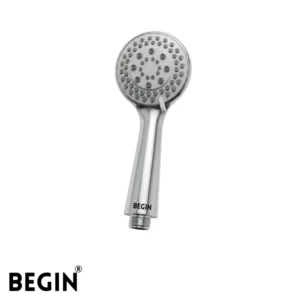
Bonn Hand Shower ABS AB2136 | Begin Faucets
Original price was: ₹2,750.00.₹1,150.00Current price is: ₹1,150.00. Add to cart -
25%
Brass Extension Nipple 1 Inch (25mm) AA0001 – 5pcs | Begin Faucets
Original price was: ₹519.00.₹390.00Current price is: ₹390.00. Add to cart -
25%
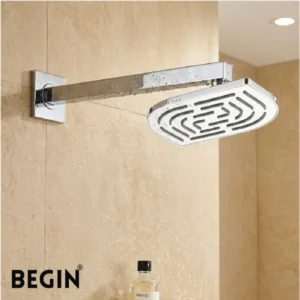
Overhead Shower Leaf Shape Chrome Finish AB3101 | BEGIN Faucets
Original price was: ₹1,400.00.₹1,050.00Current price is: ₹1,050.00. Add to cart