For the best shower head for high pressure, most Indian households prefer a compact hand shower or a fixed wall-mounted head with anti-clog silicone nozzles, focused spray pattern, and standard G1/2 fitting.
Oversized rain shower heads look premium, but they usually need stronger inlet pressure to feel powerful. A smaller nozzle often beats a bigger showerhead when your water pressure is limited.
But the right pick still depends on your water source, your existing pressure level, and your pipe’s fitting size. That’s what we’ll break down next.
Which Shower Head is Best for High Pressure?
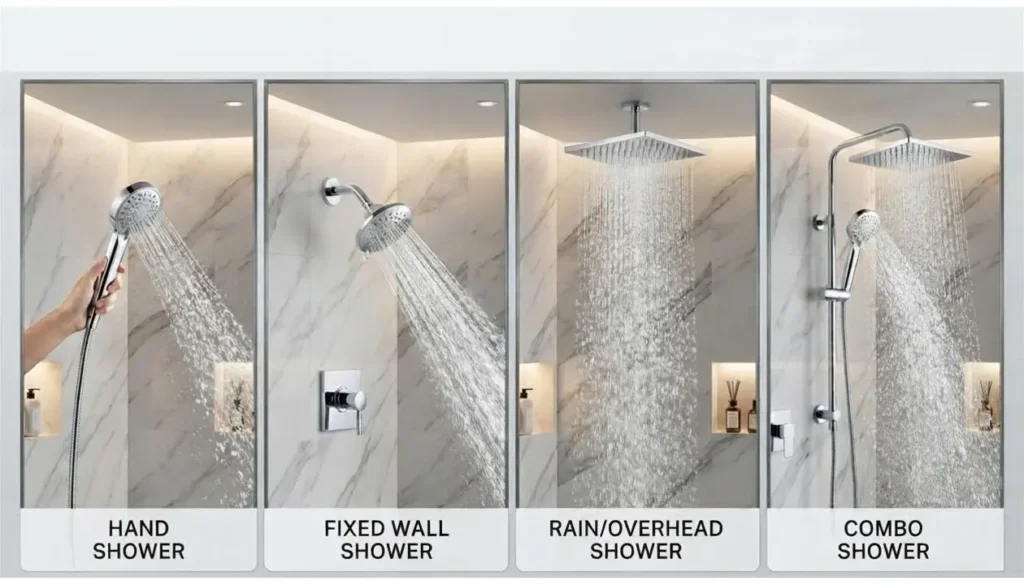
For many Indian bathrooms, a compact hand shower or fixed wall shower beats a large rain shower on felt pressure. That’s because a smaller spray face pushes the same water through fewer holes. So each jet feels stronger, even at a lower flow rate.
Rain and overhead shower heads spread water across a wide disc. That means they need a stronger inlet supply to feel powerful. Without a booster pump, they often feel weak or misty instead.
Your setup matters too. A home with an overhead tank, a booster pump, or a direct municipal line will each behave differently with the same shower head. So always match your choice to your actual water source, not just the shower head’s looks.
| Shower Head Type | Best For | Pressure Suitability | Price Range (India) |
| Hand Shower | Low to medium pressure homes | High (focused spray) | ₹500–₹5,000 |
| Fixed Wall Shower | Standard bathrooms | High (focused spray) | ₹300–₹3,000 |
| Rain/Overhead Shower | Homes with booster pumps | Needs strong inlet pressure | ₹600–₹5,000 (premium sets ₹20,000+) |
| Combo Shower | Homes wanting flexibility | Depends on parts used | Varies by parts used |
What Actually Makes a Shower Head Feel High-Pressure?
Most people confuse pressure with flow rate. But they’re not the same thing.
Pressure is the force with which the water is being pushed through the pipe. It is measured in bar or psi ( pounds per square inch ), or sometimes kPa ( kilopascals ). Flow rate is how much water comes out. It’s measured in LPM (liters per minute). A shower head can have low flow but still feel strong, because pressure and flow do two different jobs.
In India, plumbing references under IS 17429 Part 1:2020 commonly cite around 70 kPa (0.7 bar) as the minimum dynamic pressure recommended at a shower outlet, with 50 kPa (0.5 bar) used as a benchmark in simplified-system contexts. So if your line runs below these levels, even a good will feel weak.
Nozzle count changes the feel too. Picture two heads with the same 9.5 LPM flow: one has 8 holes, the other has 64. The 8-hole head pushes water out faster per hole, so it hits harder, even though total flow is identical.
Marketing labels don’t guarantee any of this. So check the actual LPM rating and nozzle count instead of trusting the box.
Best Shower Head Types for Indian Bathrooms
Not every shower head suits every home. So here’s how the main types stack up for typical Indian water setups.
1. Hand Shower: This is the best choice for homes with medium and inconsistent pressure. You can hold it close to your body, which increases the force you feel. This is why many people look for the best hand shower for high pressure when their building’s supply is inconsistent.
2. Fixed Wall Shower Head: This is a very simple wall-mounted shower head and is often a favorite with buyers in India. It gives a stronger, more focused spray than a wide rain head. So it’s a safe pick for basic bathrooms without a booster pump.
3. Rain Shower Head: A rain shower head only makes sense if your pressure is already strong. Otherwise, it turns into a rain shower for low-pressure disappointment — soft, misty, and slow. Check your pump setup first.
4. Combo Shower: A combo shower gives you both options in one fitting. So you get flexibility without picking just one style.
Matching Your Indian Setup
- Overhead tank with no pressure pump → avoid oversized rain showers
- Apartment with a pressure pump → rain shower becomes realistic
- Hard-water city → prioritize easy-clean, anti-clog nozzles
How to Choose the Right High-Pressure Shower Head
Picking the right shower head takes more than checking the price tag. Here’s what to look at, step by step.
Check Your Water Source First
- Overhead Tank: Pressure depends on tank height. A low tank means weaker flow, so choose a focused-spray head.
- Municipal Line: Pressure can vary by time of day and city zone. Check with neighbors or your building supervisor.
- Booster Pump: This gives you the most flexibility. So even rain showers can work well here.
Check the Operating Pressure
Don’t buy on looks alone. Manufacturers publish pressure specs, usually in bar or psi, right on the product page. So always check the listed spec before you add it to your cart.
Check Fitting Size
Most Indian shower heads use a standard G1/2 (1/2-inch) connection, though this isn’t universal across every brand or import. So always confirm the thread size on the listing against your existing fitting before you buy.
Features That Matter More Than Marketing Claims
- Easy-Clean Silicone Nozzles: These resist limescale, which matters a lot in hard-water cities.
- Swivel Adjustability: Lets you angle the spray without moving the whole fixture.
- Hose Quality: For hand showers, a stiff, kink-resistant hose keeps flow steady.
- Spray Modes: A single strong jet mode is useful. Five decorative modes are often just extra buttons.
- Turbo or Boost Labels: These don’t add real pressure; they just improve the pressure-feel by shaping or concentrating the spray pattern. Unless the product has an actual pump or a verified pressure-compensating design, a “boost” label can’t create water pressure that isn’t already there.
Material and Warranty
- ABS Plastic is cheap and light but wears out faster.
- Brass or Stainless Steel is more expensive but more resistant to corrosion and longer lasting with hard water.
- Always check the warranty period and the availability of service support locally in India.
Why Your Shower Still Feels Weak After Changing the Head
You installed a new shower head, but the water still trickles out. That usually means the real problem sits somewhere else in the pipe.
- Clogged Nozzles: The tiny holes get clogged with minerals in no time.
- Worn-Out Diverter or Mixer: Internal parts are worn out and lose pressure well before the water gets to the showerhead.
- Blocked Filter Screen: The fine mesh in the inlet can become clogged with rust and grit.
- Kinked Hose: A small twist in a hose can cut the flow in half.
- Low Tank Height: Gravity does the work here, so a short tank means weak flow.
- Restrictive Geyser or Mixer: Some water heaters narrow the internal pipe and slow everything down.
- Hidden Flow Restrictor: Many new heads come with a small plastic disc pre-installed to cap output.
- Scaled-Up Pipes: Years of hard water leave limescale that narrows the passage.
A shower head is just one piece of the puzzle. The plumbing behind the wall matters just as much.
Final Thoughts
Picking which shower head is best for high pressure comes down to your home, not the fanciest option on the shelf. A big rain head or a small hand shower can both disappoint if they don’t match your water source. So before you buy, check your tank height, pump setup, and fitting size first.
Ready to choose? Check out Begin Faucets’ shower head collection to find the right fit for your bathroom.
Frequently Asked Questions
Does a Shower Head Really Increase Water Pressure?
A showerhead can’t create pressure that isn’t already in your pipes. It only changes how that existing pressure feels by concentrating water through smaller nozzles.
Is a Rain Shower Head Good for Low Water Pressure?
Not usually, unless you have a booster pump. The wide spray face spreads water thin, so weak supply lines often turn it into a soft drizzle.
Which is Better for High Pressure: Hand Shower or Overhead Shower?
A hand shower usually wins for most homes. You can hold it closer to your body, which makes limited pressure feel much stronger.
Can I Fit a New Shower Head Myself, or Do I Need a Plumber?
Most people can do this themselves with basic tools. Just unscrew the old head, wrap the threads with plumber’s tape, and hand-tighten the new one.
How Often Should You Clean a Shower Head to Have Good Pressure?
Clean every two to four weeks in hard water areas. Soak the nozzle plate in a vinegar solution to dissolve any mineral build-up before the holes clog.
Related Products
Explore products related to this article
-
 25%
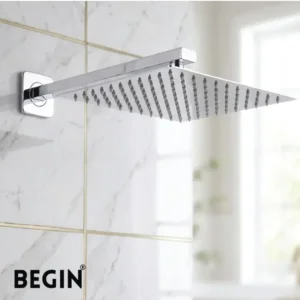
25%Ultra Slim Overhead Shower 12×12 AB3204 – Begin Faucets
Original price was: ₹1,500.00.₹1,125.00Current price is: ₹1,125.00. Add to cart -
25%
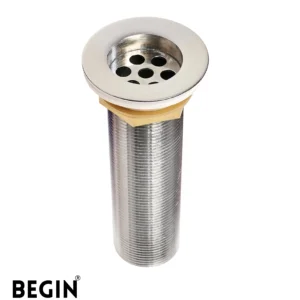
Brass Waste Coupling 6 Inch (32mm) AA0053 | Begin Faucets
Original price was: ₹517.00.₹388.00Current price is: ₹388.00. Add to cart -
25%
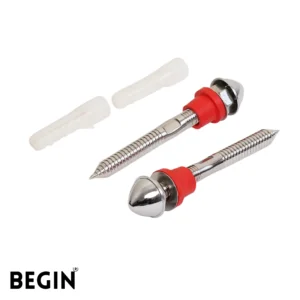
BEGIN SS BRACKET 16MM AE0045
Original price was: ₹617.00.₹463.00Current price is: ₹463.00. Add to cart -
25%
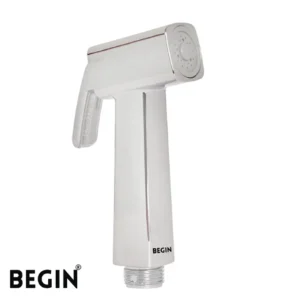
Health Faucet Set Square Shape | ABS Plastic Ss304 | Chrome Finish
Original price was: ₹680.00.₹510.00Current price is: ₹510.00. Add to cart