You’re standing in a showroom, staring at two very different showerheads, and somehow the one that costs more doesn’t feel like an obvious win.
The rain shower vs normal shower debate comes up in almost every bathroom renovation. Both look great in photos.
But photos don’t show you water pressure, installation costs, or how your back feels after a long day.
Choosing the wrong one can mean wasted money or a shower you regret every morning. This blog covers all the important things like cost, pressure, health benefits and installation.
There are no confusing terms and no guesswork. Just clear, honest information to help you make the right call for your bathroom and your budget.
What is a Rain Shower and How Does It Work?
A rain showerhead is basically a large, flat head that sits above you and showers water evenly over your body from all sides. Most models are between 8 and 12 inches wide. Some go even larger.
The water flows straight down from above, just like rain falling from the sky. That’s exactly where it gets its name.
These showerheads are generally mounted on the ceiling or on a long overhead arm. This type of shower allows water to fall vertically, hitting your shoulders, head, and back simultaneously.
The flow is wide and gentle, not a strong, focused stream.
Many homeowners exploring the rain shower vs normal shower choice are drawn to this style for its calm, spa-like feel. It turns a regular rinse into something that actually feels relaxing.
What is a Normal Shower and How Does It Work?
You’ll find a normal showerhead in most homes across the country. It’s smaller, usually around 3 to 5 inches wide, and mounts directly on the wall. The water comes out in a focused stream aimed at your body from the side.
Most standard showerheads let you switch between spray settings — wide spray, massage, mist, or a strong single stream. That flexibility is one reason they’ve stayed popular for decades.
The controls are simple. All you do is twist the knob, set the angle, and you’re good to go. No special installation, no ceiling work.
For anyone just starting the rain shower vs normal shower research, this is the baseline. It’s reliable, affordable, and works well in almost any bathroom size or layout.
Rain Shower vs Normal Shower: Key Differences
| Attribute | Rain Shower | Normal Shower |
| Sprayer Head Dimension | 8–12 inches or larger | 3–5 inches |
| Type of Water Sprayed | Wide and gentle | Narrow and concentrated |
| Water Pressure | Low and gentle pressure | High pressure |
| Positioning | Mounted on the ceiling or overhead arm | Wall mounted |
| Water Consumption | 2–5 gallons per minute | 1.5–2.5 gallons per minute |
| Suitable For | Lavish bath and relaxation | Quick showers |
It is safe to say that the main criteria for deciding between a rain shower vs normal shower are practical aspects and personal experience.
Rain showers are lush, but they use more water and take more setup. Normal showers are straightforward, water-efficient, and fit almost any bathroom without extra work.
Knowing these basic differences makes every other decision in this blog much easier to follow.
Water Pressure: Rain Shower vs Normal Shower
Water pressure matters more than most people think when picking a showerhead.
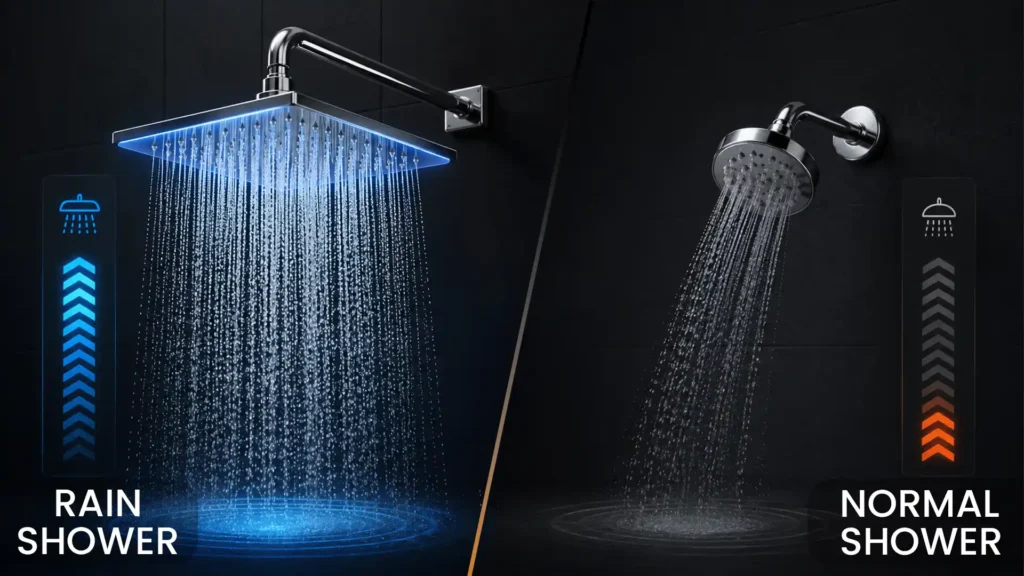
Rain showers spread water across a wide surface area. That means the pressure at each nozzle is softer and more spread out. The result is a gentle, calm flow.
But here’s the catch – if your home already has low water pressure, a rain showerhead can feel like a light drizzle. Not exactly refreshing.
Normal showers work differently. The smaller head concentrates water into a tighter stream, which naturally feels stronger.
Most standard showerheads also let you adjust the spray intensity, so you get more control over how the water hits.
When looking at rain shower vs normal shower performance, water pressure is often the deciding factor.
Check your home’s water pressure before buying a rain showerhead. Anything below 40 PSI may give you disappointing results with a rain showerhead.
Installation Process: What Each Shower Type Requires
Installation is one of the biggest practical differences in the rain shower vs normal shower decision.
Rain Shower Installation:
- Needs ceiling mounting or a long overhead extension arm.
- May require new plumbing lines run through the ceiling or walls.
- Best planned during a full bathroom remodel, adding it later gets expensive.
- Usually needs a licensed plumber or contractor.
- Not a DIY project for most homeowners.
Normal Shower Installation:
- Mounts directly onto your existing wall pipe.
- Works with your current plumbing, no major changes needed.
- Most homeowners can swap one out in under 30 minutes.
- A plumber can install it in a single visit if needed.
- Works in any bathroom size without structural changes.
When you’re remodeling from scratch, setting up a rain shower is something you can handle without too much extra effort.
But if you’re upgrading an existing bathroom, a normal showerhead saves you significant time, hassle, and disruption.
Cost Comparison: Rain Shower vs Normal Shower
Money is usually what makes or breaks a bathroom decision. Here’s a straightforward cost breakdown for the Indian market.
| Cost Factor | Rain Shower | Normal Shower |
| Base Model Price | ₹3,000 – ₹8,000 | ₹500 – ₹2,500 |
| Premium Model Price | ₹10,000 – ₹40,000+ | ₹3,000 – ₹8,000 |
| Professional Installation | ₹2,000 – ₹8,000 | ₹500 – ₹1,500 |
| Long-Term Water Bill | More expensive monthly | Monthly expenses lower |
| Total Budget Needed | ₹5,000 – ₹50,000+ | ₹1,000 – ₹10,000 |
The cost gap is real and something to take seriously. Rain showers cost more to install up front and will raise your water bill over time.
Normal showers, on the other hand, are affordable from day one. If you’re on a tight renovation budget, a good normal showerhead can give you good performance without raising your cost.
Water Consumption: Which Shower Uses More Water?
Water usage is something most people overlook until the bill arrives.
Rain showers typically use between 7 and 12 litres per minute. That wide, open flow feels amazing, but moves through a lot of water fast.
Over a month of daily showers, that adds up to a noticeable difference on your water bill, especially in Indian cities where water charges are rising steadily.
Normal showers use around 5 to 9 litres per minute. The focused stream wastes less water while still getting the job done.
In the rain shower vs normal shower comparison, normal showers clearly show the more eco-friendly and efficient choice. Rain showers consume roughly 20 to 40 percent more water per session.
Now, some manufacturers have developed water-saving rain showerheads that have flow restrictors fitted into them. This could actually be a pretty good choice depending on your situation.
Health Benefits: Rain Shower vs Normal Shower
A good shower isn’t just about getting clean, it can genuinely make your body feel a lot better.
Rain Shower Health Benefits:
- The wide, gentle flow helps relax tight muscles after a long day.
- Falling water creates a mild massage effect on your shoulders and back.
- Steam buildup under a rain shower can ease nasal congestion.
- With frequent use, it might aid in improving blood flow within the body.
- It reduces the feeling of tension, particularly when your day was stressful from work.
Normal Shower Health Benefits:
- The stream concentrates on particular areas of soreness on your body.
- The adjustable spray works well for cleaning your scalp and washing your hair at the same time.
- A quick rinse is all it takes to feel refreshed, which saves you a good amount of time.
When considering a comparison of rain shower vs normal shower benefits, it is safe to state that each of them has advantages. The choice is dependent on your body’s needs.
Bathroom Size and Aesthetics: Which Shower Fits Your Space?
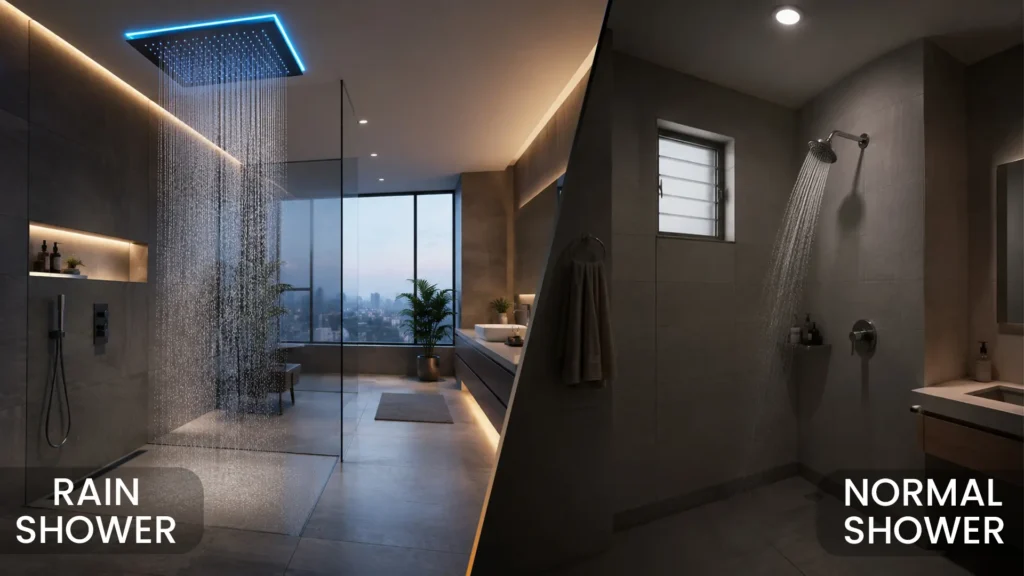
Your bathroom size plays a bigger role in this decision than most people realize.
Rain showers need room, both overhead and around you. They work best in larger bathrooms with decent ceiling height. When the space is right, they look stunning.
That wide, flat showerhead mounted on the ceiling gives any bathroom an instant spa-like feel. Many premium Indian apartments and luxury homes now feature this design for exactly that reason.
Normal showers fit almost anywhere. Got a compact 4×6 bathroom in a Mumbai flat or a mid-sized bathroom in an independent house? A standard showerhead handles it without any trouble.
When comparing rain shower vs normal shower aesthetics, rain showers clearly win on visual appeal, but only when the space supports it.
Forcing a large rain showerhead into a small bathroom often looks off and feels uncomfortable to use daily.
Maintenance and Longevity: Which is Easier to Upkeep?
Cleaning a showerhead isn’t something people think about until it stops working properly. Hard water is common across many Indian cities, and mineral buildup is a real problem for both types.
Rain Shower Maintenance:
- More nozzles mean more spots where calcium and mineral deposits collect.
- Needs cleaning every 2–3 weeks in hard water areas like Delhi or Bangalore.
- Silicone nozzles make it easier; you just rub them to clear the buildup.
- Harder to deep clean due to the larger surface area.
Normal Shower Maintenance:
- Fewer nozzles means less buildup, faster clean up.
- Easy to soak in a vinegar solution overnight for deep cleaning.
- Replacement parts are readily available and cheap all over India.
In the rain shower vs normal shower upkeep comparison, normal showers are simply less work. Both last longer when made from stainless steel or brass, but it’s worth checking before you buy.
Which is Better: Rain Shower or Normal Shower?
Honestly, there’s no single right answer here, and that’s okay.
If you love long, relaxing showers after a tiring day, have a spacious bathroom, and don’t mind spending a little more, a rain shower is a genuinely satisfying upgrade. It changes how your bathroom feels every single morning.
If you want something reliable, easy to maintain, budget-friendly, and effective; a normal shower delivers exactly that without any compromise. Most Indian homes work perfectly well with a good-quality standard showerhead.
The rain shower vs normal shower decision really comes down to your lifestyle, your bathroom space, and your budget. Neither choice is wrong. One just fits certain needs better than the other.
Pick the one that matches how you actually live, not just how you want your bathroom to look in photos.
Final Thoughts
The rain shower vs normal shower decision is simpler than it looks; you just need to think about what actually works for you.
Once you match your bathroom size, budget, and daily routine to the right option, the decision starts making itself.
Both showerheads work well when chosen for the right reasons. A rain shower rewards you with a calm, spa-like experience. A normal shower gives you dependable, efficient performance every single day.
Neither one is a bad pick; they just serve different lifestyles.
No one understands what works in your home better than you do. You know your mornings, your water pressure, and what your bathroom actually looks like.
Trust that knowledge. Pick the shower that fits your real life, and enjoy every single rinse.
Frequently Asked Questions
What are the Disadvantages of a Rain Shower?
They consume more water, cost more to set up, and if you live somewhere with low water pressure (very common in Indian cities), they’re honestly disappointing to use.
Can I Install a Rain Shower in a Small Bathroom?
You can, but you probably shouldn’t. A small bathroom will just feel more cramped, and you’ll lose the whole relaxing experience that makes rain showers worth it.
How Long do Rain Showerheads Typically Last?
A decent one will serve you well for 7–10 years, though if you’re in a city with hard water, go for brass or stainless steel, plastic won’t hold up nearly as long.
What is the 4-Minute Shower Rule?
It’s simply the habit of finishing your shower in 4 minutes to save water. This rule works great with a regular showerhead, but rain showers pour out too much water for this to make much difference.
Related Products
Explore products related to this article
-
 25%
25%Overhead Shower 12×12 Square AB3114 | MAZE By Begin
Original price was: ₹2,125.00.₹1,594.00Current price is: ₹1,594.00. Add to cart -
25%
Square Shower Arm 18inch Matte Black Wall Mount AD0166MB – Begin
Original price was: ₹1,250.00.₹938.00Current price is: ₹938.00. Add to cart -
25%
Brass Waste Coupling 6 Inch (32mm) AA0053 | Begin Faucets
Original price was: ₹517.00.₹388.00Current price is: ₹388.00. Add to cart -
25%
SS L Key Bracket 12mm AE0040 | Begin Faucets SS L Bracket
Original price was: ₹700.00.₹525.00Current price is: ₹525.00. Add to cart