You’re renovating your bathroom. The plumber holds up two pipe fittings and asks, “P trap or S trap?” Suddenly, the p trap vs s trap debate feels very real.
Most homeowners in India have no idea which one to pick. A wrong choice can cause bad smells, leaks, or even failed inspections. So before you nod and let the plumber decide, let’s make sure you understand what’s going on.
In this blog, you will learn about the main differences, where each trap works best and which one is better for Indian bathrooms. Let’s start with the basics.
What is a Plumbing Trap and Why Does It Matter?
A plumbing trap is just a bent pipe. It is located under your bathroom drain, toilet or sink. That bend holds a small amount of water at all times. Simple as that.
That trapped water does something really important. It blocks sewer gases from creeping up through your pipes and into your bathroom. Gases like methane smell terrible and can actually be harmful. The water acts like a plug, stopping those gases at the bend. Plumbers call this a “water seal.”
Now, not all traps look the same. Across Indian homes, the two most common plumbing trap types are the P trap and the S trap. Both hold water. Both block gases. But their shapes are different, and that difference matters more than most people think.
Use the wrong trap in the wrong spot, and you’ll deal with slow drains, gurgling sounds, and a bathroom that never stops smelling.
That brings us to the real question — what makes a P trap different from an S trap?
P Trap vs S Trap: Know the Basic Difference
A P-trap is named after its shape. Look at it from the side, and it resembles the letter “P.” The pipe curves down, loops back up, and then exits horizontally through the wall.
The p trap’s meaning is straightforward — it’s a wall-outlet trap that holds a reliable water seal without depending on the floor below.
An S trap also gets its name from its shape. Viewed from the side, it looks like the letter “S.” The pipe curves down, loops back up, and then exits downward through the floor. The s trap meaning is simple too — it’s a floor-outlet trap, and it’s been a go-to choice in older Indian bathroom designs for decades.
The real difference between a P-trap and an S-trap comes down to one thing: where the pipe goes after the bend. That single detail changes how each trap performs, how long the water seal lasts, and where you can actually install it.
| Feature | P Trap | S Trap |
| Shape/Design | Looks like the letter “P” | Looks like the letter “S” |
| Pipe exit direction | Exits through the wall | Exits through the floor |
| Common use in India | Modern flats, modular bathrooms | Older homes, floor-drain setups |
| Siphonage risk | Low | Higher |
| Ease of installation | Needs wall outlet access | Easier in floor-drain layouts |
| Water seal reliability | More consistent | Can dry out faster |
Both traps have their place, but how they perform in real Indian bathrooms tells a much bigger story.
Where are P Traps and S Traps Used in Indian Bathrooms?
Indian bathrooms do not follow one standard layout. Older homes, newer apartments, and independent houses all have different plumbing setups. So the trap you need depends a lot on where your drain outlet actually sits.
P-traps work best in:
- Modern apartments with concealed wall plumbing.
- New construction projects with planned drainage lines.
- Wall-hung washbasins and western-style toilet setups.
- Urban flats in cities like Mumbai, Pune, or Bengaluru.
S traps work best in:
- Older Indian homes with floor-level drain outlets.
- Ground-floor bathrooms with direct floor drainage.
- Squat-style toilets or older Western commode installations.
- Homes where replumbing the floor isn’t practical.
Many older Indian homes still rely on S-traps simply because floor outlets were the standard for decades. Brands like Hindware, Cera, and Parryware offer both p-trap toilets and s-trap toilets, so availability is rarely the issue.
The real question is which trap actually performs better in daily use. That means weighing up the pros and cons of each option.
Pros and Limitations of P Trap and S Trap Toilets
Both traps do the same basic job. But they don’t perform the same way in real bathrooms. Here’s what each one gets right and where each one falls short.
P Trap Toilet
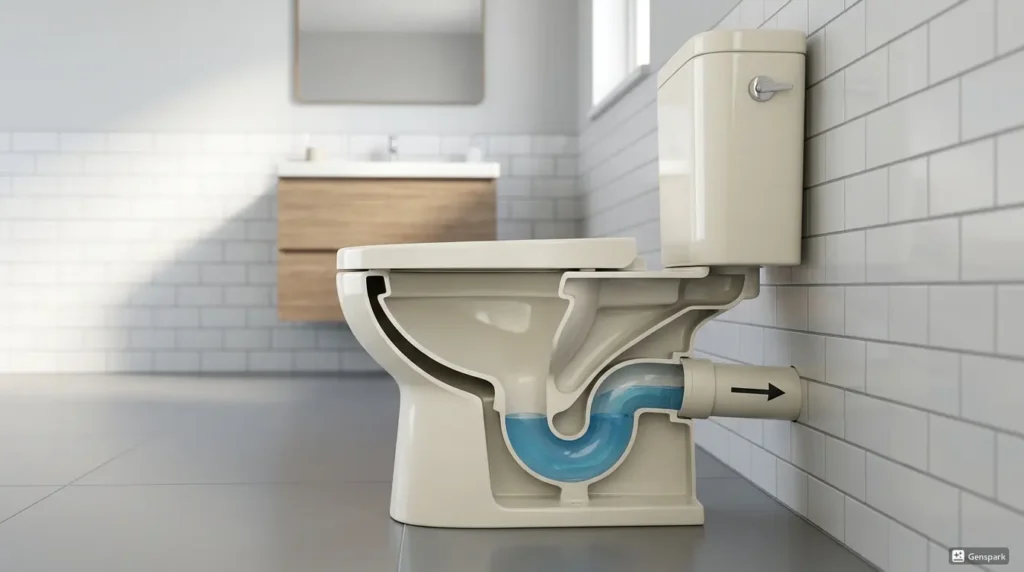
A p-trap toilet suits homes where the drain pipe comes out from the wall.
Pros:
- Holds the water seal consistently over time
- Self-siphonage is rarely an issue
- Works well with modern concealed plumbing
- Meets current building standards in most cities
Limitations:
- Only works where a wall outlet exists
- Retrofitting older homes can get expensive
- Moving it later means breaking open the wall
S Trap Toilet
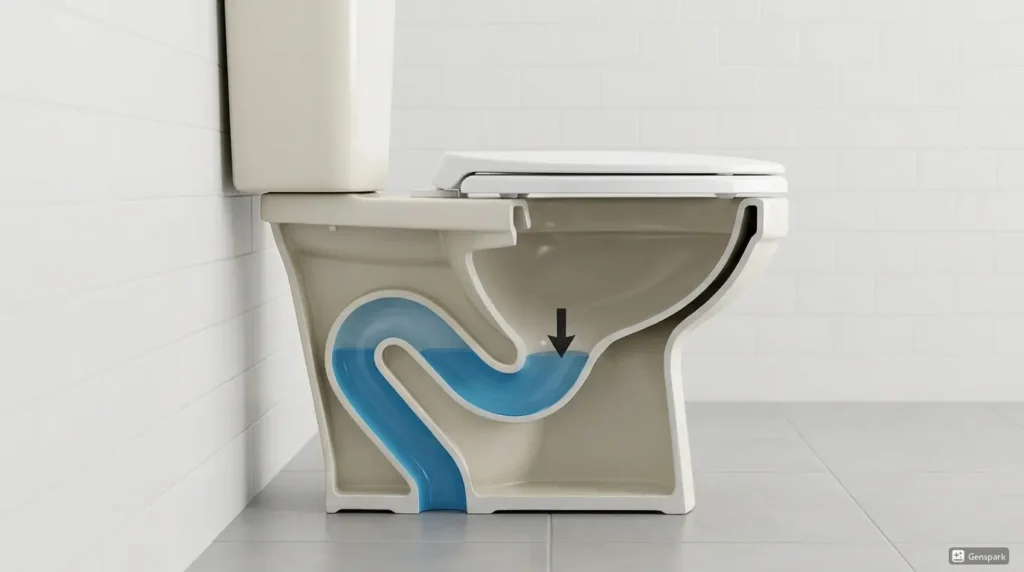
A s trap toilet is built for bathrooms where the drain goes straight into the floor.
Pros:
- Easy to install in existing floor-drain setups
- No wall modifications needed
- Readily available at most Indian plumbing shops
Limitations:
- Prone to self-siphonage, which kills the water seal
- Once the seal breaks, bad smells enter freely
- Newer construction projects are moving away from it
The self-siphonage problem is what makes most plumbers hesitant about S traps today. Water rushing through too quickly pulls the trapped water right out of the bend. After that, nothing blocks the sewer gases.
With that clear, let’s figure out which trap actually makes more sense for your bathroom.
Which is better: P Trap or S Trap?
Straight answer — the P trap wins on performance. It holds the water seal better, handles daily use more reliably, and carries far less siphonage risk. Most licensed plumbers and modern building codes back this up. In the p trap vs s trap debate, the P-trap is simply the stronger design.
That said, the S trap is not a bad choice in every situation. For many Indian homeowners, ripping out floor outlets and replumbing an entire bathroom just isn’t practical. In those cases, a properly installed S-trap does the job fine.
So here’s a simple way to decide:
- New construction or full renovation: Always go with a P-trap. You have the chance to plan the plumbing right, so use it.
- Older home, floor outlet, limited budget: Stick with the S trap. Get a good plumber to install it correctly and check it regularly.
Your bathroom layout makes the final call here. Now let’s talk about one more thing most people overlook: how to maintain whichever trap you choose.
Common Mistakes to Avoid When Choosing a Toilet Trap
Most bathroom problems don’t start with bad products. They start with avoidable mistakes during selection and installation. Here are five things homeowners get wrong all the time.
- Not checking the drain outlet position: Buying a toilet before confirming whether your drain exits from the wall or floor is the fastest way to end up with the wrong trap entirely.
- Writing off the S trap completely: An S trap installed correctly by an experienced plumber performs reasonably well. Dismissing it without considering your actual bathroom layout wastes money on unnecessary changes.
- DIY don’t check codes: Indian plumbing standards vary from city to city and builder to builder. Installing a trap without checking local norms can spell trouble when you want to get it inspected or resold.
- Ignoring the roughing-in distance: This measurement between the wall and the drain centre must match your toilet model exactly. Getting it wrong means the toilet simply won’t fit.
- Skipping water seal depth: Indian Standard codes recommend a minimum water seal depth of 50mm. Anything less and your trap won’t block sewer gases effectively.
Keeping these mistakes in mind saves you money, time, and a very unpleasant bathroom.
Wrapping It Up
Both traps work. Both have their place in Indian bathrooms. But if you’re building fresh or doing a full renovation, the P trap is the smarter, more reliable pick. It holds its water seal better and gives you fewer headaches over time.
That said, your drain outlet makes the final decision, not trends, not opinions. A wall outlet means a P-trap. Floor outlet likely means S trap. It’s that straightforward.
Before you buy anything, measure your drain position first. If you’re still unsure, talk to a licensed plumber — one visit saves a lot of trouble later. The right trap makes your bathroom work quietly and cleanly for years.
Frequently Asked Questions
Can I Replace an S-Trap with a P-Trap in My Existing Bathroom?
You can, but expect some real work. The floor drain needs to shift to the wall, which means breaking tiles and rerouting pipes. Get a plumber to look at your bathroom before you commit to anything.
Does the Trap Type Affect How the Toilet Flushes?
No, flushing has nothing to do with the trap shape. If you hear gurgling after flushing, that’s usually a broken water seal, not a flush problem.
How Often Should You Inspect Your Bathroom Trap?
For regular bathrooms, once in six months. Guest bathrooms or rarely used toilets need checking more often because the water seal dries up when nobody’s using them.
Is a P-Trap Toilet Costlier Than an S-Trap Toilet?
The toilet price is usually the same. You pay more only when the bathroom needs extra work to accommodate the wall outlet.
Related Products
Explore products related to this article
-
 25%
25%Ultra Slim Overhead Shower 12×12 AB3204 – Begin Faucets
Original price was: ₹1,500.00.₹1,125.00Current price is: ₹1,125.00. Add to cart -
25%
Brass Waste Coupling 6 Inch (32mm) AA0053 | Begin Faucets
Original price was: ₹517.00.₹388.00Current price is: ₹388.00. Add to cart -
25%
BEGIN SS BRACKET 16MM AE0045
Original price was: ₹617.00.₹463.00Current price is: ₹463.00. Add to cart -
25%
Health Faucet Set Square Shape | ABS Plastic Ss304 | Chrome Finish
Original price was: ₹680.00.₹510.00Current price is: ₹510.00. Add to cart