

Wall Mixer With Hand Shower: Types, Uses & Buying Tips
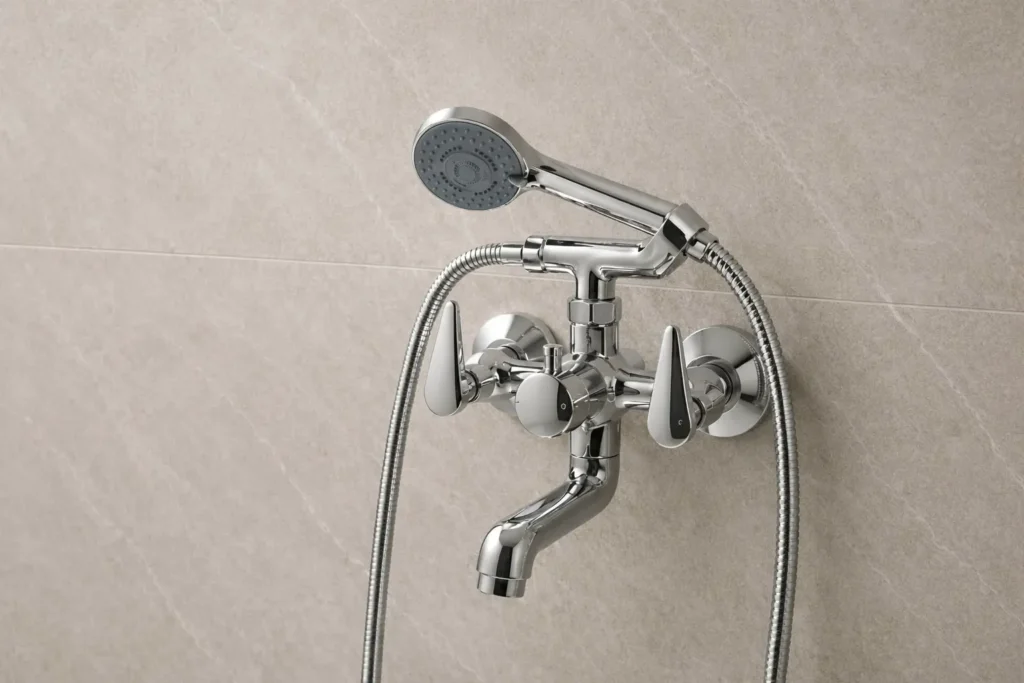
A wall mixer with hand shower is a bathroom fitting that mixes hot and cold water and sends it out through a handheld shower head. Indian homeowners now prefer this setup because it offers flexible bathing, unlike a fixed showerhead alone. Here’s what many buyers miss: two units can look almost the same on a store shelf, yet perform very differently. The cartridge quality, body material, and finish decide how long the fitting lasts and how well it handles daily use. Before buying, weigh the type of mixer, its body material, water pressure compatibility, plumbing requirements, and spare parts availability. These five factors affect performance far more than looks do. This guide explains each of them, so you can choose a fitting that suits your bathroom and lasts for years. What is a Wall Mixer With Hand Shower and How Does It Work? A wall mixer tap with hand shower, also called a hot and cold mixer tap with hand shower, blends hot and cold water into a single flow. It then sends that water out through a fixed spout or a handheld shower, whichever you need. Most Units are Built From These Parts: The working part is simple once you break it down. Hot water comes in from one pipe, cold water from another, and both meet inside the mixing chamber. Turning the handle changes how much of each goes in, so you get the temperature you want. Once that’s set, the diverter lever decides whether the water exits through the spout below or travels up through the hose to the hand shower. This makes the fitting useful for more than just bathing. People rely on it to fill buckets, rinse the floor, wash their hair, or bathe kids, all from one point on the wall. Types of Wall Mixers with Hand Shower Available in India Not every wall mixer with hand shower set works the same way. The differences come down to how the hand shower connects, how many outlets the unit offers, and how the pipework is installed. Brands such as Jaquar, CERA, Hindware, and Parryware all sell both non-telephonic and telephonic ranges in India, usually across zinc alloy and brass body options. Non-Telephonic Wall Mixer This type holds the hand shower in a fixed bracket close to the mixer body. It has a simple design, so there’s less to go wrong and less to maintain over time. Telephonic Wall Mixer Here, the hand shower pulls out on a flexible hose, much like a telephone receiver. This gives you longer reach and makes bathing easier for elderly users and children who may struggle with a fixed unit. 2-in-1 Wall Mixer This unit combines a spout and a hand shower in one compact fitting. It’s the most common setup found in Indian homes today, since it covers bucket-filling and hand shower use without needing extra plumbing points. 3-in-1 Wall Mixer A 3-in-1 wall mixer adds a third outlet: provision for an overhead shower, along with the spout and hand shower. This type needs an extra water line planned in advance. Because of this, it suits new construction or a full renovation, where the plumber can lay out all three connections before the walls are finished. Exposed vs Concealed Installation Whichever type you pick, you’ll also choose between two installation styles, and this choice matters as much as the mixer type itself. Installation Advantage Trade-off Exposed Easier to service and repair Visible pipework Concealed Cleaner, minimal look Needs planning before tiling An exposed wall mixer sits on top of the wall, so a plumber can reach the pipes quickly if there’s a leak or a part needs changing. A concealed wall mixer hides the pipework inside the wall, which gives the bathroom a neater finish, but this route only works if the plumbing is planned before tiling starts. Keep in mind that all price ranges above are indicative for 2026 and will shift based on the brand you pick, your city, and whether you buy in-store or online. Note: Wall mixers are available in finishes such as chrome, matte black, brushed nickel, gunmetal, and rose gold. Chrome remains the most popular choice because it matches most bathroom fittings and is usually the easiest to maintain. What Actually Matters When Buying a Wall Mixer with Hand Shower Looks and price tell you very little about how a fitting will hold up. These are the details that decide whether your purchase lasts five years or fifteen. Brass Body vs Zinc Alloy Body A good-quality brass wall mixer with hand shower resists corrosion and hard water better than zinc alloy. It is often made from high-grade brass, the same kind used in other sanitary fittings. It also lasts longer and handles repairs more easily because the metal is stronger around threads and joints. The trade-off is cost: brass units usually cost more than zinc alloy, but the extra spend often pays back in fewer replacements. Finish Quality A good chrome finish does more than improve appearance. Multi-layer nickel and chrome plating helps protect the mixer from rust, stains, and daily wear. A thicker, well-applied finish also keeps the fitting looking newer for longer. Cartridge Quality The cartridge controls how smoothly the handle turns and how well the mixer resists leaks. Ceramic disc cartridges outperform older rubber-washer or plastic mechanisms on both counts, and they tend to last many years longer under daily use. Water Pressure Compatibility Most hand showers work with low water pressure, but the spray becomes stronger and more even as pressure increases. Many manufacturers recommend an operating pressure of around 0.5 to 3 bar, so it’s worth checking the product specifications before buying. Diverter Quality The diverter is one of the parts that wears out most quickly because it is used every time you switch between the spout and the hand shower. A good-quality internal mechanism helps reduce leaks and keeps switching smooth over time. A durable internal mechanism matters far more here than the outer chrome finish.
How to Clean a Hand Shower Head: Complete Cleaning Guide
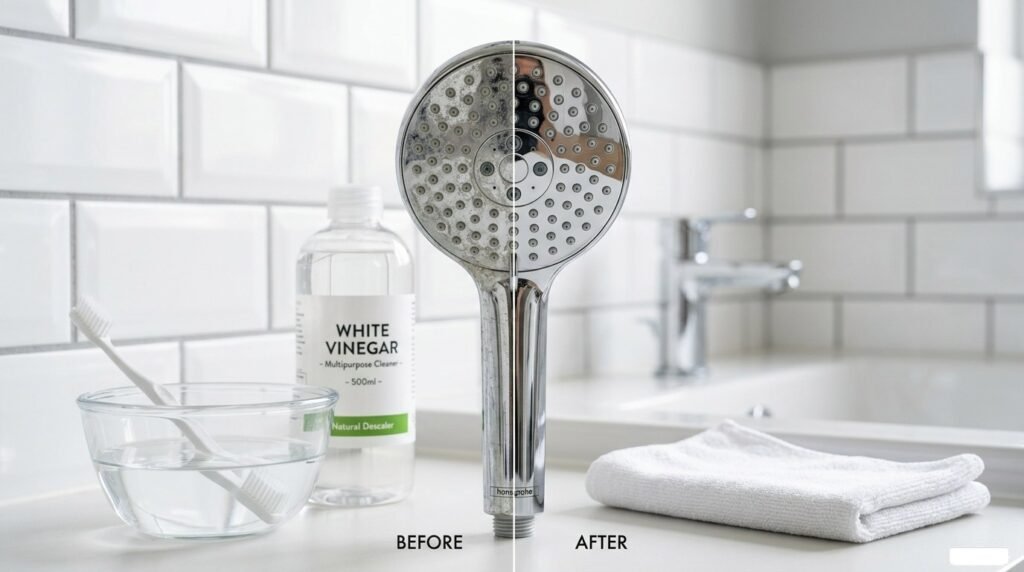
Your hand shower head is used almost every day. Over time, hard water deposits calcium and magnesium minerals on and inside it, building up into a crusty layer called limescale. Soap scum and the warm, damp bathroom air make things worse. Together, they block nozzles, stain the surface, and reduce how well your shower works. Many people don’t notice the problem until it becomes obvious. Here are five signs your hand shower head needs cleaning: These signs won’t fix themselves. The longer you wait, the harder the mineral deposits become to remove. Fortunately, cleaning a hand shower head is simple and usually requires only white vinegar, a few basic tools, and less than an hour of active effort. Quick answer: To clean the hand shower head, detach it from the hose. Soak it in undiluted plain white vinegar for 30-60 minutes. Vinegar dissolves limescale, calcium deposits and mineral build-up. Then take an old toothbrush and scrub the nozzles and unblock any holes. Rinse thoroughly in warm running water. Connect the hose again and check the water pressure. Tools and Materials Needed to Clean a Hand Shower Have all the tools and supplies you will need within arm’s reach before you get started. Item Quantity / Amount White vinegar 500–750 ml (bowl method) / 250–500 ml (bag method) Bowl or dish Large enough to cover the shower head completely Plastic bag + rubber band Standard-size sandwich bag Toothbrush with soft bristles 1 Toothpicks or a fine needle 2–3 Microfiber cloths 1 -2 Mild dish soap (optional) A few drops White vinegar is the go-to cleaner for a reason. It’s just enough natural acidity to eat through limescale and mineral deposits, but it won’t strip finishes or corrode the shower head body as some harsh chemical cleaners will. Step-by-Step Guide to Cleaning a Hand Shower Head Step 1: Remove the Hand Shower Head First things first, try removing the shower head from the hose by hand. Grip it firmly and turn anticlockwise. Most hand shower heads come off without any tools at all. If yours feels stuck, look up the manufacturer’s guide before you pull harder. Some models have locking mechanisms you need to release first. Warning: Keep metal pliers away from chrome and coated finishes. If you need extra grip, wrap a thick cloth around the connector and use that as a buffer. Bare metal on a polished surface leaves scratches that don’t buff out. Can’t get it off at all? No problem. Move straight to Step 2 — the bag method handles that situation without any removal needed. Step 2: Soak in White Vinegar Next, pour white vinegar into a bowl deep enough to swallow the whole shower head. Face the nozzles downward so the spray holes sit fully covered by the liquid. How long you leave it soaking depends on how bad the buildup actually is: Condition Soaking Time Regular monthly cleaning 15–30 minutes Light mineral deposits 30–60 minutes Moderate limescale buildup 1–2 hours Heavy limescale or stubborn blockage 4–8 hours or overnight Bag method for shower heads that won’t come off: Pour vinegar into a sandwich bag, slide it up over the shower head so every nozzle sits underwater, then cinch a rubber band around the neck of the hose to hold the bag steady. Same soaking times apply. Pro Tip: Slightly warm vinegar gets through calcium buildup noticeably quicker. Heat it for 20–30 seconds in the microwave — stop well before it boils, or the smell gets unbearable. Warning: Gold, bronze, and other decorative finishes don’t play well with long acid exposure. Cap your soak at 30 minutes for anything other than standard chrome or plastic. Step 3: Scrub the Nozzles Once the soak wraps up, grab your old toothbrush and get scrubbing. Work across the whole face of the shower head in short back-and-forth strokes. The vinegar will have already loosened most of the limescale, so it shouldn’t take much effort. Warning: Stabbing a needle straight in damages rubber nozzles faster than any amount of hard water ever would. Slow and steady gets the job done without creating new problems. After that, hold the shower head under warm running water and rinse away everything the toothbrush knocked loose — vinegar residue included. Step 4: Clean the Mesh Filter Here’s the step most people never bother with, and it’s often the real reason water pressure stays disappointing even after a thorough clean. Tucked just inside the inlet where the hose screws in, there’s a small mesh filter screen. It catches sand, grit, and pipe sediment so those particles don’t reach the nozzles. You’ll often see the water pressure improve the moment you reinstall a freshly rinsed filter. It’s a small thing that makes a big difference. Step 5: Reassemble and Test Finally, screw the shower head back onto the hose by hand. Go clockwise and keep turning until it feels snug against the connector. Warning: The moment it feels tight, stop turning. One twist too many strips the thread or flattens the washer out of shape, and either way, you end up with a dripping joint. Cleaning Tips for Different Hand Shower Head Types Not every shower head takes the same kind of cleaning. The material and finish of yours changes what products and tools are safe to use. Chrome Hand Shower Heads Chrome scratches easily if you’re not careful. Stick to soft cloths and avoid any abrasive cleaning pads or powders. Once you’re done cleaning, dry the surface straight away — this stops water spots from dulling the shine. Stainless Steel Hand Shower Heads A microfiber cloth works best on stainless steel because it lifts water marks without leaving new ones behind. Keep rough scrubbing pads away from the surface. Even light scratching on stainless steel shows up clearly under bathroom lighting. Plastic Hand Shower Heads Plastic doesn’t handle strong chemicals well — they can cloud the surface or cause it to crack over time. Clean gently with diluted white vinegar and a soft cloth.
How to Add a Hand Held Shower Head in 7 Easy Steps

A basic shower gets the job done, but a handheld shower head makes it so much better. A handheld shower head is a flexible, hose-connected shower head you can hold and move freely. And homeowners love to add one for simple reasons: The best part? You don’t need a plumber. Most people finish this upgrade in under an hour. In this blog, you will learn exactly how to add a hand held shower head in 7 easy steps. We cover every tool, every part, and every move from start to finish. Tools and Materials Required Collect these items before you begin; having everything on hand saves time and prevents trips to the hardware store in the middle of the job. Check Your Existing Shower System Before you begin, check out your current shower to avoid any surprises when you’re working. 1. Most home showers use a ½-inch NPT (National Pipe Thread) connection. This is the standard screw fitting on your shower arm — the pipe sticking out of your wall. Nearly all handheld shower kits fit this size. 2. Your current fixed shower head simply screws off by hand or with a wrench. No special tools needed. 3. But some setups need a diverter valve, a little switch that directs water between two shower heads. You may need one if you want to keep your old shower head running alongside the new handheld unit. More on that in a later step. 4. Most standard bathrooms need zero extra parts beyond the kit itself. So, check your setup first and shop with confidence. How to Install a Hand Held Shower Head in 7 Easy Steps Difficulty Level Time Required Easy 20–60 minutes Step 1: Remove the Old Shower Head Wrap a soft cloth around the base of your old shower head. This stops the wrench from leaving marks on the metal. Grip the cloth-covered base with your adjustable wrench and turn it counterclockwise. Once it starts to move, spin it off the rest of the way with your hand. Caution: Forcing a stuck shower head too fast can bend the shower arm inside the wall. Work slowly and let the wrench do the job. Step 2: Clean Off the Old Tape and Inspect the Threads Use your fingernail or a dry rag to peel off every bit of old plumber’s tape from the shower arm. Old tape leaves behind a gummy layer that stops new tape from sealing well. After clearing it off, hold the arm near a light source and look at the threads carefully. Smooth, clean threads mean you are ready for the next step. Pro Tip: Run your fingertip along the threads after wiping them down. Anything that feels rough, raised, or uneven needs a closer look before you go further. Step 3: Apply New Plumber’s Tape On The Threads Get the first edge of the plumber’s tape really tight against the bottom of the shower arm threads. Wind the tape around the threads moving in a clockwise direction. Go around two to three full times, keeping the tape pulled tight the whole way. Press the torn end flat against the threads with your thumb so nothing hangs loose. Caution: Wrapping the tape in the wrong direction, counterclockwise, makes it unravel the second you screw anything onto it. Always go clockwise. Step 4: Screw On the Mounting Bracket Pull the mounting bracket out of your handheld shower head kit. Line it up with the shower arm and begin threading it on by hand. Turn it clockwise and keep going until your hand cannot move it any further. Wrap your cloth around the bracket and tighten it one quarter turn more with the wrench. Pro Tip: The bracket should face straight out from the wall once tightened. The hose and shower head will hang all weird if it is at an odd angle. Step 5: Connect the Shower Hose to the Bracket Take the shower hose from your kit and find the end that fits into the opening of the bracket. Thread the end onto the bottom of the bracket by hand first. Once hand-tight, hold the bracket steady with one hand and give the hose fitting a short quarter turn with the wrench. Let the hose fall naturally and make sure no section of it is twisted or kinked. Pro Tip: A twisted hose puts stress on both connection points and shortens the life of the hose significantly. Step 6: Connect the Hand Held Showerhead to the Hose. Hold the open end of the shower hose with one hand to keep it steady. Take the handheld shower head and thread it onto the hose end clockwise. Hand-tighten it until you feel firm resistance. Then use the wrench with the cloth to snug it up one final quarter turn, nothing more. Pro Tip: Most leaks in a handheld shower head installation happen at this joint. Take your time here and make sure the connection feels solid before testing. Step 7: Turn the Water On and Look for Leaks Reach into the shower and turn the water on to full flow. Stand back and watch every connection point for a full minute — the shower arm, the bracket base, and both ends of the hose. Press a dry fingertip against each joint and check for any moisture at all. Then switch between every spray setting on the handheld shower head to make sure water pressure stays strong and consistent. Caution: A small drip caught now takes seconds to fix. Left alone, that same drip can damage your wall for weeks and months. How to Keep Your Existing Shower Head and Add a Handheld One Difficulty Level Time Required Moderate 30–90 minutes The good news is you do not have to choose between your old shower head and a new handheld one. A simple extra part lets you run both. Using a Diverter Valve A diverter valve is a small fitting that splits incoming water between two separate outlets —