

SS Connection Pipe Buying Guide: Grades, Sizes & Uses
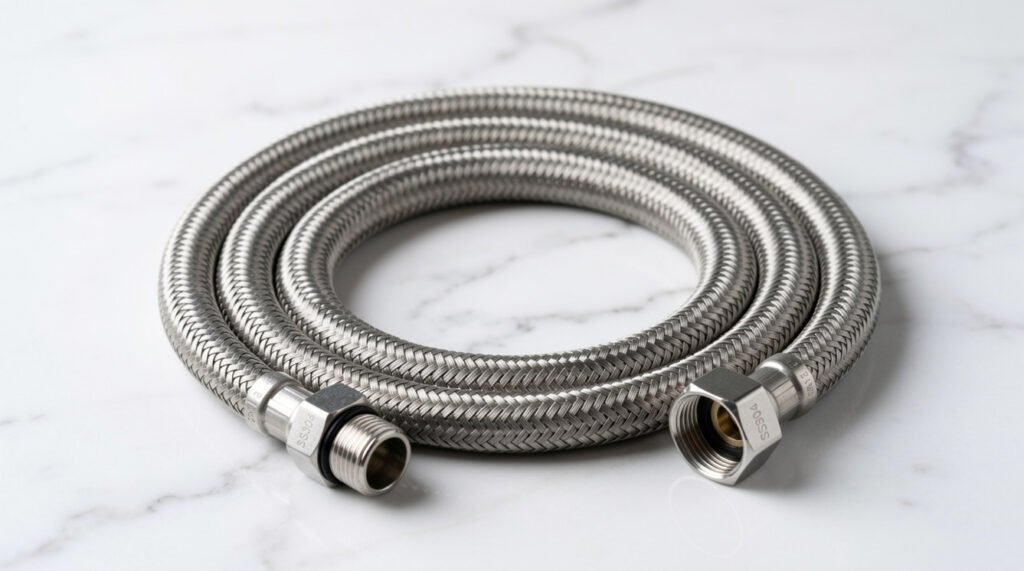
You bend down to check under the basin and find a small puddle of water. Or maybe water keeps dripping behind your toilet, no matter how many times you tighten the joint. The real problem often comes from a worn-out connection pipe. An SS connection pipe is a flexible tube that carries water from the wall or floor outlet to your tap or appliance. You will find it under basin taps, kitchen faucets, showers, health faucets, geysers, and toilet cisterns. But not every SS connection pipe performs the same way. Quality depends on the steel grade, the inner tube material, the braid strength, and the fittings used. This guide will help you pick the right SS connection pipe for your home, so you avoid leaks, rust, and repeat plumbing repairs. Why SS Connection Pipes are Preferred in Modern Plumbing Indian homes now prefer an SS connection pipe over old rubber or PVC tubes. Here is why builders and plumbers across India now default to SS connection pipes. 1. Corrosion Resistance: Stainless steel contains chromium. When stainless steel meets air, a thin, invisible layer forms on its surface. This layer blocks moisture and oxygen. That is what stops it from rusting the way ordinary iron does Note: Resistant doesn’t mean immune; given enough time and the wrong water conditions, even SS will show wear. 2. Flexible: Because of the braided design, this pipe bends and twists into spots a rigid pipe never could. Behind a basin, under a kitchen sink, squeezed inside a narrow cabinet; it goes there without kinking or snapping. 3. Durability: Most Indian homes push water through household lines at around 1 to 3 bar pressure. A decent SS connection pipe takes that pressure day after day and doesn’t crack, swell, or give out. 4. Appearance: The metal braid has a chrome-like shine to it, so it doesn’t look out of place next to modern taps and fittings. It actually adds a bit of polish to a bathroom or kitchen setup. Expert Tip: Corrosion-resistant does not mean “rust-proof.” The steel grade and your local water quality both decide how long the pipe lasts. What’s Inside an SS Connection Pipe: Construction Breakdown Before making a purchase, you must know what’s inside an SS connection pipe. Each layer plays a different job. The Inner Tube The inner tube carries the actual water flow. Most pipes use EPDM rubber for this layer, though some use PVC or nylon. EPDM handles both hot and cold water, and most household-grade pipes rate it up to 90°C. PVC versions cost less, but they cannot take high heat as well, so they suit cold-water points better. The Stainless Steel Braided Layer This layer wraps tightly around the inner tube like a metal mesh. This prevents the tube from expanding or blowing up under the extra pressure put upon the water within it. This is where the real difference between a strong pipe and a weak pipe comes into play. Wire thickness, how tightly the wires weave, and the steel grade all determine how much pressure the braid can take. End Fittings and Washers The fittings connect the pipe to your tap or wall outlet, and most are made from brass or stainless steel. Brass fittings dominate Indian plumbing because they grip threads firmly and resist corrosion well. Inside each fitting sits a small rubber washer, and this washer causes most leaks. So always check its condition before you tighten the connection. Types of SS Connection Pipes and Where to Use Them Indian markets sell two main types of SS connection pipes. Each one suits a different job in your home. Braided SS Flexible Connection Pipe This type dominates Indian homes today. A stainless steel wire braid wraps around an inner tube made from EPDM or PVC. The braid bends easily, so you can route it behind cabinets and tight fixture spaces without trouble. Use this type for basin taps, kitchen mixers, health faucets, and toilet cistern connections. Corrugated Stainless Steel Connection Pipe This pipe skips the rubber tube entirely. This type is all metal, so it can take more heat and pressure than the braided type. It is not that flexible, but it is stiffer and more durable in harsh environments. This type should be used for geysers, hot water lines, and commercial plumbing. Feature Braided SS Pipe Corrugated SS Pipe Pipe Flexibility High Moderate Temperature Range Up to ~90°C Up to ~150°C Common Use Household fixtures Geysers, hot lines Cost (India) ₹80–₹350 ₹200–₹700 SS Connection Pipe Sizes, Thread Standards & Price Range in India Picking the right length and thread size matters as much as picking the right material. Common Lengths Length Typical Use 30 cm Close-fit connections under counters 45 cm Standard basin and tap installations 60 cm Slightly longer reach behind cabinets 100 cm Geyser connections, extended runs Thread Sizes Indian plumbing fittings follow the BSP thread pattern set under IS 554. Most homes use two sizes. The ½ inch thread fits basin taps, kitchen faucets, and health faucets. ¾ inch thread is for higher flow points like geyser connections. Price Range in India Buying Tip: Buy a pipe a little longer than your exact gap, with a nice curve. A tight pipe adds more stress to the fittings and wears out faster. How to Choose the Right SS Connection Pipe This is the part that decides whether your pipe lasts five years or fails in five months. 1. Check the Steel Grade First Grade Composition Best For SS 304 18% Cr, 8% Ni Standard household plumbing, most reliable choice SS 304L 18% Cr, 8% Ni, Low Carbon Where welding is involved, better weld-zone corrosion resistance SS 202 17% Cr, 4–6% Ni Budget segment — lower corrosion resistance; avoid for long-term use Expert Note: SS 304 suits most Indian homes. SS 202 is less costly, but it rusts faster, especially in hard water areas. 2. Check the Braid Before you buy, run your eyes over the weave pattern closely. A good