You bend down to check under the basin and find a small puddle of water. Or maybe water keeps dripping behind your toilet, no matter how many times you tighten the joint. The real problem often comes from a worn-out connection pipe.
An SS connection pipe is a flexible tube that carries water from the wall or floor outlet to your tap or appliance. You will find it under basin taps, kitchen faucets, showers, health faucets, geysers, and toilet cisterns.
But not every SS connection pipe performs the same way. Quality depends on the steel grade, the inner tube material, the braid strength, and the fittings used.
This guide will help you pick the right SS connection pipe for your home, so you avoid leaks, rust, and repeat plumbing repairs.
Why SS Connection Pipes are Preferred in Modern Plumbing
Indian homes now prefer an SS connection pipe over old rubber or PVC tubes. Here is why builders and plumbers across India now default to SS connection pipes.
1. Corrosion Resistance: Stainless steel contains chromium. When stainless steel meets air, a thin, invisible layer forms on its surface. This layer blocks moisture and oxygen. That is what stops it from rusting the way ordinary iron does
Note: Resistant doesn’t mean immune; given enough time and the wrong water conditions, even SS will show wear.
2. Flexible: Because of the braided design, this pipe bends and twists into spots a rigid pipe never could. Behind a basin, under a kitchen sink, squeezed inside a narrow cabinet; it goes there without kinking or snapping.
3. Durability: Most Indian homes push water through household lines at around 1 to 3 bar pressure. A decent SS connection pipe takes that pressure day after day and doesn’t crack, swell, or give out.
4. Appearance: The metal braid has a chrome-like shine to it, so it doesn’t look out of place next to modern taps and fittings. It actually adds a bit of polish to a bathroom or kitchen setup.
Expert Tip: Corrosion-resistant does not mean “rust-proof.” The steel grade and your local water quality both decide how long the pipe lasts.
What’s Inside an SS Connection Pipe: Construction Breakdown
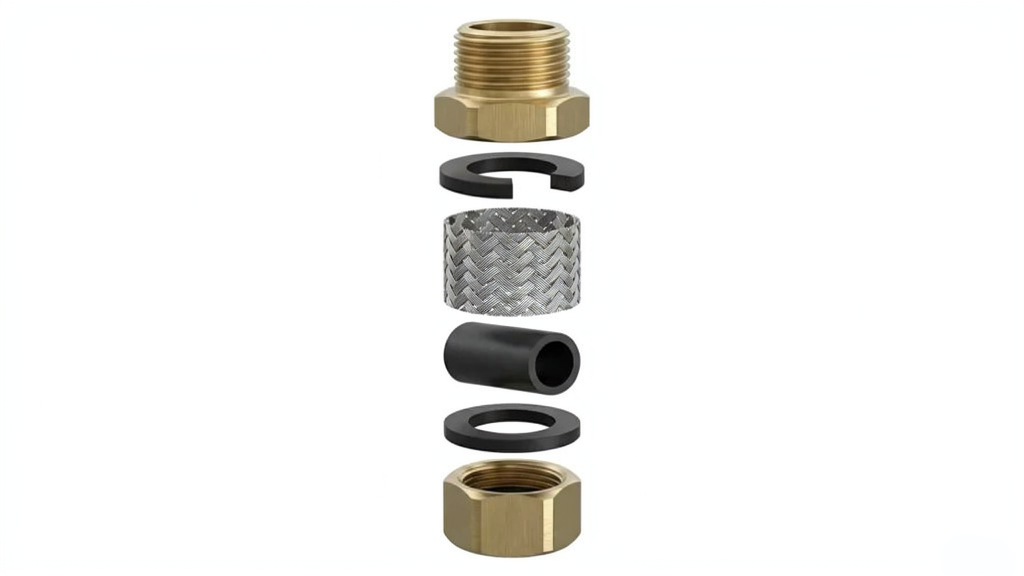
Before making a purchase, you must know what’s inside an SS connection pipe. Each layer plays a different job.
The Inner Tube
The inner tube carries the actual water flow. Most pipes use EPDM rubber for this layer, though some use PVC or nylon.
EPDM handles both hot and cold water, and most household-grade pipes rate it up to 90°C. PVC versions cost less, but they cannot take high heat as well, so they suit cold-water points better.
The Stainless Steel Braided Layer
This layer wraps tightly around the inner tube like a metal mesh. This prevents the tube from expanding or blowing up under the extra pressure put upon the water within it.
This is where the real difference between a strong pipe and a weak pipe comes into play. Wire thickness, how tightly the wires weave, and the steel grade all determine how much pressure the braid can take.
End Fittings and Washers
The fittings connect the pipe to your tap or wall outlet, and most are made from brass or stainless steel. Brass fittings dominate Indian plumbing because they grip threads firmly and resist corrosion well.
Inside each fitting sits a small rubber washer, and this washer causes most leaks. So always check its condition before you tighten the connection.
Types of SS Connection Pipes and Where to Use Them
Indian markets sell two main types of SS connection pipes. Each one suits a different job in your home.
Braided SS Flexible Connection Pipe
This type dominates Indian homes today. A stainless steel wire braid wraps around an inner tube made from EPDM or PVC. The braid bends easily, so you can route it behind cabinets and tight fixture spaces without trouble.
Use this type for basin taps, kitchen mixers, health faucets, and toilet cistern connections.
Corrugated Stainless Steel Connection Pipe
This pipe skips the rubber tube entirely. This type is all metal, so it can take more heat and pressure than the braided type. It is not that flexible, but it is stiffer and more durable in harsh environments.
This type should be used for geysers, hot water lines, and commercial plumbing.
| Feature | Braided SS Pipe | Corrugated SS Pipe |
| Pipe Flexibility | High | Moderate |
| Temperature Range | Up to ~90°C | Up to ~150°C |
| Common Use | Household fixtures | Geysers, hot lines |
| Cost (India) | ₹80–₹350 | ₹200–₹700 |
SS Connection Pipe Sizes, Thread Standards & Price Range in India
Picking the right length and thread size matters as much as picking the right material.
Common Lengths
| Length | Typical Use |
| 30 cm | Close-fit connections under counters |
| 45 cm | Standard basin and tap installations |
| 60 cm | Slightly longer reach behind cabinets |
| 100 cm | Geyser connections, extended runs |
Thread Sizes
Indian plumbing fittings follow the BSP thread pattern set under IS 554. Most homes use two sizes. The ½ inch thread fits basin taps, kitchen faucets, and health faucets. ¾ inch thread is for higher flow points like geyser connections.
Price Range in India
- PVC inner/light braid basic: Rs. 80-150
- EPDM inner / SS 304 braid standard: Rs. 150–₹350
- Premium SS 304 / brass fittings / longer lengths: Rs. 350-700+
Buying Tip: Buy a pipe a little longer than your exact gap, with a nice curve. A tight pipe adds more stress to the fittings and wears out faster.
How to Choose the Right SS Connection Pipe
This is the part that decides whether your pipe lasts five years or fails in five months.
1. Check the Steel Grade First
| Grade | Composition | Best For |
| SS 304 | 18% Cr, 8% Ni | Standard household plumbing, most reliable choice |
| SS 304L | 18% Cr, 8% Ni, Low Carbon | Where welding is involved, better weld-zone corrosion resistance |
| SS 202 | 17% Cr, 4–6% Ni | Budget segment — lower corrosion resistance; avoid for long-term use |
Expert Note: SS 304 suits most Indian homes. SS 202 is less costly, but it rusts faster, especially in hard water areas.
2. Check the Braid
Before you buy, run your eyes over the weave pattern closely. A good braid sits tight and even, with no wire ends poking out anywhere. If the weave looks loose or patchy in places, that’s a weak spot waiting to happen, and weak spots are exactly where pipes burst under pressure.
3. Check End Fittings and the Washer
Choose brass fittings over plastic ones because brass grips threads better and resists corrosion longer. Press the washer with your fingernail before installation. It should feel firm. “If it feels brittle and there are cracks, it’s time to replace it.”
4. Match to Your Water Type
- Hard water areas (common across North India): Go with SS 304. It handles mineral-heavy water better than lower grades.
- Hot water or geyser lines: Look at the pipe’s rating and make sure it can take 90°C or more.
- High-pressure supply lines: Check the rated working pressure, usually between 10 and 16 bar for household-grade pipes.
Installation Mistakes That Cause Leaks and Early Damage
Even a good SS connection pipe fails fast if you install it incorrectly. Watch out for these six mistakes.
- Choosing the wrong length: Measure your gap before you buy. A short pipe under tension pulls on the fittings and shortens their life.
- Ignoring thread compatibility: A ½ inch and ¾ inch mismatch leaks from day one. Always match the thread size to your tap or outlet before buying.
- Buying only on price: SS 202 pipes look identical to SS 304, but they corrode faster. Check the grade marking, not just the price tag.
- Over-tightening the fittings: Excess force crushes the washer inside, and a crushed washer fails and leaks. Tighten until snug, then stop.
- Twisting the pipe while connecting: Twisting creates torsional stress, and that damages the braid over time. Hold the pipe straight as you connect it.
- Not checking the washer before installation: An old, brittle washer causes an instant leak. Replace it if it looks cracked or feels stiff.
Expert Tip: Hand-tighten first, then use a wrench for just one extra quarter turn. That’s enough.
How Long Does an SS Connection Pipe Last?
Most SS connection pipes hold up well for 5 to 10 years, as long as you stick to SS 304 with an EPDM inner tube and use it under normal home conditions. That number drops fast in a few situations, though.
Hard water leaves mineral buildup behind. High chlorine eats into the braid slowly. Over-tightening crushes the washer. And any nick or scrape on the braid weakens the whole pipe from that point on.
Maintenance Checklists
- Look at the pipe every 6 months. Check for rust spots, frayed braid wires, or damp patches near the fittings.
- See water dripping at the joint? Swap out the washer before it gets worse.
- Keep the pipe in a natural curve. Sharp bends weaken it over time.
- Spot any bulging, cracked wires, or an active leak? Replace the pipe right then. Don’t wait.
Wrapping It Up
A cheap price tag tells you almost nothing about how a pipe will actually perform. The real story sits in the steel grade, the inner tube, the braid quality, and the fittings.
Put those together, and for most Indian homes, an SS 304 pipe with an EPDM inner tube and brass fittings gets the job done without drama.
So before you hand over your money, flip the pipe over and check the grade marking. That one step alone saves you from a leak six months down the line.
Frequently Asked Questions
Can We Use the SS Connection Pipe for a Water Purifier (RO) Connection?
No. RO units run on low pressure and need thin, dedicated tubing, not a braided SS pipe. Stick to the connector that came with your RO unit, or buy the exact replacement tube it specifies. The wrong fit can wreck the membrane inside.
What Happens if I Use an SS 202 Pipe Instead of an SS 304?
It rusts sooner. SS 202 has less nickel and chromium, so dissolved salts in Indian tap water attack it faster than they attack SS 304. In hard water areas, expect rust within a year or two. Once rust sets in, the braid weakens, and a sudden leak becomes likely.
Is a Braided SS Pipe Safe for Drinking Water Lines?
Yes, but the inner tube must be food-grade EPDM. Check the packaging before you buy for an ISI mark or a food-grade label. Skip this check, and you risk chemicals leaching into your water over time.
Can I Reuse an SS Connection Pipe After Disconnecting It?
Sometimes. If the washer still feels firm and the threads aren’t worn or stripped, you can reconnect it without trouble. But if either looks off, don’t risk it — a new pipe costs far less than water damage.
Related Products
Explore products related to this article
-
 25%
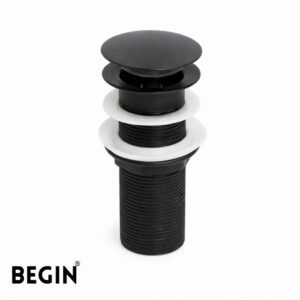
25%Pop-Up Brass Waste Coupling 5 Inch | Matte Black
Original price was: ₹950.00.₹715.00Current price is: ₹715.00. Add to cart -
25%
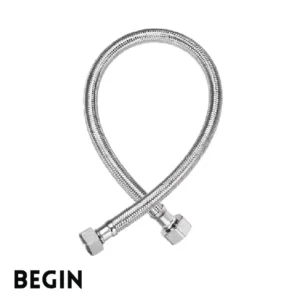
SS Connection Pipe 36 Inch | Stainless Steel | BEGIN
Original price was: ₹566.00.₹425.00Current price is: ₹425.00. Add to cart -
25%
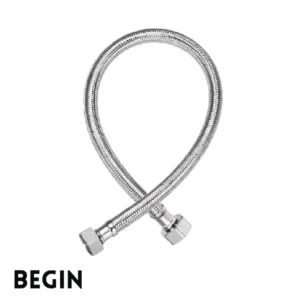
SS Connection Pipe 30 Inch | Stainless Steel
Original price was: ₹466.00.₹350.00Current price is: ₹350.00. Add to cart -
25%
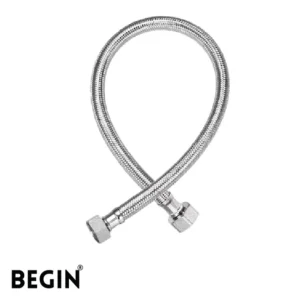
SS Connection Pipe 24 Inch | Stainless Steel
Original price was: ₹317.00.₹238.00Current price is: ₹238.00. Add to cart