

What is a Wash Basin Waste Coupling? Complete Guide
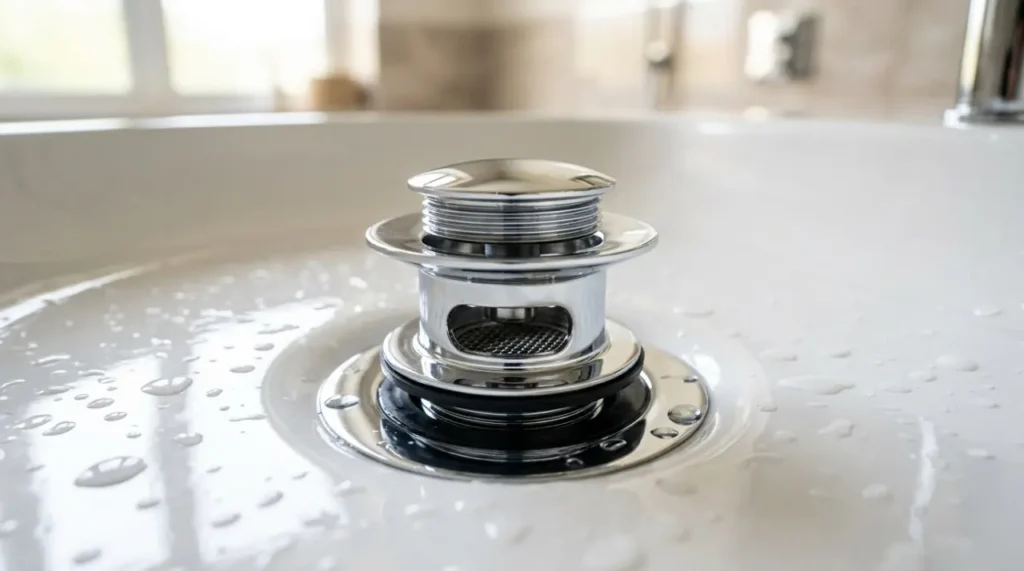
Water pooling under your basin. A drain that barely moves. A smell that won’t leave the bathroom. Most of the time, one small part is responsible, the wash basin waste coupling. People buy expensive basins, premium taps, and designer tiles. Then they fit a cheap coupling and wonder why things go wrong in 6 months. This blog covers types, sizes, materials, installation, and fixes — everything you need before you buy or before you call a plumber. What is a Wash Basin Waste Coupling and What Does It Contain? A wash basin waste coupling is a drain fitting that joins the outlet hole of a wash basin to the waste pipe below it, and which provides a seal to the joint to prevent leaks. Each Coupling is Made of 5 Parts: 1. Top Flange: The visible ring on the top of the basin drain. It acts as a strainer or jali to prevent hair and debris from entering the drain pipe. 2. Threaded Body: The cylindrical tube that goes through the drain hole in the basin and into the drain below. A full-thread body has threads along its entire length for more grip, while a half-thread body has threads only near the base and is used where there is limited space below the basin. 3. Overflow Slot: That notch on the side of the threaded body is what connects your basin’s overflow channel to the drain. A slotted coupling keeps that path open; an unslotted one seals it shut completely. Put an unslotted coupling in a basin built with an overflow hole, and water backs up inside the channel with nowhere to go. 4. Rubber Washer + Plastic Washer: These 2 washers sit between the basin’s underside and the locking nut. Their job is simple: stop water from pushing through the outlet hole and dripping below. No washer, no seal — it leaks from day one. 5. Locking Nut: The large nut is tightened from below the basin that clamps the entire assembly firmly in place. Types of Waste Couplings and Which One Fits Your Bathroom The type you need depends on two things — your basin design and how often the bathroom is used. Type How It Works Best For Not Suitable For Price Range (India) Open / Free-Flow No stopper; water drains freely at all times High-traffic bathrooms, utility areas, servant toilets Basins where water retention is needed (shaving, soaking) ₹60–150 Dome / Jali Perforated dome sits over the outlet; no moving parts Kitchen sinks, outdoor basins, high-debris areas Basins requiring water retention or a tight seal ₹80–200 Click-Clack / Push-Button Push down to close, push again to open Personal bathrooms, easy DIY replacement Basins with very shallow outlet depth; some vessel basins ₹250–600 Pop-Up The rod linkage connects to a lever near the tap; the tap handle opens and closes the drain Designer basins, premium bathrooms, wall-mount basins Basins with no pre-drilled overflow or linkage hole ₹500–1,500 Plug & Chain Rubber plug on a chain; needs a chainstay hole on the basin Vintage, classic, or clinic-style basins Modern basins without a chainstay anchor point ₹150–400 Waste Coupling Sizes and Materials Indian wash basins use a 32mm (1.25 inch) drain outlet as standard. Kitchen sinks use 40mm (1.5 inch) — these 2 sizes are not interchangeable, and fitting the wrong one creates a poor seal and a persistent leak from day one. To measure your drain hole, place a ruler across the widest internal diameter of the outlet opening. That number decides which wash basin waste coupling goes in. Waste Coupling Materials In Indian cities with high TDS water, SS304 or solid brass are the only materials worth using in a primary bathroom. How to Choose the Wash Basin Waste Coupling Before purchasing, run through these 5 steps in order. 1. Check Your Basin Type: Pedestal basins have an overflow channel built into the ceramic, so they need a slotted wash basin waste coupling. Countertop and vessel basins have no overflow path, so they need an unslotted coupling. Wall-hung basins follow the same rule as pedestals — slotted. 2. Measure the Drain Hole: Use a ruler across the widest internal diameter. A standard wash basin reads 32mm. A kitchen sink reads 40mm. Buy only what matches that number. 3. Choose the Coupling Type: Use the basin type and bathroom-use logic from the previous section. Do not guess. The wrong type creates either a flooding risk or a drain that never fully closes. 4. Choose the Material: SS304 or solid brass for any primary bathroom. ABS or PVC only in a secondary or guest bathroom with light daily use. 5. Check Finish and Trap Compatibility: Make sure the Finish of the coupling matches your tap (chrome, matte black, rose gold). Then confirm the lower thread exit diameter fits your existing bottle trap, P-trap, or concealed trap inlet before you leave the shop. Red Flags When Buying: How to Install a Waste Coupling Without a Plumber Tools you will need: Steps to Install a Waste Coupling 1. Clean the drain hole — scrape out all old sealant, putty, and residue from the basin outlet. Dry the surface completely before starting. 2. Apply silicone sealant or plumber’s putty around the underside rim of the top flange before pushing it in — this is what stops water from seeping between the flange and the basin. 3. Insert the coupling from above. Push it downward through the drain hole and press the flange firmly flat against the basin. 4. From below, slide on the rubber washer first, then the plastic washer, then hand-tighten the locking nut until it holds. 5. Hold the top flange steady by pressing a flat-head screwdriver into the strainer slots. Tighten the locking nut with pliers — firm, not forceful. Overtightening cracks ceramic. 6. On slotted couplings, align the overflow slot with the basin’s internal overflow channel before final tightening. A misaligned slot blocks the overflow path completely. 7. Wrap PTFE tape around the lower thread exit —