If your tap looked brand new a few weeks ago and now has that dull, spotty film on it, you’re not doing anything wrong.
Most of India runs on hard water, and groundwater studies from major cities put the figure at somewhere around 85% of households dealing with moderate to severe hardness. That’s calcium and magnesium sitting in your water supply, and every time it touches a metal surface and dries, it leaves a little bit of itself behind.
It’s not just a cosmetic issue either. Ignore it long enough, and the buildup clogs your showerhead nozzles, drops your water pressure, and in some cases starts eating into the coating on nicer fittings. None of that is a huge deal on its own, but it adds up fast if nobody’s paying attention.
This blog walks through why the staining happens in the first place, what tap and shower cleaners are available in the market, what’s actually in the cleaners that claim to fix it, whether vinegar from your kitchen cabinet can genuinely replace a bottled product, and how to build a cleaning habit that won’t wreck your fixtures in the process.
Why do Taps and Showers Get Hard Water Stains?
Hard water carries dissolved minerals, and those minerals don’t go anywhere when the water evaporates. They stay put. Over weeks and months, that residue thickens into something you can actually see and feel.
A few different things show up, and they’re not all the same problem:
- Limescale: The chalky, sometimes crusty white buildup around spouts and inside showerhead holes. This is the classic one.
- Soap Scum: Hard water doesn’t let soap lather the way it should, so instead of rinsing clean, it leaves a dull, slightly sticky film.
- Water Spots: Those faint circular rings you get when droplets just sit and dry on their own instead of being wiped off.
- Rust: Usually just a light surface film that wipes off without much fuss. If it’s gone deeper into the metal, though, a cleaner won’t fix that. At that point you’re probably looking at replacing the part.
- Fingerprint Grime: Oils from hands grabbing dust and dirt over time, especially on taps that get touched all day long.
Humid bathrooms make all of this worse because surfaces stay wet longer, which just gives minerals more time to settle in. And depending on which city you’re in, your water might be dramatically harder or softer than your neighbor’s, so don’t be surprised if your cleaning routine needs to be more aggressive than what worked at your last place.
What’s Actually Inside Tap and Shower Cleaners
Most tap and shower cleaners lean on mild acids to break the mineral bonds without chewing through the metal or finish underneath. Worth knowing what you’re spraying, honestly; not all acids are created equal here.
| Ingredient | What It Does | Works Best For |
| Citric acid | Naturally derived, breaks down light-to-moderate buildup without being harsh. | Weekly upkeep |
| Lactic acid | Gentle, skin-friendly, handles soap scum and light limescale well. | Sensitive or coated finishes |
| Sulfamic acid | A heavier-duty descaler for thick, hardened crust. | Serious, long-neglected limescale |
If you’re cleaning weekly and just staying on top of things, citric or lactic acid formulas are the safer pick. They’re gentle enough for finishes like rose gold or matte black that scratch or dull easily.
Sulfamic acid gets the job done faster on stubborn buildup, but I’d use it sparingly, and if you’ve got a premium coated fixture, test it on a hidden spot first before going all in.
Vinegar or a Proper Cleaner? Here’s the Honest Answer
Vinegar and baking soda are the usual go-to home remedies, and people want to know if they actually work or if it’s just internet folklore.
They do work, to a point. Vinegar’s acetic acid can loosen light scale and soap film reasonably well, especially on plain chrome. A cloth soaked in diluted vinegar wrapped around a showerhead overnight is a legitimately cheap, effective fix if the buildup isn’t too bad.
Where it falls apart is on anything other than basic chrome. Brass, rose gold, matte black, PVD gold — vinegar is too acidic for these, and using it repeatedly will dull or strip the coating over time.
It also just doesn’t have the strength to deal with limescale that’s been sitting for months; a proper descaler will clear that in one go where vinegar might need five attempts and still leave residue.
How to Choose the Right Tap and Shower Cleaner for Your Bathroom
A decent cleaner clears the grime without wrecking the finish. A few things worth checking before you buy one.
Does it actually cover the basics — hard water stains, limescale, soap scum, water spots, light rust? Most claim to, but check the label rather than assuming.
Look for something non-abrasive that works fast and rinses off cleanly. Nobody wants a cleaner that leaves its own residue behind or lingers with a chemical smell for hours.
And match it to your finish, because this part actually matters:
| Finish | What Works |
| Chrome | Fairly tough, but rough scrubbing will still scratch it; stick to mild cleaners. |
| Stainless Steel | Non-abrasive only, or you’ll dull the shine. |
| Brass | Gentle, low-acid formulas; brass tarnishes quickly otherwise. |
| Matte Black | Skip abrasive pads entirely; they strip the coating down to bare metal. |
| Rose Gold | Soft, non-acidic cleaners only; the plating is delicate. |
| Gold Finish (PVD) | Mild, PVD-safe formulas; strong acids will wear it down. |
| Brushed Nickel | Microfiber cloth and a gentle cleaner to keep the texture intact. |
Best Tap and Shower Cleaners in India
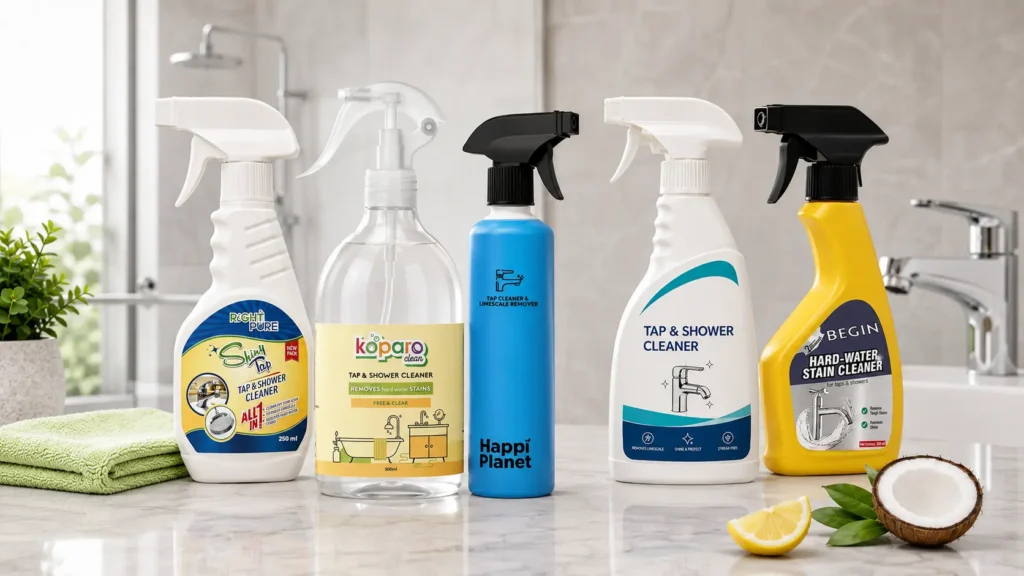
Every bathroom faces its own mix of stains, so one product rarely fits all needs. Use this table to match a tap and shower cleaner to your actual problem.
| Product | Handles Hard Water Stains | Removes Limescale | Safe on Premium Finishes | Good for Weekly Use | Rough Price Range |
| Begin Faucets Tap & Faucet Cleaner | Yes | Yes | Yes | Yes | ₹1,900 |
| Happi Planet Tap Cleaner & Limescale Remover | Yes | Strong | Check the label first | Not really | ₹200–₹299 |
| Koparo Tap & Shower Cleaner | Yes | Light to moderate | Yes | Yes | ₹149–₹299 |
| JOFF Tap & Shower Cleaner | Yes | Moderate | Yes | Yes | ₹150–₹300 |
| Right Pure Tap & Shower Cleaner | Yes | Moderate | Check the label first | Somewhat | ₹200–₹350 |
Prices shift depending on pack size and seller, so treat these as ballpark figures. And genuinely check the label for finish compatibility before your first use; this matters more on plated or coated fittings than people realize.
If you’re dealing with limescale that’s been building for a while, go with something stronger like Happi Planet. For a lighter weekly wipe-down, Koparo or JOFF do the job without being overkill.
And if your bathroom has premium fittings, don’t just chase the strongest formula on the shelf — a cleaner that strips your coating isn’t actually solving the problem; it’s creating a new one.
How to Clean Taps & Shower Fittings Properly
Cleaning taps and shower fittings can be quick and safe for the finish in a few simple steps.
- Brush off any loose dirt first. The cleaner works on mineral deposits, not on general grime sitting on top.
- Spray it on generously.
- Let it sit for however long the label says. This isn’t a step to rush; the formula needs time to actually break the buildup down.
- Wipe with a microfiber cloth or a soft sponge; nothing rough.
- For grooves, joints, or showerhead holes, a soft brush gets into the spots a cloth can’t reach.
- Rinse it off completely.
- Dry it right away. Leftover water just sets you up for fresh spots tomorrow.
How often you should be doing this:
| Fixture | Suggested Cleaning Frequency |
| Basin tap | Weekly |
| Shower head | Every 2–4 weeks |
| Hand shower | Every 2–4 weeks |
| Wall mixer | Weekly |
| Angle valve | Monthly |
A Few Safety Basics Worth Remembering
- Wear gloves — these are still mild acids, and repeated skin contact isn’t great.
- If a cleaner gets in your eyes, rinse immediately and don’t wait it out.
- Keep the bathroom door open or the exhaust fan running while you’re using anything stronger than a light spray.
- Never mix two different cleaning products together; that combination can produce fumes you really don’t want to breathe in.
- Store everything upright, out of a child’s reach, away from direct sunlight.
- And if you’ve got a premium finish, test the product somewhere hidden first. A small patch inside a cabinet or behind a fixture; before you commit to using it everywhere.
How to Keep Showers & Taps Spotless
Honestly, prevention beats cleanup every time. A few habits that actually make a difference:
Wipe fixtures dry right after you use them — wet surfaces are exactly where minerals like to settle. Don’t let water sit in the basin or shower tray longer than it needs to.
A quick weekly wipe stops light grime from turning into something that needs real scrubbing later. Once a month, go a bit deeper than your usual routine. Descale showerheads on a schedule rather than waiting until the water pressure noticeably drops.
Better bathroom ventilation helps everything dry faster, which cuts down on how much time minerals get to settle. And if a tap starts dripping, fix it soon; constant moisture just speeds the whole staining process up.
Wrapping It Up
Once you know your water’s hardness, your fixture’s finish, and what kind of buildup you’re actually dealing with, picking a cleaner stops being guesswork.
A quick weekly wipe combined with an occasional deeper clean will keep your bathroom looking better, longer, than any one intense scrubbing session ever could.
Match the product to the fixture, follow what the label says, and your taps and showers should hold their shine for a good long while.
Try Begin Faucets Tap & Faucet Cleaner on your taps and showers, and watch dull, stained fittings turn bright again.
Frequently Asked Questions
Can a Tap and Shower Cleaner Remove Old Limescale?
Yes, but thick old limescale may need more than one round. Reapply the cleaner and give it extra sitting time for stubborn crusts.
Can I Use a Tap Cleaner on Kitchen Faucets?
Most formulas work fine on kitchen faucets too. Just check the label first, since some kitchen finishes need gentler handling.
How Long Should I Leave a Tap Cleaner on Before wiping It Off?
Stick to the timing printed on the label, nothing more. Extra time doesn’t clean better — it just risks harming certain finishes.
Is a Tap and Shower Cleaner Safe for Daily Use?
Not really needed on a daily basis, and it’s better to avoid it. A once-a-week routine keeps fixtures clean without overloading the surface with chemicals.
Can Tap and Shower Cleaners Remove Rust Stains Completely?
They handle light, surface-level rust fairly well. Rust that has eaten into the metal usually calls for a professional fix instead.
Related Products
Explore products related to this article
-
 25%
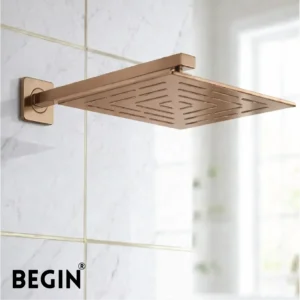
25%Rose Gold Rain Shower Head 12×12 AB3114RG – Overhead Shower | Begin Faucets
Original price was: ₹3,400.00.₹2,550.00Current price is: ₹2,550.00. Add to cart -
25%
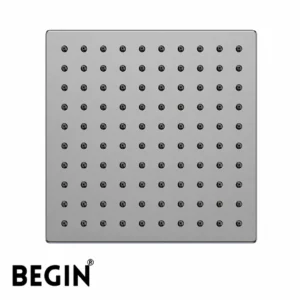
Square Overhead Shower 8×8 AB3106 | Begin Faucet Cubix Shower
Original price was: ₹1,500.00.₹1,125.00Current price is: ₹1,125.00. Add to cart -
25%
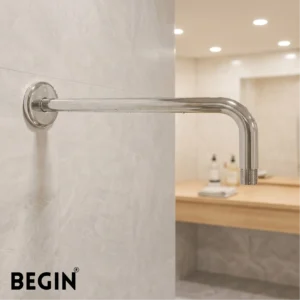
L Bend Shower Arm 12 Inch Wall Mount AD0151 – Begin Faucets
Original price was: ₹566.00.₹425.00Current price is: ₹425.00. Add to cart -
25%
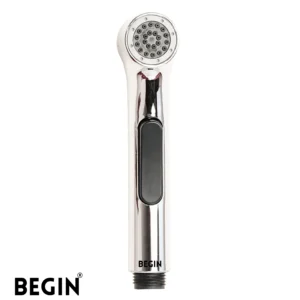
Aura Health Faucet with SS 304 Hose & Wall Holder | Premium ABS Toilet Jet Spray
Original price was: ₹706.00.₹530.00Current price is: ₹530.00. Add to cart