Gone are the days of rubber plugs and rusty chains in your bathroom sink. Today, the pop-up waste coupling does the same job but smarter, cleaner, and with one push.
A waste coupling is the fitting that connects your basin or bathtub drain to the pipe below. You find it in countertop basins, wall-mount basins, pedestal basins, and bathtubs across Indian homes.
But not all waste couplings work the same way. Some pop up with a push. Others use a rod or a click button. Each type suits a different basin style and budget.
So whether you are renovating your bathroom or picking fittings for a new home, this guide covers everything. You will find types, sizes, brands, and prices all in one place.
How Does a Pop-Up Waste Coupling Work?
A pop-up waste coupling opens and closes your drain without a plug or chain. You activate it from above, and a stopper inside the drain moves up or down.
Here is how the parts connect. A lift rod sits behind your tap. It connects to a pivot rod running horizontally inside the pipe. That pivot rod pushes the stopper up or down as you move the lift rod.
Also, check if your basin has an overflow hole. Basins with an overflow slot need a waste coupling that has an overflow channel built in. A standard one will not fit correctly.
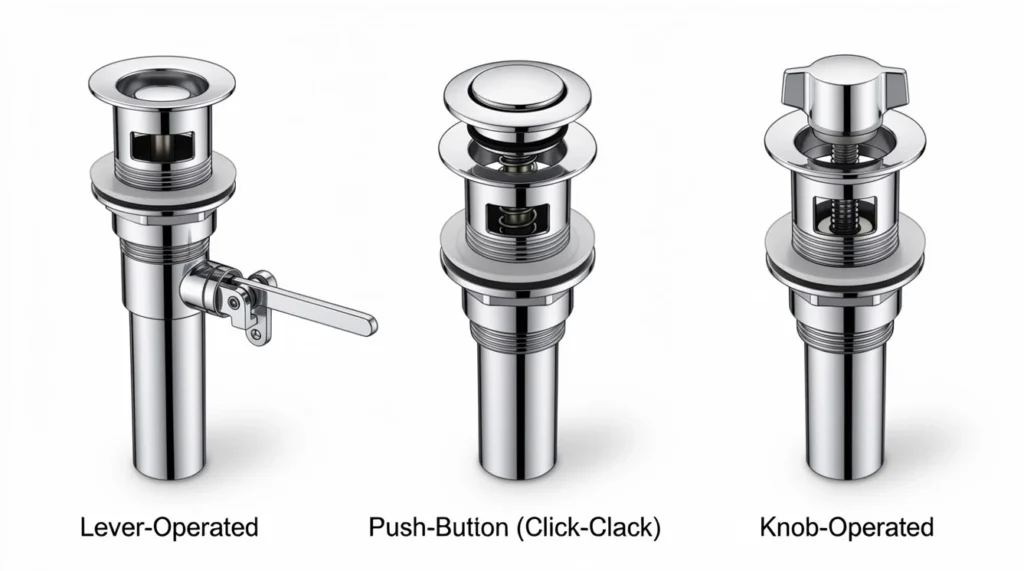
In India, you will find three activation types:
- Lever-Operated: A rod behind the tap lifts the stopper up or down.
- Push-Button (click-clack): You press the drain cap once to close, press again to open.
- Knob-Operated: You twist a knob on top to control the stopper.
In the Indian market, you’ll primarily come across two types: click-clack (push-button) pop-up couplings, which are by far the most common in countertop and wall-mount basins, and full-thread or knob-operated variants used in older or more basic setups.
Lever-operated couplings, where a rod behind the tap controls the stopper, exist but are largely limited to imported fittings or very high-end installations. If you’re buying locally, click-clack is almost certainly what you’re looking for.
Waste Couplings Types – Material, Finish & Size
Waste couplings are available in different materials, finishes, and sizes. Picking the wrong one means leaks, rust, or a poor fit; so each detail matters.
Material
Solid brass waste couplings handle hard water best and last the longest. Stainless steel is rust-proof, mid-range in price, and works well in humid Indian bathrooms. ABS or PVC couplings cost the least but wear out faster; they are fine for guest bathrooms with light use.
Finish
The finish you pick should match your tap and bathroom fittings. CP chrome is the most common and easiest to clean. But gold, glossy, matte black, rose gold, and ceramic top finishes are now widely available in India for premium bathrooms.
Size and Shank Length
This is the detail most buyers miss. Getting the wrong shank length means the coupling will not reach your drain pipe.
| Size | Use Case |
| 32mm / 1.25″ | Wash basins — countertop, pedestal, wall-mount |
| 38mm / 1.5″ | Kitchen sinks and bathtubs |
Shank lengths available in India: 3″, 5″, 6″, 7″, and 9″. Longer shanks fit thick countertop basins where the basin wall is deeper.
Note: Always measure your basin thickness before ordering online. A 3″ shank will not reach the nut on a 60mm thick countertop basin; you will need at least a 5″ or 6″ shank.
Pop-Up vs. Traditional Waste Coupling
For home and hotel bathrooms, pick a pop-up waste coupling every time. For high-traffic public washrooms, a traditional waste coupling is the smarter, lower-maintenance choice.
| Feature | Pop-Up Waste Coupling | Traditional Waste Coupling |
| Ease of use | One push or press | Manual plug insertion |
| Look | Sleek, no visible plug or chain | Basic, utilitarian |
| Debris build-up | Hair can collect under the stopper | Open drain, easy to clear |
| Maintenance | Needs occasional rod adjustment | Almost zero moving parts |
| Cost | ₹300 – ₹2,500+ | ₹40 – ₹400 |
| Best for | Homes, hotels, premium bathrooms | Public washrooms, high-traffic areas |
Traditional waste couplings win on one thing — simplicity. Fewer parts mean fewer things that break. So in a busy airport washroom or a school toilet block, they make sense.
But in your home or a hospitality project, the pop-up wins on every other count.
Brands to Know Before You Buy
The brand you pick affects more than just price. It decides your warranty coverage, spare part availability, and how well the finish holds up in hard water over time.
Entry to Mid Range
Hindware is a reliable starting point and also widely available offline and priced for standard residential bathrooms. Ruhe, Krysstal, and Bassino are design-led brands offering PVD finish options at mid-range prices.
Mid to Premium Range
Begin Faucets makes solid brass pop-up waste couplings in shank sizes of 3″, 5″, 6″, and 9″. They cover chrome and gold finishes, plus a ceramic pop-up variant for premium countertop basins.
Their couplings fit countertop, wall-mount, and pedestal basins. You can browse the full range at
Jaquar remains one of the most recognized names in Indian bathrooms, with a wide finish range and strong after-sales infrastructure across the country. The brand advertises a 10-year warranty, though coverage varies by product category.
CERA is equally worth considering, especially if you’re buying from a physical store. Most mid-size plumbing and sanitary showrooms stock it. Not the flashiest option, but reliable and easy to find spare parts for.
Luxury Tier
Kohler and Grohe are global brands. They offer great build quality, but at a considerable price premium.
Tip: See if the brand sells spare parts separately. A broken pivot rod should not mean replacing the entire waste coupling.
Pop-Up Waste Coupling Price in India
A pop-up waste coupling in India starts at under ₹100 and goes beyond ₹2,500 for premium branded options. Material and finish drive most of the price difference.
| Tier | Material | Price Range |
| Budget | ABS / PVC | ₹50 – ₹200 |
| Mid-Range | Brass chrome / Stainless steel | ₹300 – ₹800 |
| Premium | Ceramic top / PVD / Branded brass | ₹800 – ₹2,500+ |
Five Factors Push the Price Up or Down
- Material: Brass is costlier than ABS or steel.
- Finish: PVD and ceramic tops add to the cost.
- Shank Length: Longer shanks cost a little more.
- Brand: Warranty and after-sales support are factored in.
- Bottle Trap Included: Some sets come with a bottle trap. This increases the overall cost.
How to Choose the Right Waste Coupling for Your Bathroom
The right waste coupling depends upon your basin type, countertop thickness, and water quality. Work through these five steps before you buy.
- Check for an Overflow Slot: If your basin has an overflow hole, you need a waste coupling with a built-in overflow channel. A standard pop-up waste coupling will not seal correctly without it.
- Measure Your Countertop Thickness: A 3″ shank works only on thin basins. Thick countertop slabs require a 5″, 6″ or even 9″ shank to reach the drain pipe below.
- Match Your Tap Finish: Choose a finish that matches your existing taps. Begin Faucets offers chrome and gold glossy finishes to match the two most popular bathroom styles in India.
- Check Your Water Quality: Hard water areas need brass over ABS. If you’re in a hard water area, look specifically for PVD gold finishes, not just any gold-coloured coupling. PVD-coated gold bonds at a molecular level and holds up far better against mineral deposits than standard chrome plating. A regular electroplated gold finish, on the other hand, can actually deteriorate faster. The colour does not tell you the coating type, so always check the product description before buying.
- Know Your Basin Type: Countertop, wall-mount, pedestal, and bathtub fittings each have slightly different depth and shank needs.
Decide in this order: size and overflow first → shank length second → finish third → brand fourth.
5 Installation Mistakes That Cause Leaks
Most waste coupling leaks do not happen because of a faulty product. They happen because of five common fitting errors you can easily avoid.
- Wrong Thread Size: 32mm and 38mm are not interchangeable. Measure your drain hole before ordering.
- Skipping or Misaligning the Gasket: This is the most common cause of leaks. The rubber O-ring must sit flat and centred before you tighten anything.
- Over-Tightening on Thin Ceramic Basins: Too much torque cracks the basin edge. Hand-tight plus a quarter turn is enough for most countertop basins.
- Misaligned Pivot Rod: Improperly set pivot rod prevents stopper from closing flush. Water seeps through even when the drain looks closed.
- Short Shank on a Thick Countertop: A 3″ shank will not reach the lock nut on a deep basin. You end up with a loose, leaking fit.
Always dry-fit the entire waste coupling assembly before applying plumber’s putty or silicone. Check that the stopper opens and closes fully, then seal.
Wrapping It Up
Start with the right size and overflow type, then match your shank length, finish, and brand in that order. A wrong choice at step one means no other decision can fix the fit.
For a reliable mid-range option, Begin Faucets offers solid brass waste couplings and a ceramic pop-up variant for premium countertop basins. Both are available at beginfaucets.com with pan-India delivery.
Browse the full plumbing fittings collection at beginfaucets.com and pick the coupling that fits your basin, your water, and your bathroom.
Frequently Asked Questions
What is the Standard Size of a Waste Coupling for Wash Basins in India?
The standard size for wash basins in India is 32mm or 1.25 inches. Bathtubs and kitchen sinks use the larger 38mm or 1.5-inch size. Always confirm your drain hole diameter before ordering.
Can I Use a Pop-Up Waste Coupling Without a Bottle Trap?
Yes, the waste coupling and bottle trap are separate fittings. The waste coupling connects the basin to the drain opening. The bottle trap connects below it to the wall pipe. You can buy each independently.
How Long Does a Brass Waste Coupling Last?
A solid brass waste coupling typically lasts anywhere from 5 to 10 years in Indian homes, depending on your water quality and how often you clean it. In hard water cities like Delhi or Ahmedabad, you may start noticing mineral build-up or finish dulling earlier, usually around the 4 to 5 year mark. Routine cleaning and occasional descaling can push that lifespan noticeably further.
Does a Pop-Up Waste Coupling Work With All Basin Types?
Most pop-up waste couplings fit countertop, pedestal, and wall-mount basins. But you need to match the shank length to your basin depth and check for overflow compatibility. A universal fit does not exist; always verify before buying.
Which Finish Lasts Longest in Hard Water Areas?
PVD finishes last longest in hard water because the coating bonds directly to the brass base. PVD coatings are usually more corrosion and fade-resistant than traditional chrome plating. Matte black and rose gold in PVD are also good choices for bathrooms with hard water.
Related Products
Explore products related to this article
-
 25%
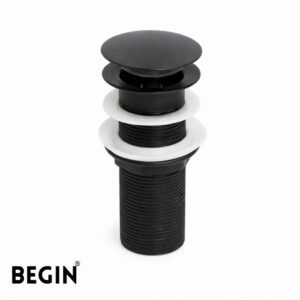
25%Pop-Up Brass Waste Coupling 5 Inch | Matte Black
Original price was: ₹950.00.₹715.00Current price is: ₹715.00. Add to cart -
25%
SS Connection Pipe 36 Inch | Stainless Steel | BEGIN
Original price was: ₹566.00.₹425.00Current price is: ₹425.00. Add to cart -
25%
SS Connection Pipe 30 Inch | Stainless Steel
Original price was: ₹466.00.₹350.00Current price is: ₹350.00. Add to cart -
25%
SS Connection Pipe 24 Inch | Stainless Steel
Original price was: ₹317.00.₹238.00Current price is: ₹238.00. Add to cart