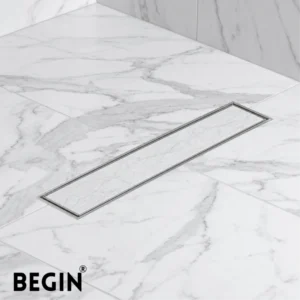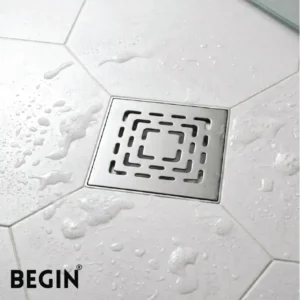
Open drains are an invitation to trouble. They are prone to clogging with leaves, hair, and dirt, and heavy rains cause water to back up. In the stagnant water, cockroaches and mosquitoes breed, and the foul smell drifts through the house.
Worse, an open drain near a balcony or staircase can cause a bad fall, especially for kids and elderly family members.
That is why learning how to cover a drain properly matters. A good cover does two jobs at once: it keeps dirt, pests, and accidents away, while still letting water flow through without blocking it. Too tight a cover, and water pools. Too loose, and debris gets in anyway.
Not every drain needs the same solution. A bathroom drain, a balcony outlet, and an outdoor trench each face different water loads and dirt types. This guide walks you through the right drain cover for each spot, how to pick materials, and how to install one the correct way.
Identify the Type of Drain Before Choosing a Cover
Not all drains are built the same, so don’t buy a cover before you know what you’re dealing with.
Take a look at what you’ll typically find around an Indian home:
- Floor Drain: The small outlet in your bathroom or kitchen floor. Hair and soap scum collect here fast, so a fine mesh works best.
- Balcony or Channel Drain: A thin strip running along the balcony edge. Since rainwater rushes through quickly, it needs a slotted cover that won’t slow things down.
- Terrace Drain: Sits on the roof and takes the brunt of monsoon rain. A wide-slot, sturdy grate handles this load better than a delicate one.
- Trench Drain: A long, sunken channel usually seen in driveways or open courtyards. Cars and heavy carts pass over it, so the grate has to be tough.
- Stormwater Drain: The bigger outdoor drain that carries rainwater toward the main sewage line. Because it’s often near footpaths, a heavy cover matters for safety too.
- Gully Trap: A small chamber that catches solid waste before it reaches the sewer line. It needs a cover you can lift for cleaning, without letting smells escape.
Skip this step, and you’ll likely pick the wrong option. As a result, the wrong drain cover can cause as many problems as no cover at all — it may trap water, let debris through, or simply crack under the weight it wasn’t made for.
Best Ways to Cover a Drain Based on Location
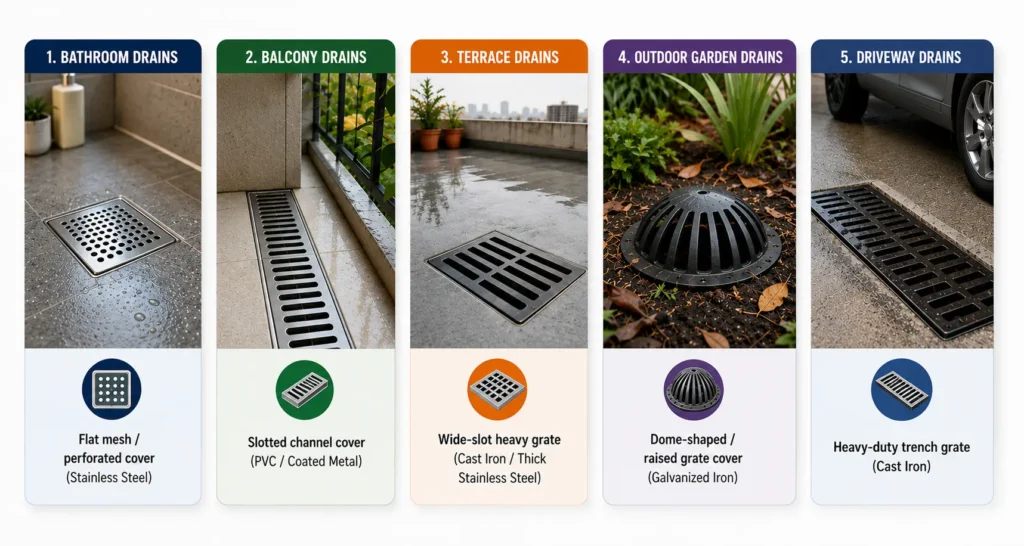
The right drain cover changes depending on where the drain sits in your home. A cover that works in a bathroom won’t survive a driveway, and one made for a terrace won’t fit a narrow balcony channel. Here’s how to choose for each spot.
Bathroom Drains
A flat mesh or perforated cover works best for bathroom drains. Stainless steel doesn’t rust when it’s in constant contact with water, and it remains hygienic for years.
Skip the weekly wipe-down, though, and hair and soap scum build up underneath the mesh fast enough to slow drainage within a month. In most Indian apartments, this drain sits near the shower area and sees daily use.
Best For: Daily wastewater with hair and soap
Avoid If: You want a cover with wide gaps, since small debris will pass through
Balcony Drains
A slotted channel cover suits balcony drains, since it clears rainwater fast without blocking the narrow opening. PVC or coated metal handles sun exposure better than plain iron, which rusts quickly outdoors.
Undersized slot widths are the usual culprit here — monsoon leaf litter clogs them almost as fast as you clear them. Apartment balconies in cities like Mumbai and Pune rely on this setup heavily during the rainy season.
Best For: Narrow spaces with regular rain exposure
Avoid If: The area collects heavy leaf litter without frequent cleaning
Terrace Drains
Terrace drains need a wide-slot, heavy grate that can handle large water volumes during monsoon. Cast iron or thick stainless steel holds up under constant weather changes better than lightweight plastic.
Many homeowners install a grate with too small an inlet area for the roof’s runoff, so water backs up and overflows during sudden downpours. Rooftop terraces often double as drying or sitting areas. A secure, properly sized cover keeps the space safe too.
Best For: High water flow and outdoor weather exposure
Avoid If: The terrace has poor slope, since water will pool regardless of the cover
Outdoor Garden Drains
A dome-shaped or raised grate cover suits garden drains, as it keeps mud and leaves from sinking straight in. Galvanized iron works well here because it resists corrosion from soil moisture.
Flat covers are the wrong pick here — soil settles over them within weeks and buries the opening entirely. Independent houses with lawns or utility yards commonly use this type near outdoor taps.
Best For: Areas with loose soil and plant debris
Avoid If: The drain sits under heavy foot traffic, since domes can crack
Driveway Drains
Driveway drains call for a heavy-duty trench grate built to bear vehicle weight without bending. Cast iron is the standard choice here, since it holds up under repeated pressure far better than plastic.
Residential-grade covers don’t belong here; rated for foot traffic only, they crack under a car’s weight within months. Parking areas in gated communities depend on this type to manage runoff safely.
Best For: Areas with regular vehicle movement
Avoid If: Load rating isn’t checked against your vehicle weight
Which Drain Cover Material is Best
If you’re wondering how to cover a drain with the best all-round material, stainless steel is the safest bet for most homes — it resists rust and looks clean for years. However, for heavy-traffic areas like driveways, cast iron works better since it carries much more weight without bending or cracking.
| Material | Rust Resistance | Load Capacity | Cost | Best Use | Maintenance |
| Stainless Steel | High | Medium | Medium-High | Bathrooms, balconies | Low |
| Cast Iron | Medium (can rust if uncoated) | Very High | Medium | Driveways, trench drains | Medium |
| PVC | High | Low | Low | Garden drains, light-use areas | Low |
| Polymer Concrete | High | High | Medium-High | Terraces, outdoor channels | Low |
For everyday indoor use, stainless steel gives the best balance of durability and price. If your drain sits in a parking area or driveway, don’t settle for anything lighter than cast iron, since plastic and thin metal both fail under vehicle weight over time.
Polymer concrete is worth the extra cost for terraces and outdoor channels, as it handles both heavy rain and temperature swings without warping.
Cost should never be the only factor. A cheap PVC cover on a driveway will crack within months, costing more in replacements than a proper cast iron one would have upfront.
How to Install a Drain Cover Without Affecting Water Flow
Most homeowners get the material right and still end up with flooding. The real problem is usually a cover with too few openings, not the material. This one mistake causes most slow-drainage complaints during heavy rain.
Here’s how to get the installation right:
- Measure the drain opening first. Don’t guess or buy based on a rough estimate.
- Choose a size that fits snugly, with no gaps at the sides.
- Clear out the drain before fitting anything. Old debris left underneath causes blockages later.
- Fix the cover in place using screws or a frame that locks, so it doesn’t shift when stepped on or hit by water flow.
- Check the flow once installed. Pour a bucket of water over it and watch how fast it drains.
- Set a cleaning routine right away, so you’re not troubleshooting a clog months down the line.
Once installed, upkeep is what keeps the drain working well. Here’s how often to check each type:
| Location | Cleaning Frequency |
| Bathroom | Weekly |
| Balcony | Every 2 weeks |
| Terrace | Monthly |
| Outdoor Drains | Before monsoon and after storms |
Insufficient openings in a cover lead directly to water accumulation during heavy rain, which then backs up and can seep into walls or flooring.
Before you finalize any cover, run through this checklist:
- Size matches the drain opening exactly.
- Material suits the location’s load and weather.
- Openings allow enough water flow.
- Cover is secured, not just resting in place.
- Design allows easy access for cleaning.
- Maintenance schedule is set from day one.
Final Thoughts
Choosing the right cover always comes down to three things: knowing your drain type, checking the water flow it needs to handle, and picking a material built for that load. Skip any one of these, and even an expensive cover will fail when you need it most.
Indian monsoons bring sudden, heavy rain, so your choice should account for that stress, not just everyday use. A terrace or balcony cover that works fine in December can overflow in July if it wasn’t sized for real rainfall.
Get these three factors right, and your drains will stay clear through every season, not just the easy ones.
Frequently Asked Questions
Can a Drain Be Covered Completely?
Sealing a drain shut isn’t a good idea. Trapped water and air build up pressure, which pushes backflow into your home. A cover should block debris and pests while still leaving room for water and air to pass.
What Size Gaps Should a Drain Cover Have?
It depends on what the drain handles. Bathroom drains need tight slots to catch hair, while terrace or driveway grates need bigger gaps for fast-moving rainwater. Get this wrong, and you’ll either block flow or let dirt through.
Can One Drain Cover Work for Both Indoor and Outdoor Use?
Not really. The outdoor drains have to fight rain and sun, so they need rustproof materials and bigger gaps. Indoor drains focus more on catching hair and soap. Using the same cover for both usually wears it out faster.
Do Drain Covers Need to Follow Any Indian Standard?
Yes. The cast iron manhole and gully covers used in driveways, parking lots, or public spaces should conform to IS 1726 (Cast Iron Manhole Covers and Frames), the Bureau of Indian Standards specification for load ratings. It sorts covers into four load classes — LD-2.5, MD-10, HD-20, and EHD-35 — ranging from light-duty for homes to extra-heavy-duty for vehicle traffic.
Can Drain Covers Stop Insects and Cockroaches?
Yes, a good cover keeps most insects and cockroaches out. Mesh-style or trap covers close off the openings pests use to sneak in, which matters most for bathroom and kitchen drains where moisture attracts them constantly.
Related Products
Explore products related to this article
-
 27%
27%SS Flip Bowl for Drain 5×5 AD0495 | Stainless Steel Drain Part
Original price was: ₹375.00.₹275.00Current price is: ₹275.00. Add to cart -
23%
Tile Insert Drain 100×600 mm SS304 with Flip Bowl
Original price was: ₹3,200.00.₹2,450.00Current price is: ₹2,450.00. Add to cart -
25%
Bathroom Drain Cover 5×5 | Stainless Steel 304
Original price was: ₹417.00.₹313.00Current price is: ₹313.00. Add to cart -
25%
Bathroom Floor Drain Cover 5×5 | Stainless Steel Wonder
Original price was: ₹417.00.₹313.00Current price is: ₹313.00. Add to cart