You turn the handle, and nothing happens. Just a weak trickle where a strong spray should be. If this sounds familiar, you are not alone.
Many homes deal with this problem at some point. Here are signs your health faucet has low pressure:
- The spray feels weak or uneven
- Water dribbles out instead of spraying
- It takes longer to clean properly
- The flow changes randomly during use
If you want to know how to increase water pressure in health faucet fittings, the good news is this: most fixes are simple. You don’t need to call a plumber or buy a new unit.
In fact, the problem often comes down to small, fixable issues. Let’s find out what causes each one and how to fix them.
How a Health Faucet Gets Its Water Pressure
Water pressure follows a simple path. It moves through three points before it reaches you.
1. Water Supply: Your bathroom water pressure depends on which overhead tank or pump your building uses. If that supply is weak, every tap and fixture in your home feels it, including your health faucet.
2. Inlet Valve and Pipe: Water is supplied through a small valve near the wall. It opens up, and the water comes in full blast. Half open it, and the pressure drops off immediately.
3. Hose and Spray Head: Water is pumped through the flexible hose to the nozzle. It is the nozzle that shapes the spray you feel in your hand.
One step builds on the one before it. If the pressure is strong at the supply but weak at the nozzle, something is blocking it in between.
This chain explains why pressure problems can start almost anywhere. Next, let’s look at the most common reasons pressure drops.
What Causes Low Water Pressure in a Health Faucet?
There are many reasons for a weak flow. Here’s a quick run-through of the usual suspects.
| Cause | Why It Happens |
| Minerals clogging or blocking the nozzle | Hard water minerals slowly build deposits of calcium and salt in the nozzle holes. Over months, these tiny holes get narrower and narrower. Eventually, cause low water pressure. |
| Kinked or bent hose | The flexible hose often gets squeezed behind the toilet tank, especially in tight bathrooms. Even a small bend is enough to choke the water flow. |
| Inlet valve partially closed | The inlet valve should be fully opened. Otherwise, the water entering the health faucet will be limited, causing a weak flow. |
| Worn-out o-ring or washer | It has washers and O-rings that help form a good seal inside the faucet. When they fail, they can obstruct the flow of water or cause leaks that reduce pressure. |
| Low building water supply | Sometimes the problem is not the tap itself. If you have low water pressure coming into your home or building, the health faucet will also have a weak flow. |
| Old internal components | Health faucets naturally wear over time. Internal parts can wear out and affect the water flow efficiency and water pressure. |
Most of these causes have an easy fix. Let’s go through each one, step by step.
Ways to Increase Water Pressure in a Health Faucet
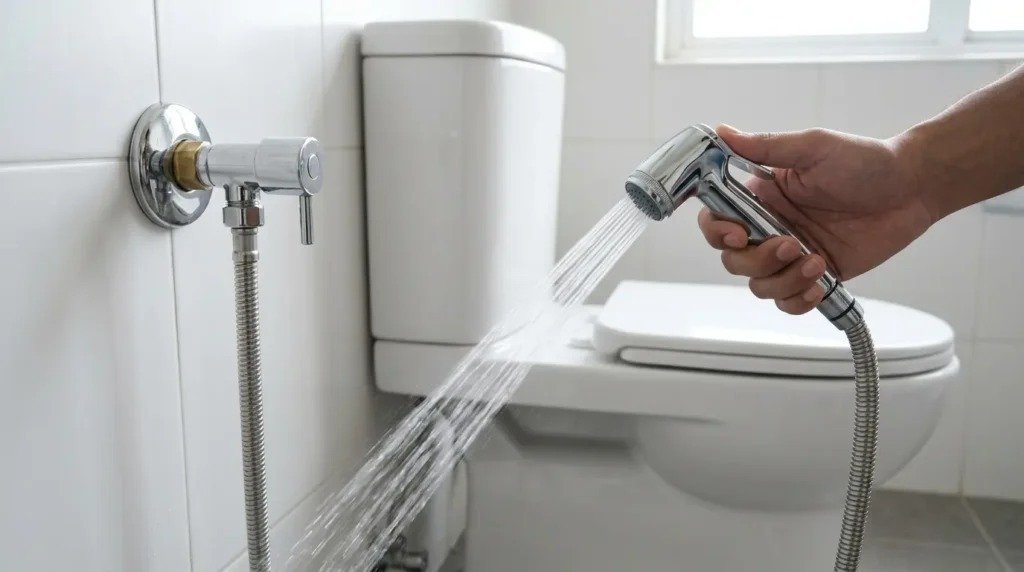
Try these fixes in order. Most people solve the problem within the first three steps.
1. Soak and clean the nozzle
Twist the spray head off the hose and look closely at the small holes. Hard water minerals are the white or grey crusty bits. Drop the nozzle in a bowl with equal parts vinegar and water, leave it for 30 minutes, then scrub gently with an old toothbrush before rinsing.
2. Straighten or swap the hose
Pull the hose out gently and run your hand along its full length. A bend or twist anywhere along it can choke the flow. If you find cracks or a soft, worn patch, it’s time for a new hose.
3. Fully open the valve
There is a small valve on the wall behind the tap. Turn it counter-clockwise as far as it goes, even if you think it’s already open. People often leave this valve only half-turned without realizing it.
4. Swap out old washers and O-rings
Open up the hose connections and look at the small rubber rings inside. Flat, cracked, or stiff rings let water sneak past instead of pushing forward. Pick up replacements from any hardware shop near you.
5. Check other taps in your home
Turn on a different tap and see how it flows. If every tap in the house feels weak, your faucet isn’t the problem; your building’s supply is. A quick chat with a neighbor will tell you if they’re facing the same thing.
6. Clear out the inlet filter
Tucked behind the inlet valve is a tiny mesh screen that traps sand and grit. Unscrew the fitting carefully, pull this screen out, and rinse it clean under a tap before putting it back.
Pro Tip: Steps 1, 2, and 6 take about 15 minutes combined and solve most low-pressure issues in one go.
If pressure still feels low after all six steps, a few more things are worth checking.
Is the Problem Your Faucet or Your Water Supply?
Before you replace any parts, run this quick test to find where the real problem sits.
1. Turn on another tap in the bathroom. If it’s weak too, your faucet probably isn’t the issue.
2. Check the small valve behind your toilet. If someone turned it down during a repair and forgot to open it back up, your health faucet will always feel weak.
3. Try testing at a different time of day. Pressure naturally tends to fall during peak hours, typically 7-9 AM and 6-8 PM, and to rise later.
If the faucet still feels weak after this test, then the problem may be within the installation itself.
Common Mistakes Include:
- The hose runs with sharp, tight bends behind the wall or tank.
- The inlet valve was never fully opened after the plumber finished work.
- The hose is too short or too long, creating tension that pinches the flow.
Once you’ve ruled out these issues, it might be time to look at the faucet’s internal parts.
When to Replace Parts and How to Keep Pressure Strong Long-Term
Cleaning solves most problems, but not all of them. Here’s when a part needs to go:
1. Spray head or nozzle: Holes still clogged after a soak, or you can see cracks on the head itself. Time for a new one.
2. Flexible hose: If a flexible hose is cracked, bulged, or leaking anywhere along its length, it will not hold pressure properly. Don’t patch it, replace it.
3. Washer or O-ring: Replaced this part once, and it is still leaking around the handle? Find another worn ring close by that you missed.
4. Full health faucet unit: Tried everything, and the valve inside still feels stuck or weak? The unit has reached the end of its life.
To avoid going through all this again, build these habits into your routine:
- Give the nozzle a clean every 3-4 months, whether it looks dirty or not.
- Run a hand along the hose once a month to catch any new kinks early.
- Leave the inlet valve fully open, all the time, not just when you remember.
- Got hard water at home? A water softener or filter slows down mineral buildup at the source.
Final Thoughts
Most low-pressure problems come down to a quick clean, a fully open valve, or a hose that needs straightening. None of this requires special tools or outside help. A little patience and 15-20 minutes is often all it takes.
If you’ve worked through every step and the faucet still feels weak, it may simply be time for a replacement. That’s normal after years of use, and it’s worth checking out our collection of health faucets to find one that fits your bathroom.
Now you know how to increase water pressure in a health faucet, so the next time it slows down, you’ll know exactly where to start.
Frequently Asked Questions
Does a Pressure Regulator Affect My Health Faucet?
Yes, if your building has one installed on the main line. It controls how much pressure flows into your home, so a low setting there limits every tap, including your health faucet.
Does Hose Length Affect Water Pressure?
A bit, yes. The longer the hose, the more resistance and the more the water loses force by the time it gets to the nozzle. This effect is usually small unless the hose is unusually long.
Why Does My Health Faucet Work Fine Sometimes But Not Other Times?
This usually points to your building’s supply, not the faucet itself. Pressure often dips during peak hours when many homes draw water at once, then returns to normal later.
Is it Safe to Use a Health Faucet with Very High Water Pressure?
Yes, usually. But you should check the hose and connections from time to time, because very high pressure can wear them out faster over time.
Related Products
Explore products related to this article
-
 25%
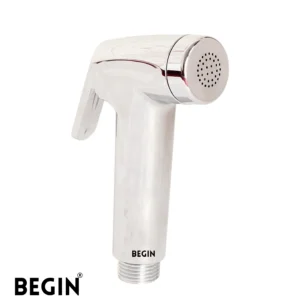
25%Star Health Faucet Set for Toilet Set AB0152 | Begin
Original price was: ₹690.00.₹517.00Current price is: ₹517.00. Add to cart -
25%
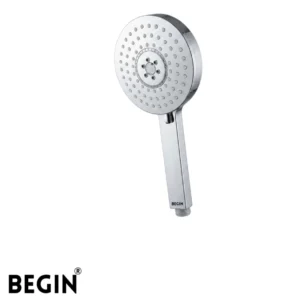
AIR Multiflow Hand Shower Set | Multiple Water Flow Modes for a Better Shower
Original price was: ₹2,120.00.₹1,590.00Current price is: ₹1,590.00. Add to cart -
25%
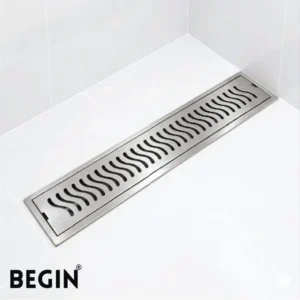
Wave Tile Insert Shower Drain with Flip Bowl – 100×300 mm Stainless Steel
Original price was: ₹1,600.00.₹1,200.00Current price is: ₹1,200.00. Add to cart -
25%
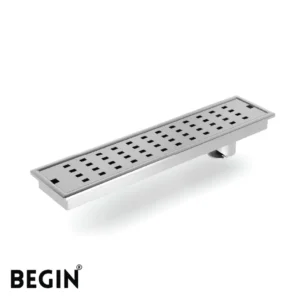
Box Drain with Flip Bowl – 100×300 mm Stainless Steel Floor Drain
Original price was: ₹1,600.00.₹1,200.00Current price is: ₹1,200.00. Add to cart