Shower heads with filters for hard water work for some problems and not others, so setting the right expectation matters before you buy.
These filters reduce chlorine, loose sediment, and bad smell in your water, and some models with KDF (a copper-zinc alloy that reduces chlorine and certain metals through a chemical reaction) or calcium sulfite media may reduce staining associated with treated water, but do not significantly reduce mineral scale caused by hardness.
What they generally cannot do is remove dissolved calcium and magnesium, the minerals that make water “hard” under BIS IS 10500, India’s drinking water standard. That job usually needs a water softener.
This guide covers which filter media actually work, when a filter alone is enough for your bathroom, and how to pick one suited to Indian water sources.
Do Shower Heads with Filters for Hard Water Really Work?
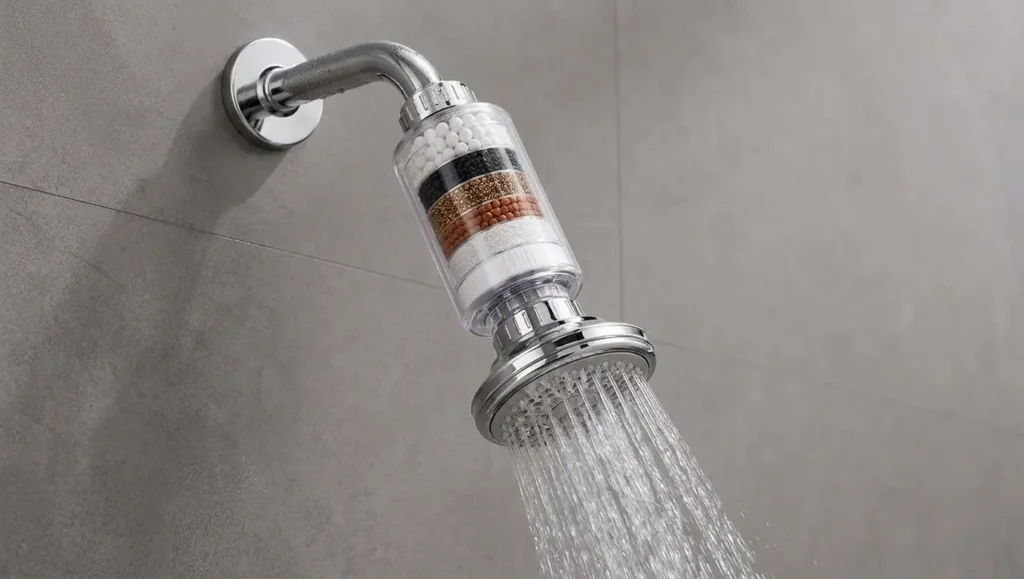
A hard water shower filter reduces sediment, chlorine smell, and the harsh feel of treated municipal water.
Independent testing of shower filtration systems shows it does not fully remove dissolved calcium and magnesium, the minerals responsible for scale and limescale buildup.
For genuine hardness reduction, you need a different technology altogether.
That technology is a water softener. A softener uses ion exchange (a process that swaps calcium and magnesium ions for sodium ions) to actually lower hardness, while a shower filter only screens and chemically alters certain contaminants as water passes through.
Before you buy either, test your water correctly.
- A TDS meter measures total dissolved solids, not hardness specifically, so a high or low TDS reading does not confirm how hard your water is.
- A hardness test strip or water hardness test kit, sold separately, gives you that number directly, usually expressed in ppm or grains per gallon (GPG), which map to hardness categories such as soft, moderately hard, hard, and very hard.
Hard Water in India: Borewell, Tanker & Municipal Water
Your water source shapes what a filter needs to handle, and India’s three main sources differ sharply.
Borewell Water
Borewell water is drawn from underground rock layers, so it picks up dissolved calcium, magnesium, iron, and sometimes fluoride as it moves through soil and stone.
A shower filter for borewell water can reduce iron staining and sediment, but the calcium and magnesium pass through largely unaffected, which is what leads to calcium deposits, magnesium deposits, and soap scum on tiles and fixtures over time.
Tanker Water
Tanker water quality depends entirely on its source and route, since one tanker may draw from a clean bore and another from a contaminated one, with no consistent standard across suppliers.
Municipal Water
Municipal water usually starts from a treated surface or ground source and gets chlorine added for disinfection, so its main added contaminant is chlorine rather than extra minerals.
BIS IS 10500 sets:
- 200 mg/L (the acceptable hardness limit as calcium carbonate, or CaCO₃)
- 600 mg/L (the permissible limit when no alternative source exists)
for drinking water.
This is a drinking-water reference, not a bathing-water rule, so treat it as context rather than a target for your shower.
Note: Match your filter choice to your water source, not to a generic hardness number.
Types of Shower Filter Media
| Filter Media | Helps With | Hard Water Impact |
| PP cotton/sediment filter | Traps dirt, rust, and visible particles | Does not affect dissolved calcium or magnesium |
| Activated carbon | Reduces chlorine taste and smell | Does not soften water |
| KDF media | Reduces chlorine and some heavy metals through a copper-zinc reaction | Does not remove dissolved hardness minerals |
| Vitamin C (ascorbic acid) | Neutralizes chlorine and chloramine | Has no effect on calcium or magnesium |
| Ion exchange resin | Swaps hardness ions for sodium or potassium ions | Reduces hardness, but resin capacity is limited in a shower-head format |
| Polyphosphate/scale inhibitor | Coats minerals to slow scale formation on surfaces | Does not remove minerals, only reduces buildup |
As the table shows, no single common shower-filter media fully softens water on its own.
Each type is built to solve a narrow problem, whether that is chlorine odor, loose particles, or surface scale, and combining media in one cartridge only stacks these narrow effects rather than creating a true softening function.
A basic sediment filter, for instance, keeps your water visibly clean but leaves mineral content untouched.
Similarly, an anti-scale shower head that uses a polyphosphate scale inhibitor can slow down limescale spots on your fixture without lowering the hardness of the water itself; unlike a standard shower filter cartridge aimed at chlorine or sediment, this scale inhibitor depletes over time and needs periodic replenishment.
Note: Pick your filter media based on your actual problem, whether that is chlorine, sediment, or surface scale, rather than expecting one cartridge to solve all three.
Shower Filter vs Water Softener vs RO: Which One Do You Need?
Your choice depends on what problem you’re actually solving, not which product sounds the most advanced.
The table below breaks down which option fits which situation.
| Option | Best For | What It Does Not Do |
| Shower head filter | Renters, mild chlorine smell, light sediment, day-to-day comfort. | Does not lower dissolved calcium and magnesium in a meaningful way. |
| Bathroom or whole-house softener | Severe hardness, visible limescale on tiles and taps, geyser scaling, borewell water. | Requires installation and space, so it is less practical for rented homes. |
| RO purifier | Makes drinking water safe by removing dissolved solids and contaminants. | Treats only drinking water, not bathing water, so it does nothing for your shower or geyser. |
A water softener shower head can help in transitional cases, such as a rented flat with moderately hard water where a full whole-house unit isn’t possible, since it fits directly onto your existing pipe without major plumbing changes.
How to Choose the Best Filtered Shower Head for Indian Bathrooms
Choosing a filtered shower head for hard water comes down to matching the product to your actual water problem, not chasing the highest stage count.
Use this checklist before you buy:
- Confirm the filter fits a standard ½-inch fitting, the common shower pipe size in Indian bathrooms.
- Match the media to your problem: carbon or Vitamin C for chlorine, PP cotton for sediment, polyphosphate for scale.
- Check that replacement cartridges are actually sold in India, not just the initial unit.
- Look at flow rate specs if your building has low water pressure.
- Treat “15-stage” or “20-stage” labels with skepticism, since stage count alone does not indicate real filtration capacity.
- Prefer brands that publish cartridge life, warranty terms, and test data rather than vague claims.
- Check whether a separate cartridge exists for borewell or tanker water, since these need different sediment handling.
If you’re searching for the best shower filter for hard water in India, the honest starting point is your specific symptom, not a brand’s stage count.
Brands currently selling filtered shower heads in India, based on live listings, include WaterScience (CLEO range), Purifit, KRYSSTAL, Alton, and Panca, though you should confirm specifications, cartridge life, and borewell-specific options directly on each listing before buying, since marketing pages often overstate results.
Installation, Maintenance & Replacement Cost in India
Most shower filters install without a plumber, and cartridge life depends more on your water quality than the brand you choose.
Installation
- Most units are DIY-installable and screw directly onto your existing shower arm.
- No plumber is usually needed for a standard threaded connection.
- Wrap plumber’s tape around the threads if you notice a minor leak after fitting.
Cartridge Replacement Interval
- Ranges from every 2 to 6 months, depending on your water hardness and household size.
- Harder water or a larger household shortens this interval.
- Municipal water with lower mineral content stretches cartridge life closer to the 6-month mark.
Signs Your Cartridge Needs Replacing
- Noticeably reduced water flow through the shower head, often from shower nozzle clogging caused by scale or sediment.
- Chlorine smell or odor returning despite regular use.
- Faster scale buildup on tiles or fixtures than before.
- Visible discoloration inside the cartridge when you check it.
When comparing a shower head filter buyers can choose from, look at total cost over a year, including cartridge replacements, rather than just the upfront price on the box.
Final Thoughts
The right choice among shower heads with filters for hard water depends less on the product you pick and more on being honest about what’s actually in your pipes.
A filter handles chlorine and loose particles well and can slow down surface buildup, but it won’t touch the minerals causing real hardness.
Know your source, check your numbers, and stay wary of oversold packaging.
For most municipal or tanker connections, a decent filter does the job, and a softener only makes sense when borewell water pushes hardness to a severe level.
Frequently Asked Questions
Do Shower Filters Completely Remove Hard Water?
No, they don’t. A shower filter cuts down chlorine, sediment, and some scale-forming buildup, but the calcium and magnesium dissolved in your water largely stay put. Full hardness removal needs ion exchange, which is how a proper water softener works, not a filter cartridge.
Can a Shower Filter Help with Hair and Skin?
A shower filter for hair and skin works by cutting chlorine and loose sediment out of the water hitting your body, since these can build up during a wash. Whether that translates into a noticeable difference for you depends on your water source and how often you shower.
How Often Should I Change My Shower Filter Cartridge?
Somewhere between 2 and 6 months, usually. If your household uses a lot of water or your source is particularly hard, expect the shorter end. Lighter use on municipal supply can stretch a cartridge closer to six months.
Is a Shower Filter Better than a Water Softener for a Rented Flat?
For most renters, yes, mainly because of ease. A filter screws on and off without touching your building’s plumbing, so you can take it with you. A softener handles hardness better but generally needs a fixed spot and installation.
Do Shower Filters Reduce Water Pressure?
Some do, a little. Multi-stage cartridges add resistance compared to a plain shower head, which can dial down your flow slightly. If your building already struggles with pressure, check the filter’s flow rate before buying.
Can I Use a Shower Filter for Borewell Water?
Yes, but pick the right cartridge for it. Borewell supply tends to carry more sediment and iron than municipal water, so a filter built for borewell or high-sediment use will hold up better than a standard one.
Related Products
Explore products related to this article
-
 25%
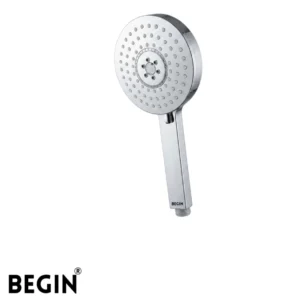
25%AIR Multiflow Hand Shower Set | Multiple Water Flow Modes for a Better Shower
Original price was: ₹2,120.00.₹1,590.00Current price is: ₹1,590.00. Add to cart -
25%
Tile Insert Drain Channel 5×5 AD0350 -SS 304 | Begin
Original price was: ₹970.00.₹728.00Current price is: ₹728.00. Add to cart -
25%
Square Shower Arm 15 Inch Wall Mount AD0162 – Begin
Original price was: ₹700.00.₹525.00Current price is: ₹525.00. Add to cart -
25%
Square Health Faucet Gun only AB0030 | Begin
Original price was: ₹266.00.₹200.00Current price is: ₹200.00. Add to cart