

Geyser Connection Pipe Guide: Types, Sizes & Price
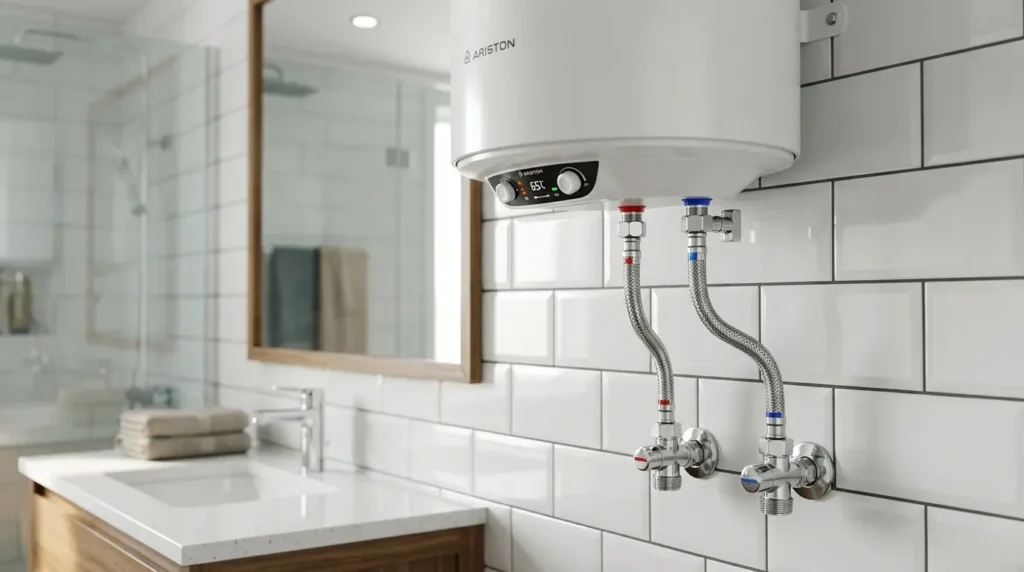
A geyser connection pipe is the short pipe that links your water heater to the wall’s shut-off valve (the tap that stops water flow). One pipe carries cold water into the geyser; another carries hot water out to your taps. Choosing the right material and size prevents leaks, burns, and costly repairs. In this guide, you will learn which pipe materials handle Indian water conditions best, what sizes fit standard geysers, how to install and maintain your pipes, and what to budget for quality fittings. Types of Geyser Connection Pipes Geyser connection pipe selection is based on the heat resistance, water hardness, and city air. SS 304 Braided Stainless Steel SS 304 is the most common choice for the hot water outlet side. It handles temperatures up to 90°C and holds pressure up to roughly 3 bar — well within the range of a standard home geyser. The “304” refers to the alloy mix: approximately 18% chromium and 8% nickel. That combination creates a tough oxide layer on the surface, which fights rust effectively. But “highly rust-resistant” is not the same as “rust-proof.” In areas with hard water or mineral-heavy supply, check the fittings every six months for early signs of surface discolouration. SS 316 Braided Stainless Steel SS 316 looks identical to SS 304 from the outside. The difference is inside the alloy: SS 316 adds molybdenum (a hardening element that blocks chloride attack — the kind caused by salt in coastal air). If you live in Mumbai, Chennai, or Kochi, the salt air accelerates corrosion on standard SS 304 fittings. SS 316 handles that environment significantly better and is worth the small price premium in those cities. PTMT Pipe PTMT stands for Poly Tetra Methylene Terephthalate, but you don’t need to remember that. What matters is that no metal touches the water path. That eliminates rust entirely and removes the risk of galvanic corrosion (the slow damage that happens when two different metals sit in contact with water). PTMT is a practical choice for Delhi, Jaipur, Lucknow, and other hard-water cities where mineral deposits accelerate metal wear. It is already the default fitting in many urban apartment buildings across India. The threads are metal-reinforced for a tight seal, so installation is straightforward. PVC Pipe PVC is the cheapest option on the shelf. For the cold water inlet side only, it works fine. The problem is temperature: standard PVC softens above roughly 60–65°C, which means it should never go on the hot outlet side of a geyser. A softened PVC joint can bulge, drip, or fail under pressure. Use PVC only where the water stays cold. If your plumber suggests PVC for the hot side to save money, push back. Material Heat Resistance Best For Typical Use-Case SS 304 Braided Up to 90°C Hot outlet + cold inlet Most Indian cities, general residential use SS 316 Braided Up to 90°C Hot outlet in coastal areas Mumbai, Chennai, Kochi, Goa PTMT Up to 85°C Hard-water cities, no-rust requirement Delhi, Jaipur, Lucknow, urban flats PVC Up to 60°C Cold inlet only Budget installs, cold water side only Geyser Connection Pipe Size Guide Before you think about length, check the thread. Nearly all Indian geysers, such as Crompton, Havells, Racold, AO Smith, use a ½ inch BSP thread (British Standard Pipe, the measurement standard used across Indian plumbing). Your geyser connection pipe must match this thread size, or no amount of PTFE tape (thread-seal tape) will stop a slow drip at the joint. Matching Length to Your Install The right length depends on one thing: the physical gap between your geyser’s inlet/outlet port and the angle valve (the small shut-off tap fixed to your wall). Here is a quick-pick guide for each standard size: The Practical Buying Rule Measure the distance from the geyser port to the angle valve. Then add 3 inches to that number. That buffer accounts for the angle of the connections, any slight misalignment in the fittings, and the gentle loop you leave in the pipe to absorb thermal expansion (the small amount a pipe stretches when hot water runs through it). Never buy the exact measured length. A pipe that is even half an inch too short puts stress on both end fittings every time hot water runs, and that stress causes leaks over months, not years. Quick Tip: If you are unsure which length to buy, pick 24 inch. You can coil the extra length neatly behind the geyser. You cannot stretch a pipe that is too short. How to Install a Geyser Connection Pipe Fitting a geyser connection pipe correctly takes under 60 minutes, but skipping any one of these steps can mean a leak, a burnt element, or an electric shock risk. Step 1: Shut Off Water and Electricity Turn off the main water supply valve and switch off the geyser’s MCB (the circuit breaker in your electrical panel) before you touch anything. Both must be off — cutting only the water or only the power is not safe enough. Step 2: Identify the Inlet and Outlet Ports Find the cold water inlet port (usually at the bottom of the geyser) and the hot water outlet port (usually at the top). Connecting these in reverse sends cold water out to your taps and hot water back into the supply line — a mistake that is easy to make and easy to avoid. Step 3: Wrap PTFE Tape on Every Male Thread Wrap PTFE tape (a thin white thread-seal tape that fills microscopic gaps in the joint) 3–4 times clockwise around every male thread end before fitting. Wrapping anticlockwise causes the tape to unwind as you tighten the nut, which defeats its purpose entirely. Step 4: Insert the Rubber Washer Into Both End Nuts Drop an EPDM rubber washer (a heat-resistant rubber ring that creates a watertight seal) inside both end nuts before you screw them on. A missing washer is the single most common cause of a slow drip at the fitting joint.
SS Connection Pipe Buying Guide: Grades, Sizes & Uses
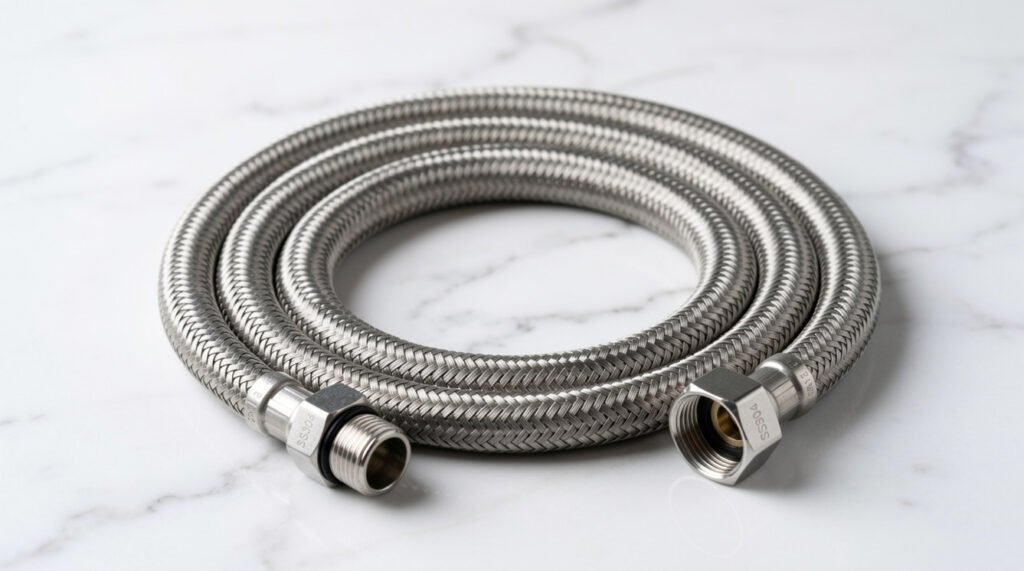
You bend down to check under the basin and find a small puddle of water. Or maybe water keeps dripping behind your toilet, no matter how many times you tighten the joint. The real problem often comes from a worn-out connection pipe. An SS connection pipe is a flexible tube that carries water from the wall or floor outlet to your tap or appliance. You will find it under basin taps, kitchen faucets, showers, health faucets, geysers, and toilet cisterns. But not every SS connection pipe performs the same way. Quality depends on the steel grade, the inner tube material, the braid strength, and the fittings used. This guide will help you pick the right SS connection pipe for your home, so you avoid leaks, rust, and repeat plumbing repairs. Why SS Connection Pipes are Preferred in Modern Plumbing Indian homes now prefer an SS connection pipe over old rubber or PVC tubes. Here is why builders and plumbers across India now default to SS connection pipes. 1. Corrosion Resistance: Stainless steel contains chromium. When stainless steel meets air, a thin, invisible layer forms on its surface. This layer blocks moisture and oxygen. That is what stops it from rusting the way ordinary iron does Note: Resistant doesn’t mean immune; given enough time and the wrong water conditions, even SS will show wear. 2. Flexible: Because of the braided design, this pipe bends and twists into spots a rigid pipe never could. Behind a basin, under a kitchen sink, squeezed inside a narrow cabinet; it goes there without kinking or snapping. 3. Durability: Most Indian homes push water through household lines at around 1 to 3 bar pressure. A decent SS connection pipe takes that pressure day after day and doesn’t crack, swell, or give out. 4. Appearance: The metal braid has a chrome-like shine to it, so it doesn’t look out of place next to modern taps and fittings. It actually adds a bit of polish to a bathroom or kitchen setup. Expert Tip: Corrosion-resistant does not mean “rust-proof.” The steel grade and your local water quality both decide how long the pipe lasts. What’s Inside an SS Connection Pipe: Construction Breakdown Before making a purchase, you must know what’s inside an SS connection pipe. Each layer plays a different job. The Inner Tube The inner tube carries the actual water flow. Most pipes use EPDM rubber for this layer, though some use PVC or nylon. EPDM handles both hot and cold water, and most household-grade pipes rate it up to 90°C. PVC versions cost less, but they cannot take high heat as well, so they suit cold-water points better. The Stainless Steel Braided Layer This layer wraps tightly around the inner tube like a metal mesh. This prevents the tube from expanding or blowing up under the extra pressure put upon the water within it. This is where the real difference between a strong pipe and a weak pipe comes into play. Wire thickness, how tightly the wires weave, and the steel grade all determine how much pressure the braid can take. End Fittings and Washers The fittings connect the pipe to your tap or wall outlet, and most are made from brass or stainless steel. Brass fittings dominate Indian plumbing because they grip threads firmly and resist corrosion well. Inside each fitting sits a small rubber washer, and this washer causes most leaks. So always check its condition before you tighten the connection. Types of SS Connection Pipes and Where to Use Them Indian markets sell two main types of SS connection pipes. Each one suits a different job in your home. Braided SS Flexible Connection Pipe This type dominates Indian homes today. A stainless steel wire braid wraps around an inner tube made from EPDM or PVC. The braid bends easily, so you can route it behind cabinets and tight fixture spaces without trouble. Use this type for basin taps, kitchen mixers, health faucets, and toilet cistern connections. Corrugated Stainless Steel Connection Pipe This pipe skips the rubber tube entirely. This type is all metal, so it can take more heat and pressure than the braided type. It is not that flexible, but it is stiffer and more durable in harsh environments. This type should be used for geysers, hot water lines, and commercial plumbing. Feature Braided SS Pipe Corrugated SS Pipe Pipe Flexibility High Moderate Temperature Range Up to ~90°C Up to ~150°C Common Use Household fixtures Geysers, hot lines Cost (India) ₹80–₹350 ₹200–₹700 SS Connection Pipe Sizes, Thread Standards & Price Range in India Picking the right length and thread size matters as much as picking the right material. Common Lengths Length Typical Use 30 cm Close-fit connections under counters 45 cm Standard basin and tap installations 60 cm Slightly longer reach behind cabinets 100 cm Geyser connections, extended runs Thread Sizes Indian plumbing fittings follow the BSP thread pattern set under IS 554. Most homes use two sizes. The ½ inch thread fits basin taps, kitchen faucets, and health faucets. ¾ inch thread is for higher flow points like geyser connections. Price Range in India Buying Tip: Buy a pipe a little longer than your exact gap, with a nice curve. A tight pipe adds more stress to the fittings and wears out faster. How to Choose the Right SS Connection Pipe This is the part that decides whether your pipe lasts five years or fails in five months. 1. Check the Steel Grade First Grade Composition Best For SS 304 18% Cr, 8% Ni Standard household plumbing, most reliable choice SS 304L 18% Cr, 8% Ni, Low Carbon Where welding is involved, better weld-zone corrosion resistance SS 202 17% Cr, 4–6% Ni Budget segment — lower corrosion resistance; avoid for long-term use Expert Note: SS 304 suits most Indian homes. SS 202 is less costly, but it rusts faster, especially in hard water areas. 2. Check the Braid Before you buy, run your eyes over the weave pattern closely. A good